

 Categories








































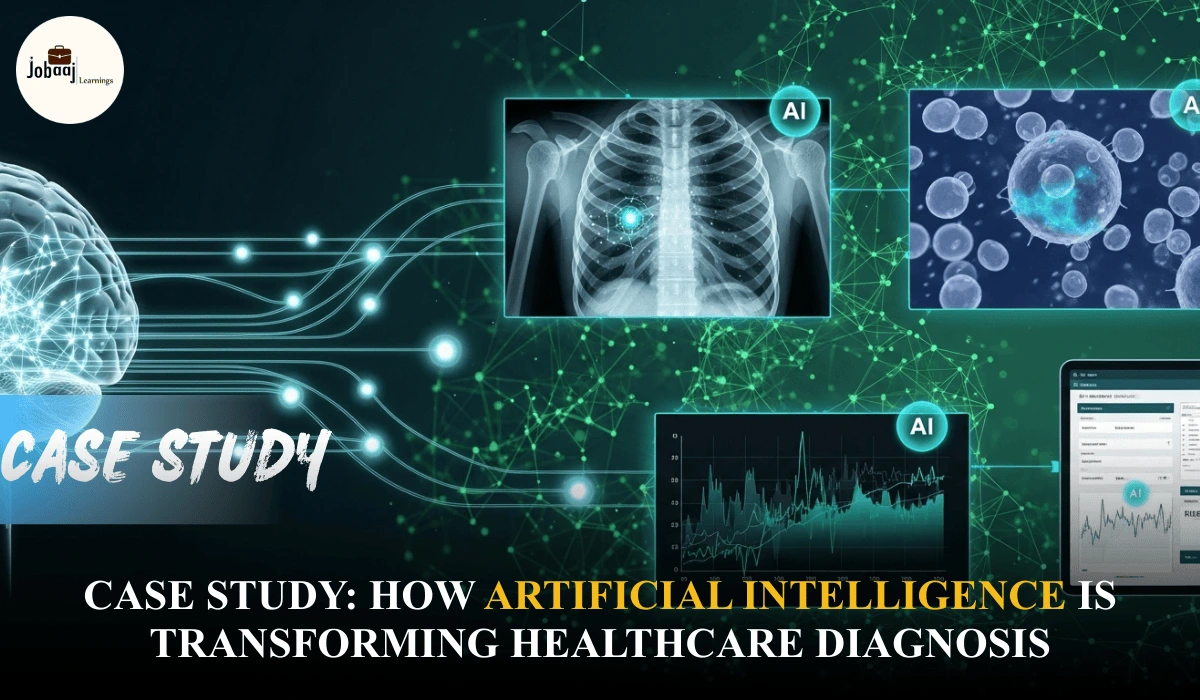
Imagine a world where doctors are able to diagnose diseases faster and more accurately than ever before, even detecting conditions that are difficult to identify with traditional methods. This is not science fiction artificial intelligence (AI) is transforming the healthcare industry, and it’s already happening. Over the past few years, AI has started playing a major role in healthcare diagnosis, making the process faster, more reliable, and sometimes more accurate than human professionals alone.
This case study explores the impact of AI on healthcare diagnosis, focusing on how machine learning, data analysis, and automation are being used to improve the accuracy of diagnoses and patient care. It also delves into the challenges, results, and lessons learned during this AI-powered revolution in healthcare.
Problem
Healthcare professionals have always faced challenges in diagnosing certain medical conditions, particularly those that require highly specialized knowledge or are rare and complex. Some of the common problems include:
-
Diagnostic Errors: Even the best doctors make mistakes, and diagnostic errors are common in healthcare. Misdiagnosis can lead to wrong treatments, delayed treatments, or unnecessary procedures.
-
Time Constraints: Doctors often have limited time to review patient records, test results, and symptoms. This time pressure can result in overlooking key details and missed diagnoses.
-
Lack of Expertise in Specific Areas: In some cases, doctors may lack the specific expertise required to diagnose rare or complex diseases. This is particularly true for conditions that may only be seen in a small number of patients.
-
Increasing Patient Load: As the global population grows, healthcare systems are becoming more strained. This often leads to longer waiting times, overwhelmed staff, and delays in diagnosis and treatment.
Findings
AI has proven to be a valuable ally in overcoming these challenges, offering powerful tools for improving diagnostic accuracy, speed, and efficiency. Key findings from the rise of AI in healthcare diagnosis include:
-
AI in Imaging and Radiology: AI algorithms are increasingly being used to analyze medical imaging (like X-rays, MRIs, and CT scans). These AI-powered systems can detect abnormalities like tumors, fractures, or heart disease far earlier than human radiologists. For instance, Google Health's AI system has been shown to outperform radiologists in detecting breast cancer.
-
Machine Learning for Predictive Analytics: AI systems powered by machine learning (ML) analyze large datasets to identify patterns that may not be visible to the human eye. By analyzing historical health data, AI can predict potential health issues, like heart attacks, early-stage cancers, or even diabetes, giving doctors a better chance to intervene early.
-
AI in Personalized Medicine: AI can also assist in creating personalized treatment plans based on individual patient data. By considering factors like genetic information, lifestyle choices, and medical history, AI can suggest the most effective treatment options, optimizing patient outcomes.
-
Automation of Routine Tasks: AI is also helping automate administrative tasks such as data entry, appointment scheduling, and even certain diagnostic procedures. This allows healthcare professionals to focus more on patient care, reducing errors caused by human fatigue and increasing efficiency.
Strategy & Approach
The successful integration of AI into healthcare diagnosis required a combination of technology, data, and collaboration. Here’s how healthcare systems approached the implementation of AI:
-
Collaboration with Tech Companies: Many healthcare providers collaborated with tech companies to develop and implement AI solutions. Companies like IBM Watson Health and Google Health have partnered with hospitals and research institutes to build AI tools that enhance diagnostic capabilities.
-
Data-Driven Decision Making: AI algorithms depend on vast amounts of data to function. Hospitals and medical centers collected and analyzed data from patient records, medical imaging, and clinical trials to train AI models to make accurate diagnoses.
-
Training Healthcare Professionals: Doctors and healthcare providers received training on how to work alongside AI tools. The goal was not to replace doctors but to enhance their decision-making with AI-powered insights. AI tools were positioned as assistants to improve the speed and accuracy of diagnoses.
-
Continuous Improvement and Feedback: AI systems in healthcare are continuously improved through feedback loops. The more data AI systems receive, the better they become at making accurate predictions and identifying patterns. Feedback from healthcare professionals also helped fine-tune the algorithms to ensure they delivered real-time, actionable insights.
Results
The integration of AI into healthcare diagnosis has led to significant results:
-
Improved Diagnostic Accuracy: AI-powered tools have shown a remarkable ability to detect conditions like breast cancer, eye diseases, and cardiovascular diseases with higher accuracy compared to traditional methods. In some cases, AI systems have been found to outperform human doctors.
-
Faster Diagnoses: AI tools help healthcare providers make quicker diagnoses, reducing wait times and allowing for faster treatments. This is especially important in life-threatening conditions like cancer or heart disease, where early detection is crucial.
-
Reduced Human Error: AI has the potential to reduce human error in diagnosis. For example, AI systems in radiology help identify subtle issues in medical imaging that might be missed by human eyes, significantly lowering the risk of missed diagnoses.
-
Better Healthcare Access: In remote or underserved areas, AI-powered tools have improved access to healthcare. These tools allow healthcare workers to make accurate diagnoses even if they are not specialists, enabling better care in rural or low-resource settings.
Lessons & Best Practices
The use of AI in healthcare diagnosis offers valuable lessons and best practices that can be applied moving forward:
-
Integrating AI with Human Expertise: AI is most effective when used alongside human expertise. Healthcare professionals must work in tandem with AI systems, using the insights provided by AI to make well-informed decisions. The combination of human intuition and AI-driven accuracy has proven to be highly effective.
-
Data Privacy and Security: As AI relies on large datasets to make accurate predictions, it’s crucial to ensure data privacy and security. Protecting patient data and adhering to HIPAA (Health Insurance Portability and Accountability Act) and other privacy regulations is essential to maintaining trust in AI systems.
-
Continuous Monitoring and Feedback: AI systems in healthcare should be continuously monitored and refined. As AI learns from real-time data, healthcare systems should gather feedback from professionals to ensure the algorithms remain effective and accurate.
-
Inclusive Access: While AI has the potential to revolutionize healthcare, it’s important to ensure accessibility across all populations. AI solutions should be designed to be inclusive, ensuring that patients from rural and low-income areas have access to the same level of care as those in urban centers.
Conclusion
Artificial intelligence is already revolutionizing healthcare diagnosis, making it more accurate, efficient, and accessible. From detecting diseases earlier to automating routine tasks and enabling personalized medicine, AI is shaping the future of healthcare. However, it is crucial to remember that AI is a tool to assist healthcare professionals, not replace them. The integration of AI with human expertise will continue to drive better outcomes for patients and healthcare providers alike.
The key to successful implementation lies in continuous improvement, data security, and collaboration between healthcare providers, tech companies, and patients. As we look toward the future, AI will continue to play a crucial role in making healthcare more accessible, affordable, and efficient for everyone.
Don’t worry, you’re not alone. Data analysis might seem intimidating at first, but with the right guidance, it becomes an exciting and valuable skill to master.
Click the link below to join our program, where Rakshit Vig and Shiva Vashishth, industry experts, will teach you everything you need to know about Data and Business Analytics. Learn to turn complex data into actionable insights and never feel overwhelmed again!
Join our latest cohort NOW and unlock the world of data!
[Disclaimer: This case study is entirely hypothetical and unrelated to real-world situations. It's designed for educational purposes to illustrate theoretical concepts and potential scenarios within a given context. Any similarities to actual events or individuals are purely coincidental.]






