

 Categories








































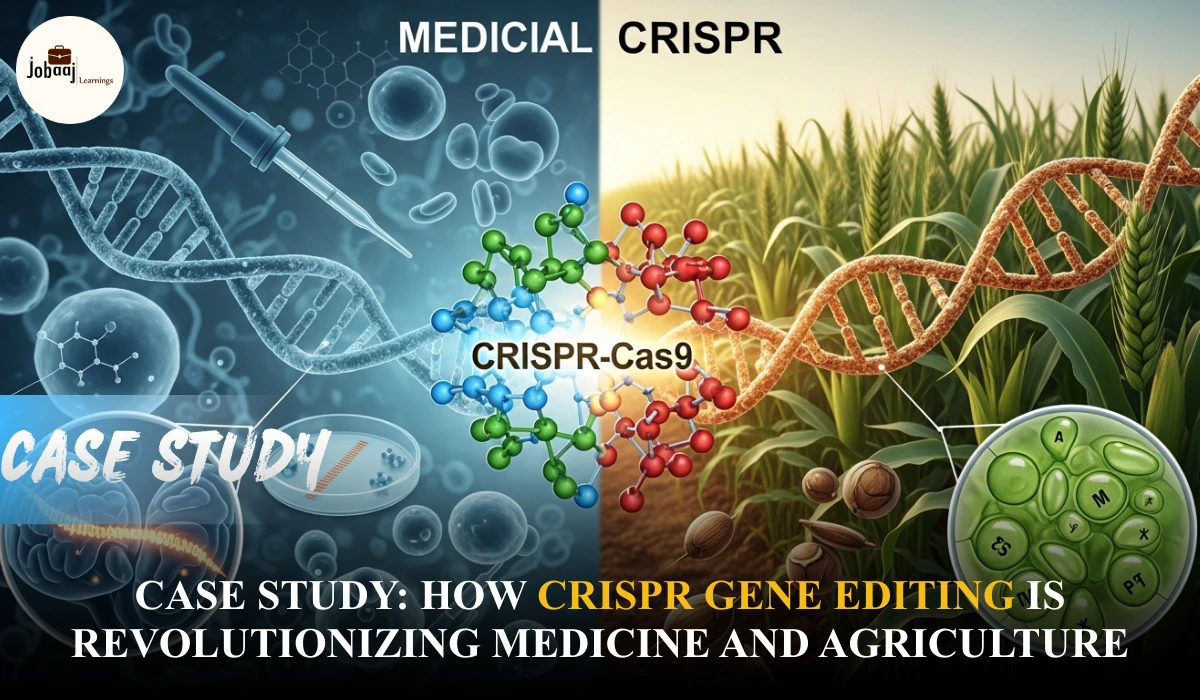
Imagine a world where we can not only understand but redefine our DNA. A world where genetic disorders could be cured by simply altering a few sequences in our genetic code. Sounds like science fiction, right? But this is exactly what CRISPR gene editing technology promises—the ability to make precise changes in DNA, potentially eliminating genetic diseases, enhancing crops, and even extending the human lifespan.
When CRISPR technology was first discovered, it quickly revolutionized the field of genetics. What started as a discovery in bacteria evolved into one of the most powerful tools in modern medicine and agriculture. This case study dives deep into the journey of CRISPR, its impact on science, its ethical implications, and the immense promise it holds for the future of humanity.
Background
CRISPR (Clustered Regularly Interspaced Short Palindromic Repeats) is a genetic technology that enables scientists to precisely edit the DNA of living organisms. It was first discovered in bacteria as part of their immune system. These bacteria used CRISPR to recognize and cut up viral DNA, allowing them to "remember" and defend against future attacks.
In 2012, scientists Jennifer Doudna and Emmanuelle Charpentier harnessed this natural system and repurposed it for gene editing, leading to the birth of CRISPR-Cas9 as a tool for genetic modifications. This breakthrough opened doors to revolutionary possibilities in fields such as medicine, agriculture, and biotechnology.
The introduction of CRISPR-Cas9 allowed for genetic engineering at an unprecedented scale—faster, cheaper, and more accurate than ever before. Researchers now had the ability to make targeted changes to DNA in living organisms with relative ease, making it a tool of immense potential for everything from curing diseases to enhancing food production.
Problem
Despite its potential, the use of CRISPR gene editing technology is not without its challenges:
-
Ethical Concerns: One of the most pressing issues with CRISPR is its ethical implications. Should humans be allowed to alter their DNA, potentially influencing the next generation? What about the possibility of designer babies or unintended genetic mutations that could have long-term consequences? The ethical debate around germline editing (altering DNA in eggs, sperm, or embryos) is fierce, with some arguing that it could lead to a world of genetic inequality or even discrimination.
-
Off-target effects: While CRISPR is highly precise, it is not perfect. There is a risk of off-target edits, where unintended parts of the genome are modified. These unintended changes could have harmful effects or lead to unforeseen health issues down the road.
-
Regulatory Hurdles: As with any new technology, CRISPR faces regulatory barriers. Ensuring that the technology is used responsibly and safely in medical treatments, especially in humans, is a massive undertaking. Governments and international organizations must agree on standardized protocols to regulate its usage.
Approach / Strategy
Over the years, researchers have developed multiple strategies to address the challenges posed by CRISPR technology:
-
Enhancing Precision: Early CRISPR techniques were sometimes prone to making off-target edits. However, ongoing research has led to the development of more refined versions of the technology, such as CRISPR-Cas12 and CRISPR-Cas13, which offer greater accuracy and specificity.
-
Ethical Guidelines: As the potential for gene editing in humans grows, so does the need for clear ethical guidelines. Researchers and bioethicists are continuously engaging in conversations about the responsible use of CRISPR technology, and regulatory bodies like the World Health Organization (WHO) have outlined frameworks to ensure ethical practices.
-
Improved Delivery Methods: One of the challenges with CRISPR is delivering the gene-editing tool into living cells. Researchers have developed several delivery methods, including viral vectors, nanoparticles, and direct injection techniques, to improve the efficiency and effectiveness of gene-editing treatments.
-
Focus on Clinical Trials: Clinical trials are a crucial step in translating CRISPR technology from the lab to real-world applications. Several clinical trials involving CRISPR are already underway to treat genetic disorders such as sickle cell anemia, cystic fibrosis, and muscular dystrophy.
Key Findings
The progress of CRISPR gene editing technology has revealed some game-changing results:
-
Curing Genetic Diseases: The most promising application of CRISPR lies in the potential to cure genetic diseases. Clinical trials for treating diseases like sickle cell anemia have shown great promise, with some patients experiencing remarkable improvements in their health after treatment.
-
Agricultural Advancements: CRISPR has revolutionized agriculture by allowing scientists to edit crops for greater resistance to disease, improved yield, and better nutritional content. This could lead to more sustainable farming practices and a solution to global food security challenges.
-
Cancer Treatment: CRISPR technology is also showing promise in cancer therapy. Researchers are exploring how to edit immune cells to better recognize and fight cancer cells, potentially leading to more effective treatments.
-
Gene Drives: CRISPR has been used to develop gene drives, which are techniques that can spread genetic modifications through wild populations. This could be used for pest control, eradicating disease-carrying insects like mosquitoes, or even eliminating invasive species threatening ecosystems.
Results / Impact
The impact of CRISPR gene editing technology has been profound:
-
Medical Breakthroughs: CRISPR has opened the door to curing genetic diseases that were once thought to be untreatable. It is being used to treat diseases like sickle cell anemia, thalassemia, and muscular dystrophy, potentially transforming the lives of thousands of patients.
-
Increased Agricultural Productivity: By allowing the modification of plant genes, CRISPR has helped create crops that are more resistant to disease, require less water, and are more nutritious. This has the potential to address food shortages and improve agricultural sustainability worldwide.
-
Future of Biotechnology: CRISPR has brought us one step closer to achieving personalized medicine, where treatments can be tailored to the genetic makeup of an individual. This is a major milestone in healthcare that could redefine how we approach disease treatment.
Lessons Learned
-
Ethics Matter: As promising as CRISPR is, ethical considerations must remain at the forefront. Striking a balance between technological innovation and the ethical use of such powerful tools is crucial for ensuring that CRISPR’s benefits are realized in a responsible way.
-
The Power of Precision: The success of CRISPR has demonstrated that with the right tools, gene editing can be achieved with unprecedented precision, leading to life-changing breakthroughs in medicine and agriculture.
-
Collaboration is Key: The rapid advancements in CRISPR technology have only been possible because of global collaboration among scientists, governments, and bioethicists. This collective effort has accelerated progress and ensured the responsible use of the technology.
Conclusion
CRISPR gene editing technology has the potential to transform the future of medicine, agriculture, and biotechnology. From curing genetic diseases to revolutionizing the way we approach crop production, CRISPR promises a future where we can rewrite the blueprint of life itself. However, it also raises complex ethical and regulatory challenges that need to be addressed to ensure its responsible and equitable use. As this technology continues to evolve, its full potential remains to be seen, but one thing is certain: CRISPR will play a pivotal role in shaping the future of science and medicine.
Don’t worry, you’re not alone. Data analysis might seem intimidating at first, but with the right guidance, it becomes an exciting and valuable skill to master.
Click the link below to join our program, where Rakshit Vig and Shiva Vashishth, industry experts, will teach you everything you need to know about Data and Business Analytics. Learn to turn complex data into actionable insights and never feel overwhelmed again!
Join our latest cohort NOW and unlock the world of data!
[Disclaimer: This case study is entirely hypothetical and unrelated to real-world situations. It's designed for educational purposes to illustrate theoretical concepts and potential scenarios within a given context. Any similarities to actual events or individuals are purely coincidental.]






