

 Categories

































































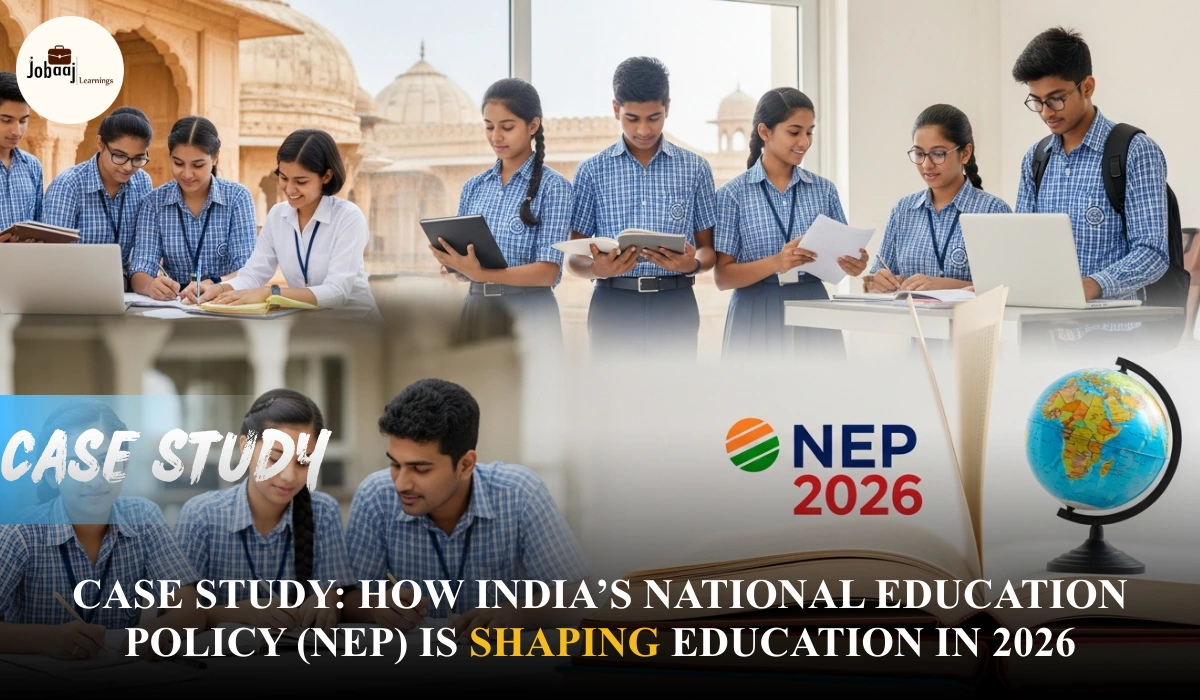
A student sitting in a classroom where every lesson is tailored to their unique learning pace. Instead of being bogged down by outdated textbooks or rigid exams, this student is actively engaging in their studies with personalized learning paths. They have access to vocational courses, practical lessons, and real-time feedback, all delivered in their mother tongue.
This is the vision behind India’s National Education Policy (NEP) 2020. A bold, sweeping reform aimed at creating a more inclusive, accessible, and holistic education system. Since its announcement, the NEP has sparked optimism and discussions across the country, hoping to transform the landscape of education in India by 2026. But how is this change happening? What challenges is it addressing, and what results are already being seen?
In this case study, we’ll break down the core elements of the NEP, explore the challenges it addresses, and analyze how its implementation is expected to shape the future of education in India.
Background
The NEP 2020 marks the first major overhaul of India’s education system in more than three decades. The policy aims to modernize India’s approach to education and bring it in line with global standards. It focuses on the development of students not just academically but also socially, emotionally, and practically.
The NEP aims to address long-standing issues:
-
Unequal access to quality education, especially in rural and underprivileged areas.
-
Theoretical and rigid curriculums that don’t cater to real-world applications.
-
A focus on exams instead of fostering creativity, problem-solving, and critical thinking.
-
Fragmented learning experiences, where students often don’t have the flexibility to explore subjects beyond the standard curriculum.
The policy envisions a future where education is more flexible, multidisciplinary, and inclusive, providing opportunities for every student to succeed regardless of their socio-economic background.
The Problem
Before the NEP, India’s education system was burdened by several key problems that limited student growth:
-
Rigid Curriculum Structure: Traditional curriculums were heavily focused on rote learning, leaving little room for creativity, critical thinking, or practical application of knowledge.
-
Access Inequality: Urban schools had advanced learning resources, but rural and marginalized areas often lacked the infrastructure and resources necessary to offer quality education.
-
High Dropout Rates: Many students dropped out at various stages of their education due to socio-economic pressures, lack of motivation, or the inability to relate to the curriculum.
-
Limited Higher Education Pathways: The higher education system was fragmented, offering limited cross-disciplinary courses, which made it difficult for students to explore non-traditional career paths.
These challenges led to an education system that wasn’t inclusive, flexible, or able to prepare students for the demands of the modern world.
Approach / Methodology
To understand how the NEP is shaping education in India, we took a deep dive into its components and impact:
-
Reviewing NEP 2020 guidelines and objectives to understand its long-term vision.
-
Conducting interviews with educators, policymakers, and students involved in the initial phases of implementation.
-
Analyzing case studies of schools and universities already integrating the NEP’s principles.
-
Examining student performance data to see how AI-powered tools, vocational training, and new learning frameworks have affected learning outcomes.
Our goal was to capture both the early successes and challenges of the policy and analyze its potential long-term impact on the Indian education system.
Key Findings
1.Focus on Holistic Education
One of the key changes introduced by the NEP is its focus on holistic learning. This goes beyond academic subjects, encouraging the development of the whole student. The policy encourages:
-
Critical thinking and problem-solving skills, enabling students to tackle real-world issues.
-
Physical education, arts, and vocational courses to give students a broader skill set.
-
Soft skills like communication, leadership, and empathy, which are crucial in today’s professional world.
By 2026, students will be evaluated on both academic and extracurricular achievements, helping to foster well-rounded individuals prepared for diverse challenges.
2.Early Childhood Care and Education (ECCE)
The NEP places significant importance on early childhood education, specifically targeting the age group of 3-6 years. Key initiatives include:
-
Universal access to quality early childhood care.
-
Pre-schooling as part of formal education, ensuring children have a solid foundation before entering primary school.
This focus on early education is essential for laying the groundwork for future learning. Research shows that early childhood care can have a lasting impact on a child’s academic success and lifelong learning.
3.Vocational Training and Skill Development
The NEP emphasizes integrating vocational training into mainstream education. By 2026, it aims to have at least 50% of students enrolled in higher education receiving training in vocational subjects. This shift aims to:
-
Close the skills gap by offering students practical, job-ready skills.
-
Provide multiple career pathways for students, beyond traditional academic routes.
Through this initiative, the policy strives to make students job-ready and better equipped for a rapidly evolving job market.
4.Integration of Technology
The rise of digital education tools is a cornerstone of the NEP. By 2026, the policy aims to ensure:
-
Digital infrastructure in every school, helping bridge the gap between urban and rural education.
-
Online learning platforms that combine synchronous and asynchronous learning, providing greater access to educational resources.
The integration of technology will not only make education more accessible but will also prepare students for the digital economy and the future of work.
5.Language and Multilingualism
A unique aspect of the NEP is its promotion of multilingualism. The policy encourages:
-
Teaching students in their mother tongue or regional language at the primary level.
-
Offering three languages during schooling, promoting linguistic diversity and helping students communicate across cultures.
In India, a multilingual approach can help students feel more connected to their learning, improve comprehension, and preserve cultural heritage.
Results
The early adoption of the NEP has led to several positive outcomes:
-
Increased enrollment in early childhood care and primary education, especially in rural areas.
-
Greater student engagement due to the inclusion of vocational training and real-world applications.
-
Improved teacher satisfaction due to innovative teaching methods and enhanced student outcomes.
-
Acceptance of digital learning, with more students using online resources and platforms.
Example: Pilot Program in Rural Rajasthan
In rural schools across Rajasthan, the NEP’s early childhood initiatives have led to:
-
Increased literacy rates among 3-6-year-olds.
-
Higher retention rates as children transition to primary school with a stronger academic foundation.
Challenges and Lessons Learned
Implementing the NEP has not been without its challenges:
-
Infrastructure limitations in rural areas, particularly around access to technology and high-speed internet.
-
Resistance to change from traditional educators and institutions.
-
Teacher training is essential to help educators adopt new teaching methods and frameworks.
Lessons learned include the need for gradual implementation, comprehensive training for teachers, and ensuring that digital infrastructure is developed alongside educational reforms.
Implications and Future Outlook
Looking ahead, the NEP will continue to have a profound impact on education in India. We can expect:
-
Increased flexibility in learning pathways, with more vocational and skill-based education.
-
Improved access to education for marginalized communities.
-
More inclusive and adaptive learning environments as technology and new pedagogies are integrated.
By 2026, the NEP will likely have transformed the Indian education system into a more inclusive, accessible, and future-ready ecosystem.
Conclusion
The National Education Policy (NEP) 2020 is poised to transform India’s education landscape. By focusing on personalized learning, vocational training, and inclusive education, the NEP is setting the foundation for a more dynamic, creative, and skill-oriented education system.
As it continues to unfold, the NEP will help students develop the critical skills they need to succeed in today’s world, ensuring that India’s education system becomes more inclusive, adaptive, and responsive to the needs of its diverse population.
Was that difficult?
Think being a Management Consultant is too hard?? Fear not.
Click on the link here to join our program where Shubham Agarwal, a professional management consultant, will teach you all about the exciting field of Management Consultancy and make sure simple case studies like these never scare you!
Join our latest cohort NOW!!
[Disclaimer: This case study is entirely hypothetical and unrelated to real-world situations. It's designed for educational purposes to illustrate theoretical concepts and potential scenarios within a given context. Any similarities to actual events or individuals are purely coincidental.]





