

 Categories










































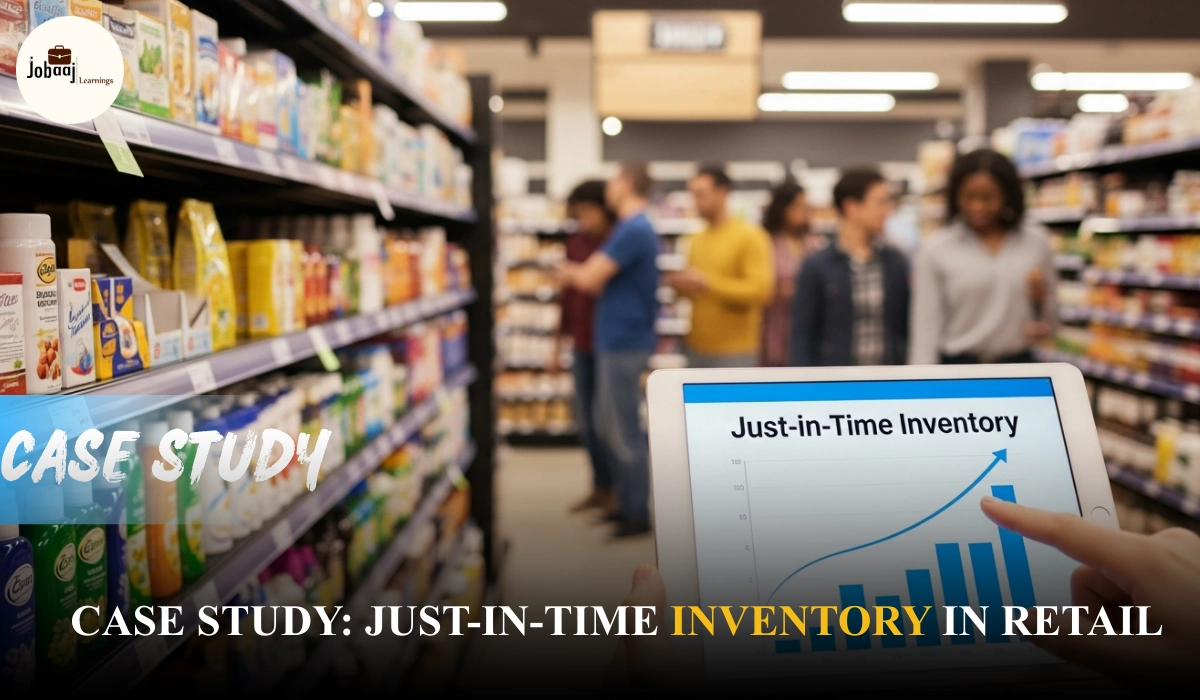
In retail, managing inventory effectively is a key to success. One of the most innovative and efficient methods employed by retail businesses is the Just-in-Time (JIT) inventory model. This strategy, which focuses on receiving goods only when needed in the production process or for sale, allows retailers to reduce excess stock and the associated carrying costs. This case study explores how Just-in-Time inventory is applied in retail and the outcomes of adopting this model.
Problem
For many retail businesses, inventory management can become a significant challenge. Companies often struggle with excess inventory, which ties up capital and incurs storage costs, or alternatively, they may experience stockouts, leading to lost sales. Retailers need to find a way to maintain an optimal inventory level—enough to meet customer demand without overstocking or understocking. The traditional methods of inventory management weren’t always sufficient in achieving this delicate balance.
Solution: Just-in-Time (JIT) Inventory System
The Just-in-Time inventory system is a solution that allows retailers to minimize stock levels while ensuring that products are available when needed. The key components of the JIT system include:
-
Precise Demand Forecasting: Retailers predict the exact demand for products based on historical data, customer trends, and market analysis. This allows businesses to only order what is needed.
-
Supplier Relationships: Retailers establish strong, reliable relationships with suppliers who can deliver products quickly when requested. This is crucial in JIT systems since the goal is to have goods arrive just in time for sale.
-
Efficient Logistics: The JIT model requires excellent logistics systems to handle the smooth flow of goods, as products are often shipped in smaller, more frequent quantities.
-
Technology Integration: Retailers use inventory management software to monitor and adjust stock levels, track real-time sales data, and trigger reorder points automatically when necessary.
Findings
Through the application of Just-in-Time inventory practices, retail businesses have observed several key benefits:
-
Reduced Inventory Holding Costs: By minimizing the amount of stock on hand, retailers can reduce warehousing costs and the capital tied up in unsold inventory.
-
Improved Cash Flow: With less money spent on excess inventory, retailers have more working capital available to invest in other areas of the business.
-
Increased Efficiency: By receiving products exactly when needed, retailers improve their overall supply chain efficiency and reduce waste, as goods are turned over more quickly.
-
Enhanced Customer Satisfaction: The JIT model helps retailers avoid stockouts, leading to more satisfied customers and fewer missed sales opportunities.
-
Less Risk of Obsolescence: Since goods are delivered when needed and sold more quickly, there is less risk of inventory becoming outdated or obsolete.
-
Flexibility in Product Range: Retailers can experiment with new product offerings without committing to large quantities, allowing for greater flexibility in product selection.
Challenges
While the JIT system offers several advantages, it also presents a few challenges:
-
Supplier Dependency: Retailers are heavily reliant on their suppliers' ability to deliver products on time. Any delays or disruptions in the supply chain can cause significant problems.
-
Demand Fluctuations: JIT systems depend on accurate demand forecasting. If there are sudden shifts in consumer demand that weren’t anticipated, retailers may face stockouts or missed sales.
-
Transportation Costs: Although inventory is minimized, frequent deliveries can lead to increased transportation costs. Retailers need to carefully assess their logistics costs to ensure JIT remains cost-effective.
-
Technology Investments: Implementing JIT requires sophisticated inventory management software and potentially upgrading existing IT infrastructure, which can be costly.
Results
The retail businesses that have adopted Just-in-Time inventory systems have witnessed significant improvements in their operations:
-
Cost Savings: Companies reduced their inventory holding costs and warehousing expenses by as much as 20-30%.
-
Optimized Stock Levels: Retailers saw a reduction in stockouts, leading to a higher level of product availability and fewer missed sales.
-
Better Supply Chain Management: The JIT system has streamlined supply chain operations, improving overall efficiency and reducing waste.
-
Customer Satisfaction: As a result of better inventory management, customer satisfaction levels increased, leading to stronger customer loyalty and repeat business.
Lessons Learned
-
Strong Supplier Relationships Are Key: Successful implementation of JIT depends on having suppliers who can consistently meet demand with quick turnaround times.
-
Accurate Forecasting Is Crucial: Retailers must invest in high-quality demand forecasting tools to ensure the system runs smoothly and accurately predicts sales.
-
Technology Integration Can Streamline Operations: Proper integration of inventory management software is essential to track stock levels in real-time and trigger timely reorders.
-
Flexibility in the Face of Demand Fluctuations: Retailers should be prepared to make quick adjustments to their inventory levels if demand changes unexpectedly, ensuring that the JIT model remains effective.
Approach & Strategy
To successfully implement a Just-in-Time system, retailers need to:
-
Build Strong Supplier Partnerships: Establish clear communication with suppliers and work closely to ensure they understand the retailer’s needs.
-
Adopt Advanced Technology Solutions: Implement inventory management systems that track inventory in real-time and automatically trigger reorder alerts.
-
Invest in Forecasting Tools: Use data-driven insights to predict consumer demand accurately, taking into account market trends, past sales, and seasonality.
-
Focus on Lean Operations: Focus on streamlining supply chain processes, eliminating waste, and improving efficiency across the entire operation.
Innovations
As retail businesses continue to refine their Just-in-Time inventory systems, several innovations have emerged:
-
Automated Replenishment: Retailers are using machine learning and AI to predict demand more accurately and automate the replenishment process, ensuring stock levels are always optimized.
-
Blockchain for Supply Chain Transparency: Blockchain technology is being integrated into JIT systems to improve transparency and traceability across the supply chain, ensuring that products arrive exactly when needed without delays.
-
Cloud-Based Inventory Management: Many retailers are moving their inventory management systems to the cloud, enabling real-time visibility and better control over stock levels.
Conclusion
Just-in-Time inventory has proven to be a highly effective strategy for retailers seeking to reduce costs, improve operational efficiency, and enhance customer satisfaction. While there are challenges, such as dependence on reliable suppliers and the need for accurate demand forecasting, the benefits of implementing JIT systems far outweigh the potential risks. By adopting JIT and focusing on continuous improvement, retailers can remain competitive in the fast-paced retail environment.
Was that difficult?
Think being a Management Consultant is too hard?? Fear not.
Click on the link here to join our program where Shubham Agarwal, a professional management consultant, will teach you all about the exciting field of Management Consultancy and make sure simple case studies like these never scare you!
Join our latest cohort NOW!!
[Disclaimer: This case study is entirely hypothetical and unrelated to real-world situations. It's designed for educational purposes to illustrate theoretical concepts and potential scenarios within a given context. Any similarities to actual events or individuals are purely coincidental.]





