

 Categories








































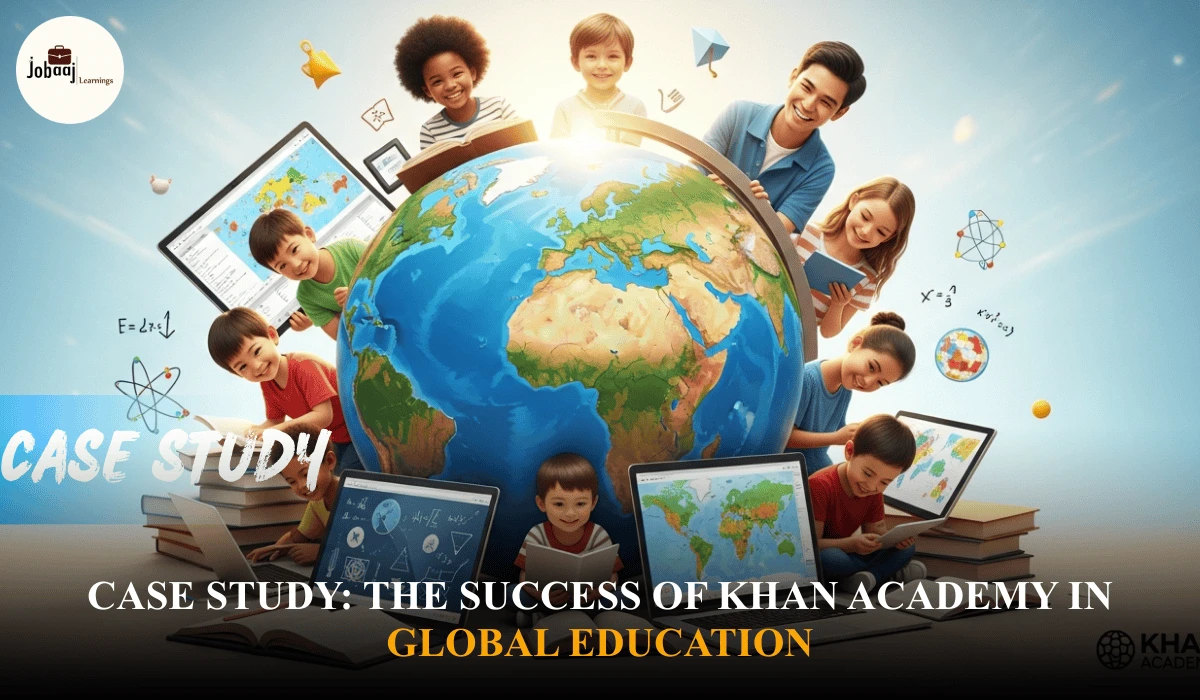
In 2006, a former hedge fund analyst named Sal Khan started recording educational videos to help his cousin with math. Little did he know that this simple act of helping someone would turn into one of the most influential educational platforms in the world Khan Academy. What started as a humble, self-initiated tutoring project has transformed into a global movement, impacting millions of students, teachers, and learners worldwide. The rise of Khan Academy isn’t just a success story it’s a revolution in how we approach learning in the digital age.
This case study delves into the factors behind the success of Khan Academy and its immense impact on global education. We will explore the challenges faced by traditional education systems, how Khan Academy addressed them, and the results of its innovations in the classroom.
Background
Khan Academy was founded in 2008 with a mission to provide a free, world-class education for anyone, anywhere. Initially, it was a series of YouTube videos explaining math concepts. Fast forward to today, and Khan Academy has expanded its scope to include K-12 subjects, college prep, and even personal finance and art history.
The platform’s vision is rooted in making education accessible and affordable, with a focus on creating personalized learning experiences for students. Khan’s approach uses technology to fill the gaps in traditional education, with tools that allow students to learn at their own pace, whenever they need.
Problem
Despite the benefits of traditional education, many students still face significant challenges:
-
Access to quality education: Students in rural areas or underprivileged communities lack access to quality teaching resources and tutors.
-
Pacing and standardization: In traditional classrooms, all students are expected to learn at the same pace, which can leave some behind or hold others back.
-
Teacher shortages: In some regions, there is a shortage of teachers, especially in specialized subjects, which makes it difficult for students to receive adequate instruction.
-
High cost of education: Not everyone can afford private tutors or high-quality learning materials, leading to inequality in educational opportunities.
These issues prompted the need for a scalable, affordable, and accessible solution something that Khan Academy sought to provide.
Solution
Khan Academy addressed these problems by leveraging the power of technology to create a platform that is both scalable and personalized. Here’s how:
1. Free and Accessible Learning
By offering free courses, Khan Academy broke down the financial barriers that often prevent students from accessing quality education. All of its content, including video lessons and practice exercises, is available at no cost, ensuring that anyone with an internet connection can learn.
2. Self-Paced Learning
One of the biggest challenges in traditional education is that it forces all students to progress at the same pace. With Khan Academy, learners can go through lessons at their own speed. They can replay videos as many times as they need, making it easier to understand complex topics.
3. Personalized Feedback
Khan Academy provides real-time progress tracking and personalized feedback for each student. The platform tracks performance, suggests practice exercises, and offers immediate feedback, helping students focus on areas where they need the most improvement.
4. A Wide Range of Subjects
Initially focusing on math, Khan Academy expanded its offerings to include science, history, economics, and even advanced subjects like college-level calculus and art history. The comprehensive nature of the platform allows it to serve students across a wide spectrum of learning needs.
5. Teacher Support
Khan Academy also supports teachers by providing them with tools to track student progress and assign personalized exercises. Teachers can monitor how each student is doing and intervene when necessary, making it easier to provide one-on-one support in a classroom setting.
Findings
As Khan Academy scaled globally, the results began to speak for themselves:
1. Widespread Adoption
Khan Academy’s growth has been phenomenal. The platform has reached millions of students worldwide, with over 100 million registered users as of 2021. It’s used in schools across the globe and by individual learners who seek extra help or a different learning experience.
2. Impact on Student Learning
Students using Khan Academy show improved academic performance. According to several studies and testimonials, students who engage with the platform perform better in standardized tests and class assessments.
For example, a study in Los Angeles found that students who used Khan Academy for supplementary learning saw an improvement of 15-20% in their math scores over one academic year.
3. Global Reach
Khan Academy is not just a tool for students in developed countries. It has been used in remote villages in India, schools in Africa, and disadvantaged areas in the U.S. In these places, where access to quality education is often limited, Khan Academy has opened doors to knowledge that were once unreachable.
Results
By 2026, Khan Academy’s impact on education can be measured through several key results:
|
Impact Factor |
Before Khan Academy |
After Khan Academy |
|
Global Reach |
Limited |
100 million+ users |
|
Student Engagement |
Low |
High, interactive learning |
|
Access to Quality Education |
Limited in rural/remote areas |
Universal, free education available globally |
|
Performance Improvement |
Inconsistent |
15-20% improvement in math performance |
|
Cost of Education |
Expensive (private tutors) |
Free and accessible |
Khan Academy has proven that digital learning platforms can overcome geographical and financial barriers, making high-quality education accessible to anyone with an internet connection.
Challenges Faced
However, Khan Academy’s journey wasn’t without its challenges:
-
Digital Divide: Not all students have reliable internet access or devices, which limits the reach of Khan Academy in certain regions.
-
Skepticism from Traditional Educators: Initially, many teachers and educational institutions were skeptical about the effectiveness of online learning platforms, especially in comparison to traditional classroom settings.
-
Content Adaptation: Some subjects and learning levels are more difficult to teach through video alone, requiring the platform to continuously adapt and innovate to meet evolving educational needs.
Despite these challenges, Khan Academy has adapted, continued to innovate, and made significant strides toward democratizing education.
Conclusion
The success of Khan Academy in global education shows the transformative power of technology when used effectively in education. By providing free, high-quality educational content to millions of learners around the world, Khan Academy has made learning more personalized, accessible, and engaging.
In the coming years, we can expect to see even greater advancements as Khan Academy continues to expand its offerings and reach, impacting future generations of learners. The platform stands as a testament to how technology and innovation can break down barriers and create opportunities for students everywhere.
Was that tough?
Think you won't make it in the field of Digital Marketing?? Don't worry, we got you!
Click Here to join hundreds of other aspiring individuals who aim to become Performance Marketers and help mega-corporations run their next successful marketing campaign!
Join our latest cohort NOW!!






