

 Categories








































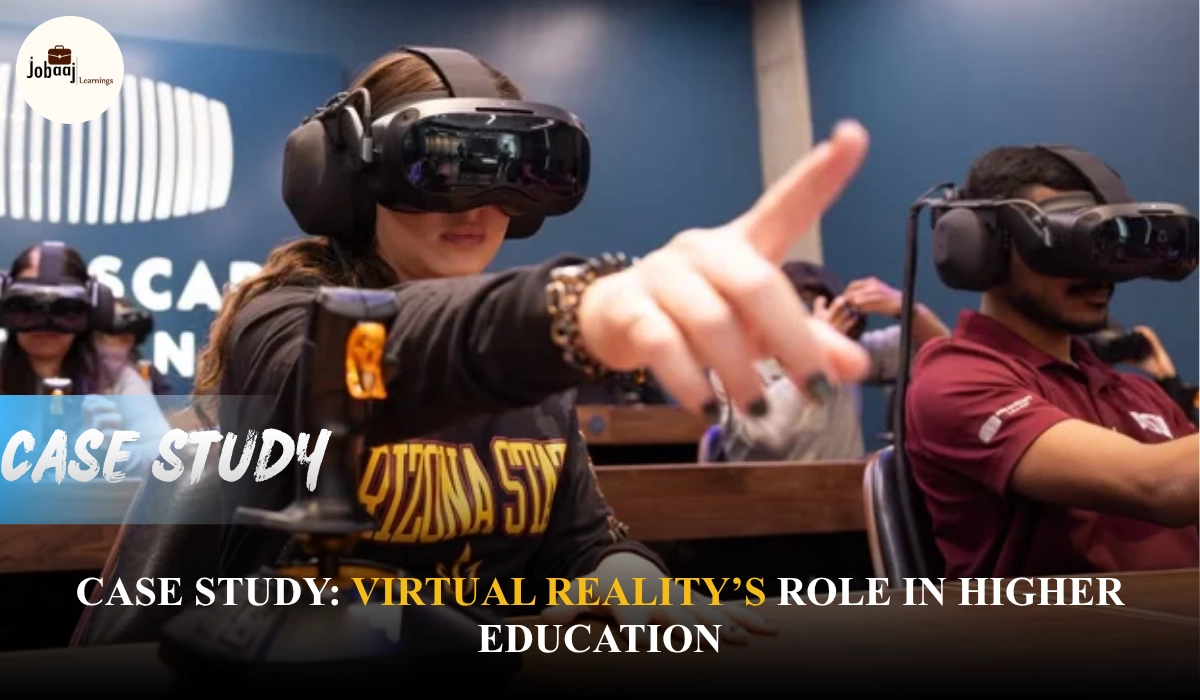
In recent years, Virtual Reality (VR) has transitioned from a futuristic concept into a viable tool in education. From immersive classrooms to hands-on simulations, VR is reshaping the way students interact with their learning environment. As educational institutions look for ways to innovate and enhance student engagement, Virtual Reality offers a promising solution. This case study explores the role of VR in higher education, highlighting how it’s used to improve learning outcomes, engage students in new ways, and bridge the gap between theoretical knowledge and real-world application.
The Problem
Traditional teaching methods, while effective, often fall short when it comes to engaging students, especially in complex subjects that require experiential learning. These methods include lectures, textbooks, and standard classroom exercises, which might not provide students with a full understanding of how theoretical concepts apply to real-life situations. Some key challenges include:
- Lack of engagement: Traditional teaching can become monotonous, leading to a decline in student attention and interest.
- Limited hands-on experience: Some subjects, especially in fields like engineering, medicine, and architecture, are difficult to understand without practical application.
- Geographical barriers: Instructors and students are often limited by geographic locations, which can restrict access to specific resources or expertise.
To address these issues, educational institutions have started turning to technology, with Virtual Reality emerging as a game-changing tool.
Strategy
Several higher education institutions have started integrating VR into their curriculum, creating immersive and interactive experiences. This strategy not only enhances student engagement but also bridges the gap between theoretical knowledge and practical experience. Below are key strategies adopted by educational institutions:
1. Creating Immersive Learning Environments
By using VR, universities can provide students with a fully immersive learning experience. Virtual simulations replicate real-world scenarios, allowing students to interact with the environment and gain hands-on experience without the need for physical resources or a classroom setting.
For instance:
- Medical students use VR to practice surgeries in a simulated environment, honing their skills without the risk associated with real-life procedures.
- Engineering students use VR to design and test prototypes before physically building them.
2. Simulating Real-World Scenarios
VR allows students to explore scenarios that are difficult, if not impossible, to replicate in a traditional classroom. In fields like medicine, astronomy, and environmental science, students can engage in virtual field trips or surgery simulations, experiencing situations they might not otherwise have access to during their studies.
For example:
- Astronomy students can take virtual trips through the universe, exploring planets, stars, and galaxies that would be hard to visualize on a flat screen.
- Environmental science students can use VR to explore ecosystems, allowing them to study diverse ecosystems, whether it’s a tropical rainforest or an underwater coral reef.
3. Facilitating Collaborative Learning
Another significant advantage of VR in education is the ability to foster collaboration in a virtual setting. Students from different geographical locations can come together in a virtual classroom, interact with each other, and engage in group activities. This eliminates the barriers of location and brings students together for collaborative work, regardless of physical distance.
For example:
- Group projects can be done in a VR environment where students can manipulate objects, discuss ideas, and even conduct virtual lab experiments.
4. Personalized Learning Experiences
With VR, learning can be customized to suit individual student needs. Some VR programs allow students to progress at their own pace, revisit challenging concepts, and receive personalized feedback based on their performance in the virtual environment. This personalized approach ensures that students get the most out of their learning experience.
For example:
- A student struggling with a particular topic in history can use VR to explore historical events in greater detail, revisiting scenarios from different perspectives and at their own pace.
Findings
After implementing VR-based learning systems, many institutions have seen impressive results in terms of both student engagement and academic performance.
Increased Student Engagement
- Interactive Learning: Students reported feeling more engaged when using VR tools, with hands-on interaction leading to higher retention rates. This is especially true for subjects that are difficult to understand purely through textbooks.
- Gamification: By incorporating elements of gamification, students actively participate in their learning process, increasing motivation and interest.
Enhanced Learning Outcomes
- Improved Skills and Knowledge Retention: VR’s immersive environment allows students to retain information better as they directly interact with simulations and scenarios. This has been especially effective in subjects like medicine, engineering, and architecture, where hands-on experience is crucial.
- Real-World Experience: Students are able to practice skills in a virtual environment, ensuring that they are better prepared for real-world challenges. Medical students, for example, feel more confident after practicing surgeries in VR rather than relying solely on theoretical knowledge.
Broader Access to Education
- Geographically Accessible: Students who previously may not have had access to certain resources, teachers, or universities can now experience world-class education through VR technology, breaking down geographical barriers.
- Diverse Course Offerings: Through VR, universities can offer specialized courses in subjects that require practical demonstrations. This allows learners to gain practical knowledge without attending physical classes.
Results
The implementation of Virtual Reality in higher education has led to tangible improvements in both academic performance and student satisfaction.
- Universities have seen increased enrollment rates for VR-integrated courses.
- Students report better understanding of complex subjects and improved job readiness after completing VR-based modules.
- Schools and colleges that implemented VR programs have seen higher retention rates, as students engage better with immersive technology.
Key Learnings from Virtual Reality’s Role in Education
- Immersion Increases Retention: Students retain complex information better when it’s experienced firsthand. Immersive VR technology accelerates this process, enhancing long-term memory.
- Interactive Experiences Are Essential: Passive learning no longer engages students in the same way. Interactive VR simulations allow them to practice their skills, ensuring better preparedness for real-life situations.
- Flexible and Scalable Learning: Virtual learning environments enable institutions to cater to a larger number of students without compromising the quality of education.
- Breaking Geographic Barriers: VR has allowed learners from different corners of the world to access high-quality, engaging educational content.
- Enhanced Collaboration: Virtual spaces allow students to collaborate from any location, improving teamwork and communication, essential for the modern workplace.
Conclusion
Virtual Reality has taken education to new heights, particularly in higher education, where practical learning and student engagement are critical. As educational institutions continue to adopt VR, we will likely see a transformation in how students learn, interact with content, and prepare for their future careers.
The growth of VR in education will not only make learning more immersive and engaging but also provide students with hands-on experiences that were once limited to physical classrooms. For institutions and students alike, VR is no longer a futuristic tool it’s the key to unlocking new ways of learning, understanding, and connecting.
Don’t worry, you’re not alone. Data analysis might seem intimidating at first, but with the right guidance, it becomes an exciting and valuable skill to master.
Click the link below to join our program, where Rakshit Vig and Shiva Vashishth, industry experts, will teach you everything you need to know about Data and Business Analytics. Learn to turn complex data into actionable insights and never feel overwhelmed again!
Join our latest cohort NOW and unlock the world of data!
[Disclaimer: This case study is entirely hypothetical and unrelated to real-world situations. It's designed for educational purposes to illustrate theoretical concepts and potential scenarios within a given context. Any similarities to actual events or individuals are purely coincidental.]






