

 Categories








































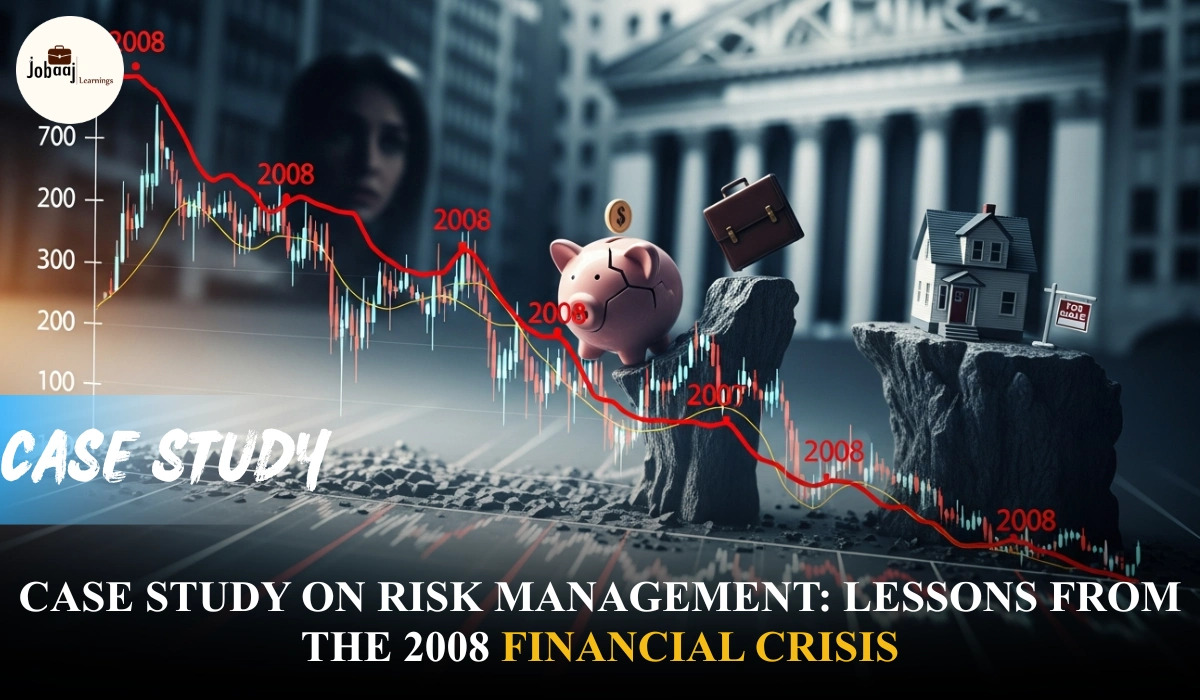
Imagine you're sitting in a comfortable office, with the market humming along smoothly, businesses thriving, and everything seeming perfect. Then, out of nowhere, a small glitch in the system sends shockwaves through the entire economy. The financial world collapses, banks go under, and businesses close their doors. This was the reality in 2008 when the global financial crisis hit. It was a time when even the most trusted institutions found themselves at the edge of ruin.
In the aftermath, people from all walks of life were left asking, "What went wrong?" But for many who survived the crash, there was a silver lining — it brought the world’s attention back to risk management. How could these colossal failures have been avoided? And more importantly, what lessons could be learned to prevent another crisis like this one from happening?
In this case study, we’ll break down the lessons learned from the 2008 financial crisis, examine how poor risk management contributed to it, and explore how businesses today can use these lessons to not just survive but thrive.
The Problem
It all started with what seemed like harmless risks. In the years leading up to 2008, banks and financial institutions began taking on more risk than ever before. Subprime mortgages, which were offered to borrowers with poor credit histories, were bundled into mortgage-backed securities (MBS). These MBS were then sold to investors, promising high returns. On the surface, everything looked fine. Housing prices were rising, demand was high, and profits were soaring.
But behind the shiny facade, a few problems began to unfold. Many financial institutions had become over-leveraged, relying heavily on borrowed money to finance these risky investments. Risk models that banks were using at the time assumed that housing prices would keep rising — forever. They didn’t factor in the possibility that house prices could fall, or that many borrowers wouldn’t be able to repay their loans.
And when the housing bubble finally burst, it didn’t just pop; it exploded. The value of those MBS plummeted, and the effects rippled through the entire financial system. Banks couldn’t recover their investments, and the credit market froze. The results were catastrophic — Lehman Brothers, one of the largest investment banks, filed for bankruptcy, while others like AIG and Bear Stearns required government bailouts.
The financial crisis wasn’t just an economic meltdown. It was a failure of risk management on a massive scale. Institutions relied on faulty assumptions, ignored warning signs, and failed to prepare for the worst-case scenarios. This lack of understanding and foresight resulted in widespread damage, not just for financial institutions, but for people’s jobs, savings, and livelihoods.
Key Findings
As we look back, there are several key findings that explain how risk management failed and why it contributed to such a disastrous outcome:
1. Underestimation of Risk and Overconfidence in Assumptions
Many banks and financial institutions were overly confident in their models. They assumed that the housing market would keep growing and that risks were spread out. In reality, these assumptions were based on historical data that didn’t account for a financial collapse. Institutions ignored the possibility of a systemic collapse, underestimating the risks that come with interconnected financial systems.
2. A Lack of Effective Stress Testing
Risk models in place at the time focused on typical, normal market conditions. They didn’t take into account what could happen in extreme market situations — scenarios where everything goes wrong at once. As a result, many financial firms were caught off guard when the market collapsed. The risk management system failed to account for the possibility of a global financial crisis.
3. Inadequate Oversight and Risk Governance
In many institutions, risk management was treated as a formality. The focus was on revenue generation, with little attention paid to assessing and managing long-term risk. Senior leadership often delegated risk management to junior teams, creating gaps in oversight. By the time the risks became clear, it was too late.
4. Liquidity Risk Was Ignored
Many financial institutions were relying on short-term borrowing to finance long-term investments. When trust broke down and credit dried up, they couldn’t access the funds they needed to stay afloat. This liquidity risk was a major contributor to the crisis. Institutions did not have enough cash reserves to handle the financial strain when the crisis hit.
5. Lack of Transparency and Accountability
One of the biggest issues revealed by the crisis was the lack of transparency in financial products and investments. Many investors had no idea what they were actually investing in. As the value of mortgage-backed securities collapsed, so did the trust in financial institutions, creating an even deeper crisis of confidence.
Results and Consequences
The consequences of poor risk management were felt far beyond Wall Street. The global economy suffered a deep recession, and millions of people lost their jobs, homes, and savings. The effects rippled through the world, impacting businesses, governments, and households alike.
Here are some of the key results of the crisis:
-
Global recession: Economies across the world shrank as businesses cut costs, investment stalled, and consumer confidence plummeted.
-
Unemployment: Millions lost their jobs, leading to a rise in poverty and financial instability for families.
-
Bailouts: Governments around the world had to step in with bailouts to save major banks and financial institutions, costing taxpayers billions of dollars.
-
Loss of trust: The crisis shattered public confidence in the financial system, which took years to rebuild.
Response and Reforms
In the aftermath of the crisis, governments and regulatory bodies took immediate action to prevent such a disaster from happening again. Here are some of the major reforms:
1. Stricter Capital and Liquidity Requirements
The introduction of Basel III guidelines required banks to hold more capital in reserve and to maintain higher liquidity ratios. This ensures that banks have enough resources to weather financial storms.
2. Enhanced Stress Testing
Regulators now require financial institutions to perform regular stress tests, simulating extreme market conditions to evaluate how they would fare in a crisis.
3. More Robust Risk Management Frameworks
Banks and financial institutions were forced to overhaul their risk management processes. Risk is no longer just a back-office concern; it’s a key part of corporate strategy and is managed at the highest levels.
4. Improved Transparency and Accountability
Financial institutions were mandated to improve transparency in their products, making it easier for investors to understand the risks involved. There’s also been a push for clearer and more comprehensive financial disclosures.
5. Regulatory Oversight
Governments and regulators around the world introduced new laws to enhance oversight and ensure that banks and financial institutions are held accountable for their actions.
Lessons
The 2008 financial crisis taught us some valuable lessons about risk management:
-
Be Realistic About Risk: Don’t just focus on positive scenarios. Always plan for worst-case situations, and make sure your risk models account for extreme events.
-
Diversification is Key: Don’t put all your eggs in one basket. Diversify your investments and risk exposure to avoid systemic collapse.
-
Transparency Builds Trust: Be clear about the risks involved in any investment. Transparency reduces uncertainty and helps build trust.
-
Governance Matters: Risk management should be embedded into the core of your business, not left to the back-office teams. Top management should always be involved in risk discussions.
-
Liquidity is Crucial: Ensure your organization has enough liquidity to weather financial disruptions, and don’t rely on borrowed money to fund long-term investments.
Conclusion
The 2008 financial crisis was a wake-up call. It reminded us that risk is not just a financial concept; it’s a fundamental part of how businesses and economies function. By learning from the mistakes of the past, organizations today can build stronger, more resilient risk management frameworks that protect them — and the people who depend on them — from future crises.
Risk management is no longer a "nice-to-have." It’s an essential practice that every business, big or small, must take seriously. By recognizing the lessons of 2008 and implementing proactive, holistic risk strategies, organizations can better navigate the complexities of today’s interconnected, global economy.
Were you able to solve it?
Think you can make it as an Investment Banker? No??
No worries. Click Here to join thousands of other aspiring individuals, students to working professionals, to learn from investment bankers who have been in the industry for almost 10 years! Learn industry-relevant skills and create flawless projects to become an Investment Banker on Wall Street!!
Join our latest cohort NOW!!
[Disclaimer: This case study is entirely hypothetical and unrelated to real-world situations. It's designed for educational purposes to illustrate theoretical concepts and potential scenarios within a given context. Any similarities to actual events or individuals are purely coincidental.]






