

 Categories








































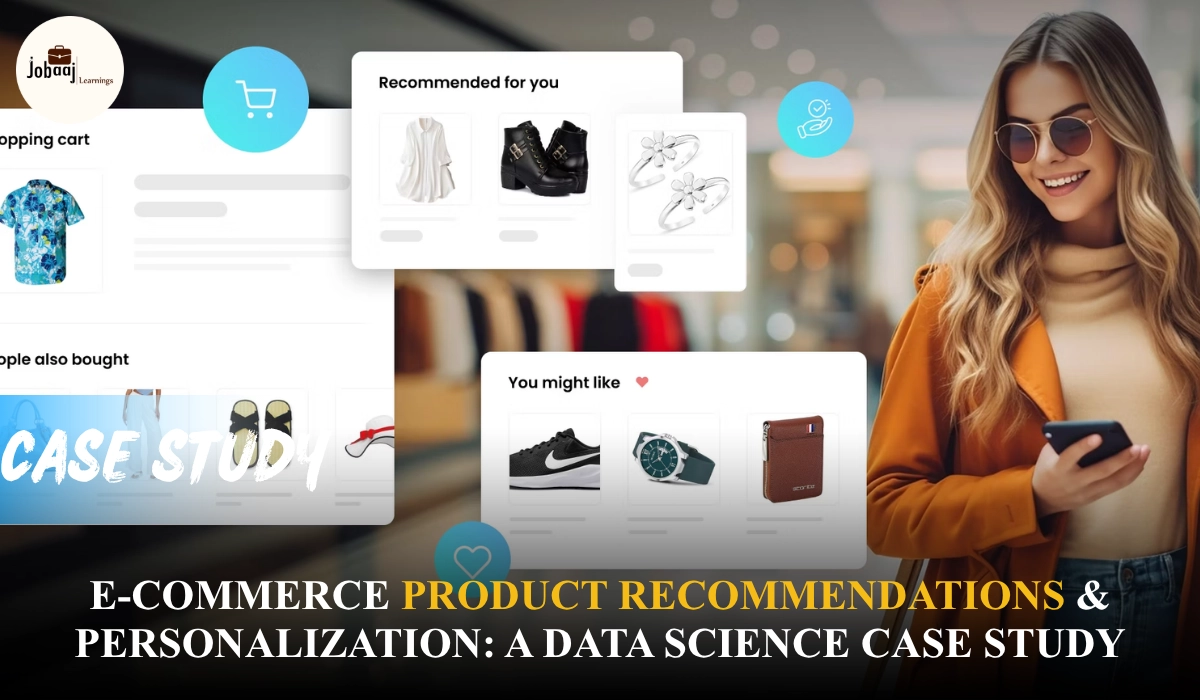
In today’s fast-paced world of e-commerce, providing a personalized shopping experience is no longer just a luxury; it's a necessity. Online shoppers are bombarded with countless options, and many e-commerce platforms struggle to offer relevant product suggestions that genuinely resonate with customers. The challenge for retailers is to understand user preferences, behavior, and needs in real-time, so they can present the right products at the right time.
Product recommendation systems are a powerful tool in achieving this goal. By analyzing a customer’s past behavior, preferences, and even the browsing history, these systems can suggest products that a customer is most likely to purchase, improving conversion rates, increasing average order values, and enhancing the overall shopping experience. This case study explores how an e-commerce platform, let's call it “ShopSmart,” utilized data science to develop a personalized recommendation engine, boosting both customer satisfaction and business performance.
Business Context: Understanding ShopSmart’s Challenge
ShopSmart was an established e-commerce retailer with a vast catalog of products ranging from electronics to clothing. Despite having a steady flow of visitors, ShopSmart faced several challenges:
-
High cart abandonment rates
-
Lower-than-expected repeat purchases
-
A lack of targeted product suggestions that could guide customers toward relevant products
ShopSmart’s leadership understood that these challenges weren’t just about poor marketing. Their website had traffic, their products were well-priced, but the experience felt disconnected. When customers visited, they weren’t shown personalized product recommendations that could turn browsing into buying.
ShopSmart knew that if they could leverage data science to understand customer behavior and create personalized shopping experiences, they could turn these struggles into growth opportunities.
Objectives: What ShopSmart Wanted to Achieve
The goal was clear: to increase customer satisfaction, drive sales, and improve retention through better product recommendations. ShopSmart wanted to:
-
Increase conversion rates by recommending relevant products, making it easier for customers to find what they want.
-
Boost average order value (AOV) through personalized upselling and cross-selling suggestions.
-
Enhance the customer experience by offering a shopping journey that feels more personalized and less generic.
-
Drive customer loyalty with recommendations that feel relevant, timely, and custom-tailored to their individual needs.
To do this, ShopSmart turned to their wealth of data — user browsing behavior, past purchase history, product metadata, and interaction data — to feed into their new personalized recommendation engine.
Data Collection & Preparation: Laying the Foundation
The team knew that without the right data, even the most sophisticated algorithms wouldn’t work. ShopSmart’s first step was to gather and clean their data. This meant unifying user information (location, device used, account status), transactional data (items purchased, purchase time, payment method), and interaction history (viewed products, cart additions, wishlists).
Data cleaning and preparation involved several key actions:
-
Removing duplicate records
-
Filling in missing data points where possible
-
Creating clear categories for user behavior (new users vs. returning users, first-time buyers vs. loyal customers)
-
Structuring product metadata (category, brand, color, price) to make sure the recommendation engine could identify similarities between products
-
Handling the cold-start problem, where new users or new products had little data to start with. The team decided on a hybrid approach to recommend trending or popular items in such cases.
With clean and structured data, ShopSmart could build a reliable recommendation engine capable of making relevant suggestions in real-time.
Methodology: Choosing the Right Tools for the Job
The team decided to use a hybrid recommendation system combining collaborative filtering and content-based filtering. Both methods would work together to deliver highly relevant recommendations.
-
Collaborative Filtering: This technique is based on the idea that users who share similar preferences will like similar products. If a customer bought item X and item Y, the engine assumes that someone who liked X will also like Y.
-
Content-Based Filtering: This approach looks at the product attributes (e.g., color, category, price) and matches them with a user’s past preferences to suggest similar items.
-
A fallback strategy for new users (cold-start problems) involved using trending products or best-sellers.
To optimize the real-time aspect of the system, the team implemented a fast data pipeline that delivered personalized recommendations almost instantly as a customer browsed. If you were shopping for a phone case, for example, the engine would suggest complementary products like a screen protector or wireless charger, based on your past behavior and the most popular items purchased with similar products.
Findings: Understanding Customer Behavior and Improving Engagement
When the recommendation engine was launched, the team spent a lot of time observing how users interacted with the new features. What they found was illuminating:
-
Users were more likely to make a purchase when they saw a personalized recommendation. In fact, those who engaged with recommendations were 40% more likely to convert.
-
The cross-sell and upsell opportunities, such as recommending matching accessories or higher-end versions of a product, led to a 15% increase in average order value.
-
The recommendation engine also helped reduce cart abandonment. By recommending products based on the user’s recent behavior, customers felt more engaged and were less likely to abandon their cart.
Another interesting insight was that new users who hadn’t built up any behavioral data yet still responded well to trending and best-seller recommendations, validating the importance of having a fallback strategy in place.
Results: The Impact of Personalization on ShopSmart’s Business
Within six months of implementing the product recommendation system, ShopSmart saw remarkable improvements across key metrics:
-
Conversion rates increased by 20% for customers who interacted with personalized recommendations.
-
Average order value rose by 18%, thanks to upselling and cross-selling opportunities.
-
Customer retention improved by 12% as users felt more engaged with the shopping experience and came back for repeat purchases.
-
Revenue from recommendations alone accounted for 25% of total sales, showing the true value of personalization.
Beyond the numbers, customers started to appreciate the personal touch. Many users reported feeling like the platform understood their needs and preferences, which built trust and kept them returning for more.
Challenges: Overcoming Data and Technological Hurdles
Though the implementation was largely successful, there were challenges along the way:
-
Cold-start problem: New users and products often didn’t have enough data for personalized recommendations. ShopSmart solved this by using a hybrid approach (best-sellers for new users, trending products for new items).
-
Scalability: As ShopSmart’s catalog grew, the system needed to be optimized to handle millions of products and hundreds of thousands of daily interactions without compromising speed. They achieved this by fine-tuning their data pipeline and using faster recommendation algorithms.
-
User Privacy Concerns: With growing concerns around data privacy, ShopSmart made sure to be transparent with users about what data was being collected and how it was used. Users were also given options to control their data-sharing preferences.
Best Practices for Data Scientists in E-commerce Recommendations
For data scientists working on recommendation systems in e-commerce, this case study shows that success lies in understanding both the technical side (data cleaning, algorithm selection, system optimization) and the human side (user experience, customer trust, personalization). Here are a few key takeaways:
-
Start with quality data. Clean, structured, and enriched data forms the foundation of accurate recommendations.
-
Use hybrid models for a well-rounded recommendation system that handles both cold-start problems and established users.
-
Test frequently. A/B test different recommendation algorithms to see what works best for your users.
-
Balance personalization with discovery. Too much personalization can narrow down choices and limit exploration.
-
Make real-time recommendations a priority. Instant suggestions lead to more engaging and seamless user experiences.
Conclusion
The journey of implementing personalized product recommendations at ShopSmart illustrates the profound impact data science can have on e-commerce. By understanding customer preferences, leveraging the right data, and building a fast, efficient recommendation engine, ShopSmart turned simple browsing into a highly personalized experience—boosting sales, improving customer loyalty, and ultimately creating a more engaging online shopping journey.
For data scientists, the real value lies not just in the models, but in humanizing the experience. Building systems that understand, anticipate, and delight users is where true innovation happens. This case study shows that personalized recommendations are more than just a tool; they’re a powerful way to connect with customers and make them feel truly understood.
Don’t worry, you’re not alone. Data analysis might seem intimidating at first, but with the right guidance, it becomes an exciting and valuable skill to master.
Click the link below to join our program, where Rakshit Vig and Shiva Vashishth, industry experts, will teach you everything you need to know about Data and Business Analytics. Learn to turn complex data into actionable insights and never feel overwhelmed again!
Join our latest cohort NOW and unlock the world of data!
[Disclaimer: This case study is entirely hypothetical and unrelated to real-world situations. It's designed for educational purposes to illustrate theoretical concepts and potential scenarios within a given context. Any similarities to actual events or individuals are purely coincidental.]






