

 Categories








































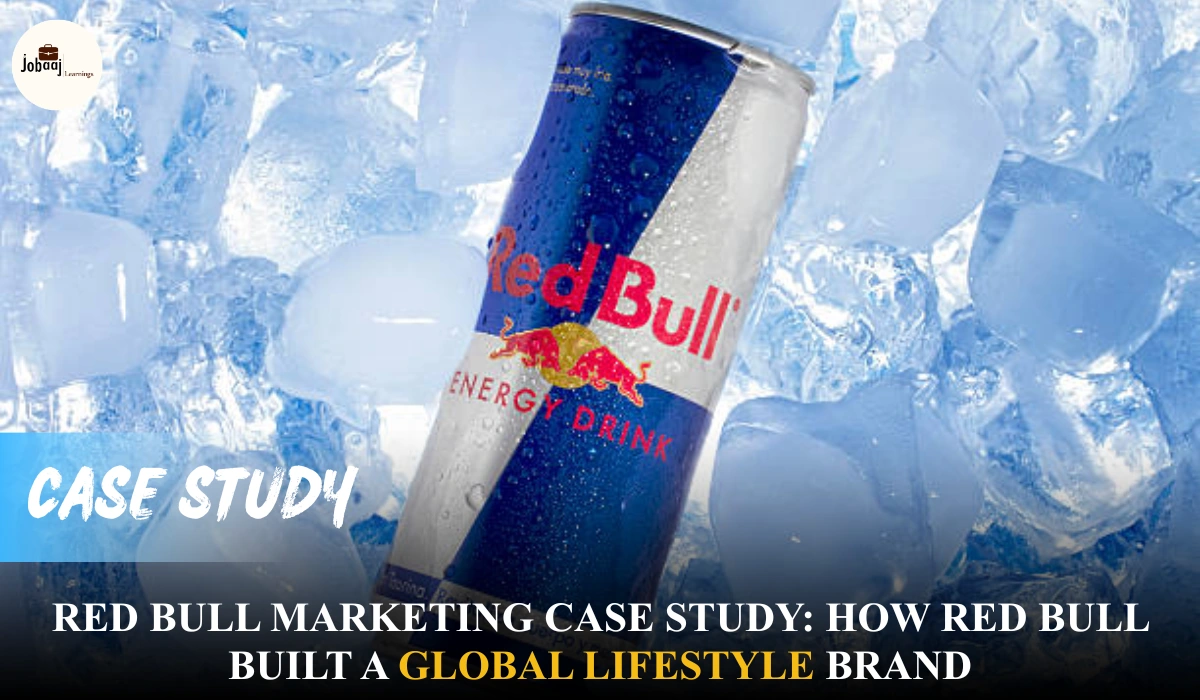
When most beverage companies think about marketing, they focus on promoting product features, taste, pricing, or availability. Red Bull took a completely different approach.
Instead of selling only an energy drink, Red Bull built a brand around adventure, performance, excitement, and pushing human limits. The company understood that consumers were not just buying a drink. They were buying the feeling and identity associated with the brand.
Through extreme sports sponsorships, unforgettable events, athlete partnerships, and powerful storytelling, Red Bull transformed itself from a beverage company into a global lifestyle brand.
This case study explores how Red Bull identified a market opportunity, built a unique brand positioning, executed innovative marketing strategies, and created one of the most successful examples of modern brand building.
Company Background
Red Bull was founded in 1987 by Austrian entrepreneur Dietrich Mateschitz after he discovered a popular energy drink concept during a business trip to Thailand.
At that time, energy drinks were not a mainstream category in many global markets.
Traditional beverage companies mainly focused on:
- Soft drinks
- Juices
- Sports beverages
- Coffee products
Red Bull entered with a new idea: a drink designed for people who wanted increased energy, focus, and performance.
However, introducing a new category came with a major challenge.
Consumers were not actively looking for an energy drink because the category itself was unfamiliar.
Red Bull had to create demand before it could capture market share.
Business Problem
The biggest challenge for Red Bull was not producing the drink.
The challenge was:
How do you convince consumers to buy a product they have never considered before?
The company faced several problems:
1.Lack of Category Awareness
Consumers did not understand why they needed an energy drink.
Unlike coffee, which had an established purpose, energy drinks were a new concept.
2.Strong Competition From Existing Habits
People already consumed:
- Coffee for energy
- Soft drinks for refreshment
- Sports drinks for fitness
Red Bull needed to create a separate identity.
3.Limited Product Differentiation
The company could not rely only on taste because beverages are difficult to differentiate purely through flavour.
Red Bull needed something stronger:
A brand personality.
Marketing Objective
Red Bull’s objective was not simply to sell more cans.
The company wanted to:
- Create awareness about energy drinks
- Build emotional connections with young consumers
- Position itself as a symbol of energy and achievement
- Develop long-term brand loyalty
- Become associated with extreme performance
The strategy was based on one important idea:
Red Bull should represent a lifestyle, not just a product.
Consumer Insight: Understanding the Target Audience
Red Bull carefully understood the mindset of its target customers.
The brand focused mainly on:
- Young adults
- Students
- Athletes
- Entrepreneurs
- Adventure seekers
- Creative individuals
The company identified that this audience valued:
- Freedom
- Excitement
- Risk-taking
- Achievement
- New experiences
Instead of communicating:
“Our drink gives you energy.”
Red Bull communicated:
“Red Bull gives you the energy to achieve extraordinary things.”
This emotional positioning became the foundation of the brand.
Marketing Strategy: Selling an Identity, Not a Beverage
Red Bull’s biggest strategic decision was moving away from traditional beverage marketing.
Most companies promote:
- Product benefits
- Discounts
- Features
Red Bull promoted:
- Experiences
- Stories
- Personal achievements
The brand created an association between Red Bull and people who challenge limits.
The product became a symbol of a particular mindset.
Strategy 1: Extreme Sports Marketing
One of Red Bull’s strongest marketing decisions was investing heavily in extreme sports.
The company sponsored events and athletes in areas such as:
- Formula One racing
- Mountain biking
- Snowboarding
- Surfing
- Skateboarding
- Skydiving
This was not random sponsorship.
Extreme sports perfectly matched Red Bull’s identity.
These sports represented:
- Risk
- Courage
- Performance
- Adventure
The brand became naturally connected with the emotions these activities created.
Strategy 2: Red Bull Stratos Campaign
One of Red Bull’s most famous marketing campaigns was Red Bull Stratos.
In 2012, Red Bull sponsored Felix Baumgartner’s attempt to jump from the edge of space.
The event captured global attention because it represented everything the brand stood for:
- Breaking limits
- Human achievement
- Innovation
- Courage
The campaign was different from traditional advertising.
Red Bull did not interrupt entertainment.
It created entertainment.
Millions of people watched the event, making it one of the most successful examples of experiential marketing.
Strategy 3: Content Marketing and Red Bull Media House
Red Bull understood early that content could become a powerful marketing tool.
Instead of depending only on advertisements, the company created its own media ecosystem.
Through Red Bull Media House, the company produces:
- Documentaries
- Sports videos
- Athlete stories
- Adventure content
- Digital experiences
This strategy helped Red Bull attract audiences even when they were not actively thinking about buying an energy drink.
The content itself became valuable.
Strategy 4: Building a Community Around the Brand
Red Bull did not want customers to simply purchase the product.
It wanted them to become part of a community.
The brand connected with people through:
- Events
- Competitions
- Athlete communities
- Adventure experiences
This created stronger emotional relationships compared to traditional advertising.
Customers became followers of the brand lifestyle.
Strategy 5: Student and Grassroots Marketing
Before becoming a global brand, Red Bull focused heavily on grassroots marketing.
The company targeted college students through:
- Campus ambassadors
- Events
- Free product sampling
- Local activities
This helped create early brand awareness among young consumers.
Instead of spending only on mass advertising, Red Bull created direct experiences.
Key Findings From the Case Study
1. Emotional Branding Creates Stronger Connections
Red Bull succeeded because it did not compete only on product features.
Many companies can sell energy drinks.
But Red Bull owned a unique emotional space:
Adventure and achievement.
2. Great Brands Create Communities
Red Bull built a community around shared values.
Customers connected with the lifestyle, not just the product.
3. Content Can Become a Competitive Advantage
Red Bull proved that brands can become media companies.
Creating valuable content helped the company maintain continuous engagement with audiences.
4. Experiences Are More Memorable Than Advertisements
A traditional advertisement may be forgotten.
A memorable experience can create long-term brand loyalty.
Red Bull focused on creating moments people wanted to talk about.
Business Impact and Results
Red Bull’s strategy helped it become one of the world’s most recognized energy drink brands.
The company achieved:
- Strong global brand recognition
- Loyal customer communities
- Successful international expansion
- A unique position in the beverage industry
More importantly, Red Bull changed how companies think about marketing.
It showed that a brand can grow by creating culture and experiences instead of only promoting products.
Marketing Lessons From Red Bull
-
Understand What Your Customers Aspire To
Customers often connect with brands that represent their goals and identity.
-
Build a Story Around Your Product
A product becomes more valuable when it has a meaningful story behind it.
-
Create Experiences That People Remember
The strongest marketing creates emotions that customers associate with the brand.
-
Differentiation Matters
Red Bull did not try to become another beverage company.
It created its own category.
Conclusion
Red Bull’s success is one of the best examples of modern brand building.
The company started with a simple energy drink but transformed itself into a global lifestyle brand by understanding consumer psychology and creating meaningful experiences.
The biggest lesson from Red Bull is that successful brands do not only sell products. They sell ideas, emotions, and identities that people want to be associated with.
For marketers and product managers, Red Bull demonstrates the power of storytelling, community building, and creating a brand that becomes part of people’s lifestyles.






