

 Categories








































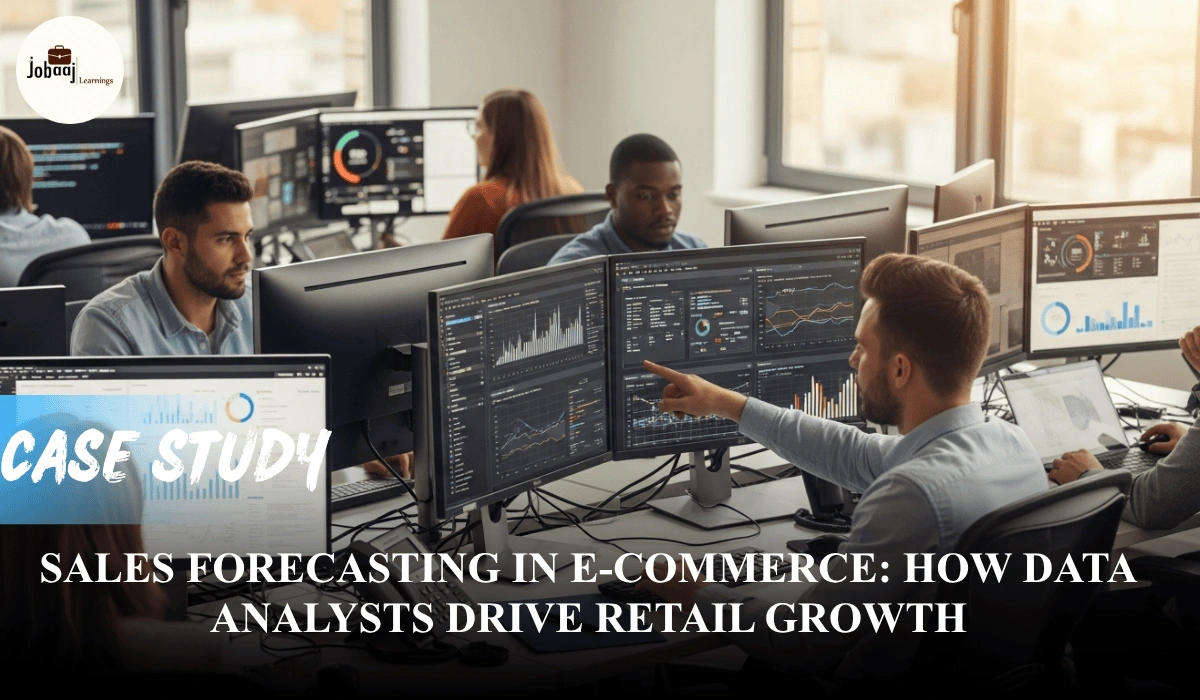
For many retail e-commerce businesses, one of the greatest challenges lies in accurately forecasting sales. The ever-changing nature of customer demands, seasonal fluctuations, and market dynamics often makes it feel like you’re predicting the future. However, in a competitive market, getting sales forecasting wrong can lead to excess inventory or stockouts, both of which are costly for business operations and customer satisfaction.
This case study takes you through the journey of how Trendify, an e-commerce platform that specializes in fashion products, tackled these challenges head-on by leveraging business analytics. By implementing advanced sales forecasting techniques and data optimization strategies, Trendify managed to align its operations with customer demand, ultimately enhancing both sales and customer satisfaction. Let’s break down the process, approach, and outcomes.
The Company: A Leading E-Commerce Retailer
Trendify is a fast-growing retail e-commerce platform known for offering a broad range of fashion products, from everyday essentials to premium items. Despite its popularity and impressive product catalog, Trendify found itself struggling with a key operational issue: inaccurate sales forecasting.
As the company scaled, the challenges became more apparent. Overestimating sales would result in surplus stock, which tied up capital in unsold goods and increased storage costs. On the other hand, underestimating sales meant stockouts, leading to missed sales opportunities, disappointed customers, and lost revenue.
Trendify recognized that to stay competitive and improve its performance, it needed a more accurate and data-driven approach to forecasting sales. This realization marked the beginning of their journey into the world of business analytics.
Objective: Achieving Accurate Sales Forecasting and Optimization
Trendify set out with clear goals in mind. The company aimed to:
-
Predict sales volumes more accurately to better align inventory with demand.
-
Optimize inventory levels to avoid both overstocking and understocking.
-
Enhance customer satisfaction by ensuring that high-demand products were always available.
-
Reduce operational costs associated with excessive storage or last-minute stock replenishments.
Achieving these goals would allow the company to optimize its supply chain, improve product availability, and boost profitability while simultaneously reducing inefficiencies.
Approach: Leveraging Data Analytics for Sales Optimization
To solve these challenges, Trendify brought in a team of skilled data analysts who employed a combination of historical sales data analysis, machine learning models, and advanced sales optimization techniques. The steps taken were methodical, structured, and deeply rooted in data-driven insights.
1. Data Collection and Historical Analysis
The first step in Trendify’s approach was gathering relevant data. They collected extensive historical sales data, including:
-
Daily, weekly, and monthly product sales data.
-
Seasonality trends such as changes in demand due to weather, holidays, and sales events.
-
Marketing campaigns and promotional efforts to identify their impact on sales.
-
Customer behavior patterns, including browsing history and purchase preferences.
-
Supply chain and inventory data, which provided insight into stock levels and replenishment timelines.
With this information, the company could begin analyzing patterns and correlations that weren’t immediately obvious. For example, they discovered that winter jackets saw a significant sales spike during colder months, while activewear became popular around New Year’s resolution periods. By recognizing these trends, the company could predict future demand with more accuracy.
2. Implementing Machine Learning Models
Once the historical data was in place, the team moved to the next step: using machine learning to build predictive models. Trendify used tools like Python, R, and SQL to train several different models that could forecast future sales with precision.
-
Time-series forecasting models helped Trendify predict sales based on past data, accounting for trends, seasonality, and other historical factors.
-
Regression models were used to understand the relationship between external factors (like marketing promotions or weather) and sales trends.
-
Classification models allowed Trendify to categorize products based on their demand intensity. This helped identify which products would likely have high or low demand.
These models were fine-tuned continuously, with each new data input leading to better, more accurate predictions. The machine learning models evolved over time, becoming more sophisticated as the team learned from their past forecasts and results.
3. Sales Optimization and Inventory Management
With the forecasting models in place, the next step was optimizing inventory levels. Using the predictions from the machine learning models, Trendify was able to implement a just-in-time (JIT) inventory system. This system allowed them to keep stock levels optimized, reducing storage costs while ensuring they had enough stock to meet customer demand.
Key steps included:
-
Automated reordering: Based on predictive data, inventory managers received alerts when stocks were running low, triggering automatic orders to suppliers.
-
Dynamic pricing: With a better understanding of demand, Trendify adjusted the prices of overstocked or slow-moving products. For example, they offered discounts on older stock or bundled items together to boost sales.
These efforts helped to reduce the inefficiencies associated with excess inventory, which had previously led to wasteful spending, while also ensuring high-demand products were consistently available.
Findings: Real-World Insights Gained
After implementing the forecasting and optimization techniques, Trendify was able to gather several important insights:
-
Seasonality and external factors matter: Trendify learned that external factors like weather, holidays, and trends on social media could significantly affect customer buying behavior. For instance, winter jackets experienced a 50% increase in sales during colder months.
-
Predictive models provided actionable insights: The machine learning models gave the team not just overall sales forecasts but also more detailed insights into which specific products would be in demand. This helped Trendify prioritize products for restocking or promotion.
-
Inventory management was significantly improved: By aligning their inventory with accurate forecasts, Trendify reduced excess stock by 30% and reduced stockouts by 15%, improving both operational efficiency and customer satisfaction.
-
Promotions were more effective: With better predictions, Trendify was able to time promotional campaigns perfectly. Flash sales and special discounts were strategically aligned with predicted demand peaks, improving sales and ensuring the efficient use of marketing budgets.
Results: Success Through Data-Driven Decisions
At the end of the first quarter following the implementation of the new forecasting and optimization system, Trendify saw measurable improvements:
-
Sales Growth: Trendify’s sales grew by 18%, thanks to better alignment between inventory levels and customer demand.
-
Reduced Inventory Costs: Overstock was reduced by 30%, while out-of-stock situations decreased by 15%, leading to a 10% reduction in overall operational costs.
-
Improved Customer Satisfaction: With better availability of high-demand products and more personalized offers, customer satisfaction improved by 20%, resulting in higher retention and repeat purchases.
-
Better Decision Making: Trendify was able to make more informed decisions, both in the short and long term, based on accurate, data-driven insights.
The integration of business analytics not only improved operational efficiency but also set a strong foundation for future growth in the competitive retail e-commerce market.
Conclusion
This case study demonstrates just how impactful sales forecasting and optimization can be when driven by business analytics. By leveraging advanced data tools and predictive models, Trendify was able to enhance its operational efficiency, improve sales, and deliver a better customer experience.
For data analysts working in retail or e-commerce, this case provides valuable lessons in how to use business analytics to solve complex challenges and make better, more informed decisions. By transforming raw data into actionable insights, companies can optimize their operations, stay ahead of market trends, and drive growth.
As the e-commerce industry continues to evolve, business analytics will remain an essential tool for staying competitive and continuously improving business performance.
Don’t worry, you’re not alone. Data analysis might seem intimidating at first, but with the right guidance, it becomes an exciting and valuable skill to master.
Click the link below to join our program, where Rakshit Vig and Shiva Vashishth, industry experts, will teach you everything you need to know about Data and Business Analytics. Learn to turn complex data into actionable insights and never feel overwhelmed again!
Join our latest cohort NOW and unlock the world of data!
[Disclaimer: This case study is entirely hypothetical and unrelated to real-world situations. It's designed for educational purposes to illustrate theoretical concepts and potential scenarios within a given context. Any similarities to actual events or individuals are purely coincidental.]






