Categories







































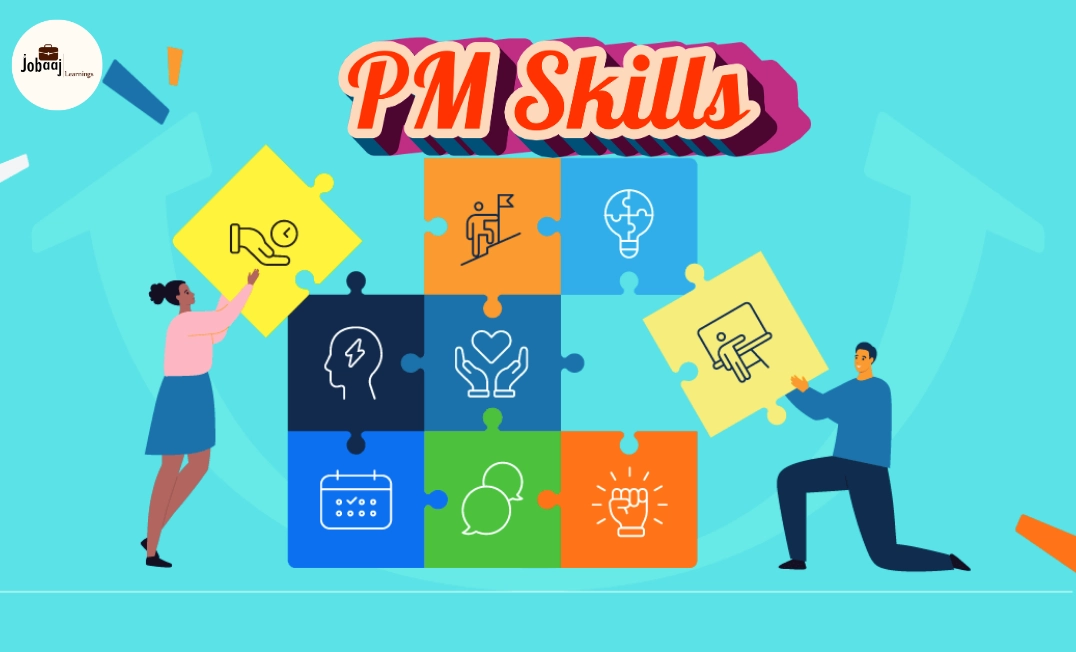
The role of a Product Manager is evolving rapidly. In 2026, PMs are strategic leaders, problem-solvers, and customer advocates, balancing business priorities with user needs. Success requires a combination of technical, strategic, analytical, and interpersonal skills.
Exploring a career in Product Management? Apply Now!
This guide covers 15 essential skills every PM should develop, with detailed explanations, practical examples, sub-points, and tips to help you thrive in modern product management.
1. Strategic Thinking and Product Vision
Strategic thinking is the ability to see the big picture, anticipate market trends, and align product initiatives with business goals. PMs who master this skill guide teams effectively and ensure product success.
- Defining a product vision aligned with company objectives
- Understanding market dynamics and user needs
- Prioritizing high-impact features over low-value tasks
Real-World Application:
- Creating a roadmap for a fintech app focusing on secure mobile payments while balancing technical feasibility
- Adjusting priorities in response to competitor features or emerging technologies
Impact:
- Guides the team toward long-term value creation
- Ensures resource allocation is strategic and purposeful
Tips:
- Study market trends, competitor products, and user insights
- Regularly revisit the roadmap to adapt to changing priorities
2. Customer-Centric Mindset
A PM must deeply understand user needs, behaviors, and pain points. Customer-centric thinking ensures products solve real problems and drive satisfaction.
- User research and persona development
- Identifying pain points and opportunities
- Translating insights into actionable product features
Real-World Application:
- Conducting interviews to discover why onboarding drop-offs occur
- Redesigning user flows to improve usability and satisfaction
Impact:
- Builds products users love
- Reduces churn and increases loyalty
Tips:
- Immerse yourself in the user journey
- Combine quantitative data with qualitative feedback
3. Data-Driven Decision Making
PMs rely on data to validate assumptions, measure outcomes, and inform decisions. Analytical thinking reduces risk and enhances effectiveness.
- Tracking KPIs such as engagement, retention, and conversion
- Using analytics tools like SQL, Google Analytics, and Power BI
- Interpreting data to prioritize features or initiatives
Real-World Application:
- Identifying which features increase retention through cohort analysis
- Adjusting the roadmap based on usage metrics
Impact:
- Supports evidence-based decision-making
- Increases confidence in product investments
Tips:
- Learn essential analytics tools
- Practice interpreting data to make actionable insights
4. Technical Knowledge
While not coding experts, PMs need enough technical understanding to communicate with engineers and assess feasibility.
- Understanding APIs, software architecture, and technical constraints
- Evaluating trade-offs between features and technical complexity
Real-World Application:
- Estimating the engineering effort for a new feature
- Avoiding unrealistic timelines or scope creep
Impact:
- Improves collaboration with engineering teams
- Ensures decisions are grounded in reality
Tips:
- Learn basic coding concepts and system architecture
- Participate in sprint planning discussions
5. UX and Design Awareness
PMs must appreciate user experience principles to collaborate effectively with designers and ensure intuitive, delightful products.
- Reviewing wireframes and prototypes
- Understanding accessibility, usability, and interaction design
- Translating user insights into design requirements
Real-World Application:
- Ensuring onboarding flows reduce friction and improve retention
- Suggesting improvements based on user testing feedback
Impact:
- Enhances customer satisfaction and reduces churn
- Leads to higher adoption and engagement
Tips:
- Take UX courses or workshops
- Regularly evaluate designs critically from a user perspective
6. Agile and Lean Methodologies
PMs must know how to work in iterative, fast-paced environments to deliver incremental value.
- Sprint planning, backlog prioritization, and retrospectives
- Applying Lean principles to reduce waste
- Collaborating cross-functionally in Agile frameworks
Real-World Application:
- Managing a 2-week sprint, ensuring high-priority features are completed
- Adjusting the backlog based on customer feedback
Impact:
- Increases adaptability and delivery speed
- Aligns teams with evolving priorities
Tips:
- Get certified in Scrum or Agile fundamentals
- Use project management tools like Jira or Trello
7. Communication and Storytelling
Effective PMs translate complex product ideas into clear, persuasive narratives for teams and stakeholders.
- Clear written and verbal communication
- Storytelling to explain strategy, vision, and trade-offs
- Adapting communication to audience: executives, engineers, or clients
Real-World Application:
- Presenting roadmap updates to executives
- Writing concise product briefs for the design team
Impact:
- Ensures alignment and buy-in across teams
- Reduces miscommunication and delays
Tips:
- Practice presentations and concise writing
- Focus on narrative flow and data-backed insights
8. Leadership and Team Collaboration
PMs lead without authority, guiding cross-functional teams toward shared objectives.
- Facilitating collaboration between engineering, design, and marketing
- Resolving conflicts constructively
- Motivating and aligning teams
Real-World Application:
- Mediating disagreements between engineers and designers while maintaining product quality
- Coordinating multiple teams to meet launch deadlines
Impact:
- Boosts team efficiency and morale
- Ensures smooth project execution
Tips:
- Observe successful leaders and practice empathy
- Encourage transparency and shared accountability
9. Prioritization and Decision-Making
PMs face constant trade-offs and must prioritize high-impact initiatives efficiently.
- Evaluating impact vs. effort for features
- Using frameworks like RICE and MoSCoW
- Making timely, informed decisions under uncertainty
Real-World Application:
- Deciding between launching a new feature or fixing a critical bug
- Balancing short-term wins with long-term strategic goals
Impact:
- Ensures resources focus on initiatives that maximize value
- Improves overall product delivery
Tips:
- Track outcomes of past prioritization decisions
- Reflect on trade-offs and stakeholder alignment
10. Problem-Solving and Critical Thinking
Product managers constantly face complex challenges. Critical thinking helps identify root causes and evaluate multiple solutions.
- Breaking down problems into manageable parts
- Evaluating alternatives objectively
- Considering technical, business, and user perspectives
Real-World Application:
- Analyzing why a feature has low adoption and implementing iterative improvements
- Resolving resource constraints while maintaining quality
Impact:
- Leads to better product outcomes
- Reduces risk of poor decision-making
Tips:
- Use case studies to practice problem-solving
- Analyze competitor products for lessons
11. Stakeholder Management
Managing internal and external stakeholders is essential to align goals, expectations, and priorities.
- Mapping stakeholders by influence and interest
- Communicating clearly and consistently
- Anticipating concerns and addressing them proactively
Real-World Application:
- Coordinating product priorities between marketing, engineering, and sales
- Keeping executives informed without overloading them with details
Impact:
- Reduces conflicts
- Ensures smooth product execution
Tips:
- Maintain a stakeholder register
- Schedule regular updates and feedback sessions
12. Negotiation and Influence
PMs must convince without authority, persuading teams and stakeholders to adopt solutions.
- Presenting data-driven arguments
- Finding mutually beneficial compromises
- Using empathy and listening skills
Real-World Application:
- Convincing leadership to invest in a feature that aligns with long-term strategy
- Negotiating resource allocation with multiple teams
Impact:
- Increases buy-in for initiatives
- Strengthens team collaboration
Tips:
- Practice persuasion in small projects
- Collect supporting data to justify decisions
13. Adaptability and Continuous Learning
PMs must adapt to emerging technologies, market changes, and evolving customer needs.
- Staying updated with industry trends
- Learning new tools, frameworks, or methodologies
- Being open to feedback and change
Real-World Application:
- Learning AI-powered analytics tools to optimize feature performance
- Adapting roadmap priorities based on new regulations or market shifts
Impact:
- Keeps PMs relevant
- Ensures products remain competitive
Tips:
- Read industry blogs, attend webinars, and join PM communities
- Test new approaches in side projects
14. Business Acumen
Understanding how products generate revenue, drive growth, and impact the bottom line is essential.
- Knowing business models and pricing strategies
- Understanding market positioning and competition
- Linking product decisions to measurable outcomes
Real-World Application:
- Choosing which features to prioritize based on ROI and cost analysis
- Identifying growth opportunities aligned with company goals
Impact:
- Ensures product decisions create value
- Aligns product roadmap with organizational strategy
Tips:
- Study business fundamentals
- Analyze metrics and KPIs for insights
15. Emotional Intelligence
Emotional intelligence (EQ) enables PMs to navigate team dynamics, resolve conflicts, and empathize with users.
- Self-awareness and self-regulation
- Empathy for team members and customers
- Social skills for collaboration
Real-World Application:
- Resolving disagreements between designers and engineers while keeping focus on customer outcomes
- Using feedback constructively to improve team and product performance
Impact:
- Builds strong teams
- Enhances user-centered decision-making
Tips:
- Practice active listening
- Reflect on emotional responses and adjust behavior
Conclusion
Customer acquisition is important, but retaining customers is where businesses truly grow and thrive. For Product Managers, marketers, and business leaders, understanding customer retention metrics is essential to track loyalty, engagement, and long-term revenue.Mastering these 15 essential skills equips Product Managers to lead teams, make data-driven decisions, and build products that delight users. Success in 2026 requires strategy, technical knowledge, data literacy, user empathy, leadership, and adaptability. By investing in these areas, PMs can thrive in a dynamic environment, influence stakeholders effectively, and create products that make a meaningful impact.
Dreaming of a Product Management Career? Start with Product Management Certificate with Jobaaj Learnings.
Frequently asked questions
What are the most important skills for a Product Manager in 2026?
Essential skills include strategic thinking, UX knowledge, data analysis, stakeholder management, leadership, prioritization, emotional intelligence, adaptability, and communication.
How can I develop Product Manager skills?
Through online courses, certifications, internships, mentorship, real-world projects, and continuous practice in strategy, analytics, and leadership.
Do Product Managers need technical knowledge?
Yes, basic understanding of software development, APIs, and technical constraints helps PMs communicate effectively with engineering teams.
Why is emotional intelligence important for PMs?
It helps PMs manage teams, resolve conflicts, empathize with customers, and make user-centered decisions.
Which skills are most critical for future-ready PMs?
Strategic thinking, adaptability, data-driven decision-making, UX understanding, stakeholder management, and leadership are critical for PMs to succeed in 2026.

Join 5,00,000+ Subscribers
Be a part of our ever growing community.