Categories














/content/learnings/assets/header/ManagementConsulting.svg)
/content/learnings/assets/header/InvestmentBanking.svg)


























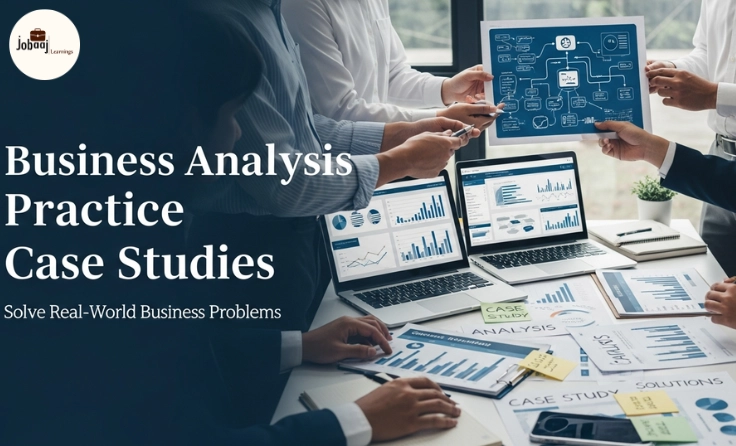
Business analytics is all about using data to make informed decisions that drive business growth. It’s a skill set that’s become more essential than ever in the fast-paced, data-driven world of business. Whether you're working in marketing, finance, operations, or human resources, business analytics provides the tools you need to make smarter, data-backed decisions.
In this blog, we will share 25 real-world business analytics case studies from diverse industries. These case studies will give you the opportunity to see how business analytics can be applied in practical scenarios, helping you sharpen your skills and broaden your understanding of how data can solve complex business problems.
1. Improving Customer Retention in a Subscription Service
Scenario:
A subscription-based company offering digital content has been experiencing high churn rates. Despite offering valuable content, many customers unsubscribe after a short period. The company wants to identify the causes of churn and implement strategies to improve retention.
Analytics Approach:
By analyzing user activity, feedback, and engagement levels, the business can identify patterns among customers who cancel their subscriptions and those who stay. With the help of predictive analytics and clustering algorithms, the company can segment customers and tailor retention strategies accordingly.
2. Optimizing Supply Chain Efficiency for a Manufacturing Firm
Scenario:
A manufacturing company has faced recurring delays in its production process due to inefficiencies in the supply chain. These delays are impacting product availability and causing customer dissatisfaction.
Analytics Approach:
By analyzing inventory levels, supplier performance, and production timelines, the company can optimize its supply chain network using inventory forecasting and logistics optimization models. This can help improve delivery times and reduce operational costs.
3. Predicting Market Trends for a Retail Business
Scenario:
A retail company wants to predict future trends in customer shopping behavior to enhance its product offerings and marketing strategies. They want to understand which products are likely to gain popularity in the coming months.
Analytics Approach:
Using historical sales data, customer preferences, and seasonal trends, the company can apply time series forecasting models to predict product demand. This helps the company adjust its inventory and marketing campaigns proactively.
4. Improving Operational Efficiency for an E-Commerce Platform
Scenario:
An e-commerce platform is experiencing high operational costs and inefficiencies in its warehouse management system, leading to slow delivery times.
Analytics Approach:
By analyzing order fulfillment times, inventory turnover rates, and shipping costs, the company can use optimization algorithms to streamline the warehouse process. This can help reduce costs and improve delivery speed, enhancing the customer experience.
5. Customer Segmentation for a Telecom Company
Scenario:
A telecom company wants to enhance its marketing efforts by targeting different customer segments with tailored promotions and services. They need to identify which customer groups are most likely to upgrade or switch to higher-tier plans.
Analytics Approach:
Using customer demographic data, usage patterns, and transaction history, the company can apply clustering techniques like K-means clustering to identify distinct customer segments. This allows for more personalized marketing strategies.
6. Improving Employee Productivity in a Tech Company
Scenario:
A technology company is facing issues with employee productivity and engagement. While salaries and work conditions are favorable, the company wants to optimize workflows and enhance employee performance.
Analytics Approach:
By analyzing employee performance data, work schedules, and task completion rates, the company can identify bottlenecks and inefficiencies. Applying predictive analytics to assess which employees are likely to excel can help tailor training programs and improve overall productivity.
7. Optimizing Pricing Strategy for a SaaS Company
Scenario:
A Software-as-a-Service (SaaS) company wants to optimize its pricing strategy to maximize revenue while staying competitive in the market. They need to understand which pricing models will attract more customers while retaining existing ones.
Analytics Approach:
By analyzing customer lifetime value (CLV), price sensitivity, and market data, the company can use pricing optimization models to determine the best pricing tiers for different customer segments. This helps in maximizing profits while ensuring customer satisfaction.
8. Market Entry Strategy for a Consumer Goods Brand
Scenario:
A consumer goods company wants to enter a new regional market but is unsure of which product line will resonate best with the local audience. They want to ensure their product launch is successful and minimizes risk.
Analytics Approach:
By analyzing local market trends, competitor performance, and consumer preferences, the company can use market basket analysis and geodemographic segmentation to identify the most promising products for the new market.
9. Improving Customer Experience for a Restaurant Chain
Scenario:
A popular restaurant chain is facing declining customer satisfaction due to long wait times and inconsistent food quality. They want to improve the overall customer experience.
Analytics Approach:
Using customer feedback data, wait time metrics, and food quality scores, the restaurant can apply sentiment analysis to assess customer opinions. By identifying the pain points in the customer experience, they can implement changes to reduce wait times and improve service consistency.
10. Risk Assessment for a Financial Institution
Scenario:
A financial institution wants to assess the creditworthiness of new customers to reduce the risk of defaults on loans and credit lines.
Analytics Approach:
By analyzing credit history, income data, and loan repayment patterns, the institution can apply logistic regression and credit scoring models to assess risk and determine which customers are more likely to repay their debts on time.
11. Churn Prediction for a Streaming Service
Scenario:
A streaming service provider has noticed a high churn rate and wants to predict which customers are most likely to cancel their subscriptions.
Analytics Approach:
By analyzing usage data, watching patterns, and subscription history, the company can use predictive models such as decision trees and random forests to identify at-risk customers and target them with retention offers.
12. Employee Satisfaction in a Manufacturing Company
Scenario:
A manufacturing company has seen high turnover rates and low employee satisfaction, which is affecting productivity. The management wants to understand the root causes of these issues.
Analytics Approach:
By analyzing employee surveys, job satisfaction scores, and exit interviews, the company can identify the main factors contributing to dissatisfaction. This will allow management to implement policies aimed at improving work culture and reducing turnover.
13. Sales Forecasting for a Retail Business
Scenario:
A retail company wants to forecast sales for the upcoming quarter to adjust inventory levels and avoid stockouts or overstocking.
Analytics Approach:
Using historical sales data, seasonal trends, and economic factors, the company can apply time series forecasting models to predict future sales trends. This helps in making data-driven decisions regarding stock management.
14. Optimizing Marketing Campaigns for an E-Commerce Website
Scenario:
An e-commerce platform is looking to optimize its marketing campaigns to increase conversions. They need to analyze customer behavior and identify the most effective campaigns.
Analytics Approach:
By analyzing user engagement data, conversion rates, and advertising spend, the platform can apply A/B testing and multivariate analysis to determine which marketing campaigns are driving the highest ROI.
15. Supply and Demand Planning for a Wholesale Distributor
Scenario:
A wholesale distributor is facing issues with demand forecasting, leading to overstocking or stockouts of products. They need to improve their inventory management and demand forecasting accuracy.
Analytics Approach:
By analyzing historical demand data, seasonal trends, and market conditions, the company can use forecasting models such as ARIMA or exponential smoothing to predict future demand more accurately and adjust their inventory levels accordingly.
16. Campaign Effectiveness for a Nonprofit Organization
Scenario:
A nonprofit organization wants to measure the effectiveness of its fundraising campaigns. They need to assess how well their resources are being utilized and which campaigns are bringing in the most donations.
Analytics Approach:
By analyzing donor data, campaign reach, and donation trends, the nonprofit can use regression analysis and donor segmentation to identify which factors lead to more successful campaigns, helping optimize future fundraising efforts.
17. Sales Conversion Optimization for a Real Estate Agency
Scenario:
A real estate agency wants to increase the conversion rate of leads to sales. They are unsure whether their marketing efforts are reaching the right audience or whether their follow-up processes need improvement.
Analytics Approach:
By analyzing lead generation data, sales conversion rates, and customer demographics, the agency can use funnel analysis and lead scoring to identify the most promising leads and refine their conversion strategies.
18. Profitability Analysis for a Fashion Retailer
Scenario:
A fashion retailer wants to analyze the profitability of different product categories and determine which products should be promoted or discontinued.
Analytics Approach:
By analyzing sales data, cost of goods sold (COGS), and profit margins, the company can perform a profitability analysis to understand which product lines are underperforming and which are the most profitable.
19. Target Market Identification for a New Service
Scenario:
A company is launching a new service and needs to identify its target market. They want to ensure that their marketing efforts are directed towards the right audience.
Analytics Approach:
By analyzing customer demographics, behavioral data, and market segmentation, the company can apply cluster analysis to segment the market and identify the best-fit target audience for the new service.
20. Quality Control in a Manufacturing Process
Scenario:
A manufacturing company wants to improve product quality and reduce defects in its production process.
Analytics Approach:
By analyzing defect rates, production cycles, and equipment performance, the company can apply Six Sigma or Pareto analysis to identify the root causes of defects and implement process improvements.
21. Fraud Detection for an E-Commerce Platform
Scenario:
An e-commerce platform wants to detect fraudulent transactions before they occur. They need to develop a system that can automatically flag suspicious activity.
Analytics Approach:
By analyzing transaction data, customer behavior, and payment patterns, the platform can use machine learning algorithms like decision trees or neural networks to predict and detect fraud in real time.
22. Customer Lifetime Value (CLV) Prediction for a SaaS Business
Scenario:
A SaaS business wants to predict the Customer Lifetime Value (CLV) of its subscribers to understand how much each customer is worth over the long term.
Analytics Approach:
By analyzing subscription data, usage patterns, and customer acquisition cost, the company can use regression models to predict the future value of a customer and adjust marketing efforts accordingly.
23. Employee Performance Optimization for a Call Center
Scenario:
A call center wants to improve employee performance and reduce call handling time without compromising service quality.
Analytics Approach:
By analyzing call center data, employee performance metrics, and customer satisfaction scores, the company can identify the best-performing agents and use predictive analytics to tailor training programs for others.
24. Customer Segmentation for a Financial Institution
Scenario:
A financial institution wants to understand the behaviors and needs of different customer segments to provide personalized financial products and services.
Analytics Approach:
By analyzing customer demographic data, transaction history, and credit scores, the institution can use clustering techniques like K-means to segment customers and tailor products accordingly.
25. Optimizing Resource Allocation for a Construction Firm
Scenario:
A construction firm needs to optimize the allocation of its resources (labor, materials, machinery) to improve project efficiency and reduce costs.
Analytics Approach:
By analyzing project timelines, resource usage data, and costs, the firm can apply resource optimization models to better allocate resources and ensure the project stays on track and within budget.
Conclusion
These business analytics case studies represent a wide variety of real-world business challenges, each requiring careful data analysis, strategic thinking, and actionable recommendations. By working through these cases, you’ll improve your ability to handle complex business problems and learn how to leverage data to make informed decisions. Whether you're preparing for an interview, enhancing your analytics skills, or simply practicing for the future, these cases are a valuable resource to help you succeed.
Frequently asked questions
What is a business analytics case study?
A business analytics case study is an exercise where you apply business analytics principles to solve a real-world business problem. It involves identifying the issue, analyzing data, and proposing actionable solutions.
How can business analytics be applied in real-world scenarios?
Business analytics can be applied in various industries, including retail, manufacturing, finance, and healthcare, to solve problems like declining sales, inefficiencies in processes, and improving customer experience. By analyzing data, business analysts can recommend strategic solutions that drive business success.
What frameworks should I use for business analytics case studies?
Common frameworks include SWOT analysis, Porter’s Five Forces, PEST analysis, and predictive modeling techniques like regression analysis. These frameworks help you analyze problems from multiple angles and create effective solutions.
How do I approach solving a business analytics case study?
Start by thoroughly reading the case study to understand the core issue. Use appropriate frameworks and analytical tools to break down the situation. Then, develop actionable recommendations and an implementation plan to address the problem.
Why is data analysis crucial in business analytics case studies?
Data analysis is at the heart of business analytics because it allows you to identify patterns, trends, and insights that drive decision-making. By using data, you can create evidence-based solutions that are both reliable and actionable.
How do I present my findings in a business analytics case study?
Present your findings in a clear and structured way, starting with an executive summary of the issue. Then, provide a detailed analysis supported by data, followed by your recommendations. Ensure your presentation is easy to follow, with actionable steps and metrics for success.

Join 5,00,000+ Subscribers
Be a part of our ever growing community.