Categories












/content/learnings/assets/header/ManagementConsulting.svg)
/content/learnings/assets/header/InvestmentBanking.svg)
























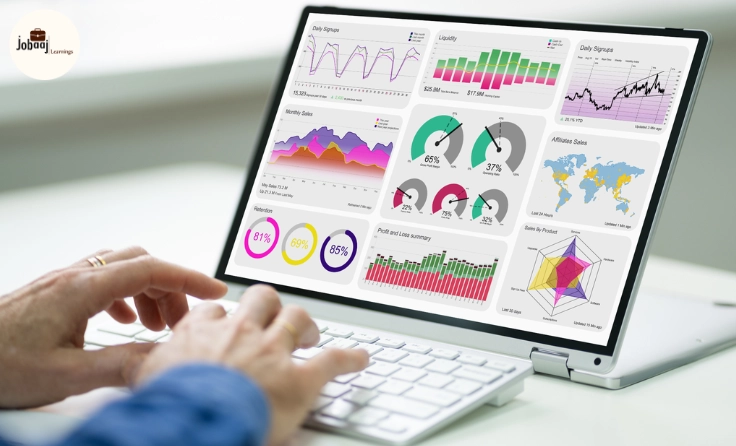
Starting your career in data analytics can feel overwhelming. You’ve learned the theory, taken the courses, and maybe even dabbled with a few datasets. But there’s one big hurdle you’ll need to jump: proving your skills. Sure, you can list the tools you know, but nothing shows your abilities like real projects.
Exploring a career in Data and Business Analytics? Apply Now!
That’s where projects come in. If you're just getting started, picking the right projects to build your data analytics portfolio is crucial. These projects not only help you sharpen your skills, but they also give you the hands-on experience that employers want to see. And let's be honest—having a solid portfolio is the perfect way to stand out in a crowded field. In this post, we’ll go over some beginner-friendly projects that can help you start building a portfolio that demonstrates your knowledge, creativity, and problem-solving skills in the world of data analytics.
Why Build a Portfolio?
A portfolio is more than just a collection of projects. It’s your opportunity to showcase the skills you've acquired, how you approach problems, and your ability to use data to drive decisions. In the world of data analytics, a portfolio is often the deciding factor between getting your first job or internship. It’s proof that you can not only analyze data but also interpret it and communicate insights effectively.
The best part is that your portfolio doesn’t need to be filled with complex, multi-million dollar datasets. Some of the best data analytics portfolios are built from small, creative projects that reflect your understanding of the core principles of data analysis, like cleaning data, finding patterns, and making predictions.
1. Sales Data Analysis Project
One of the most common yet effective beginner projects is analyzing sales data. Many businesses rely on sales data to make crucial decisions, so working with this kind of dataset will help you understand how data can drive business strategies.
Start by finding a dataset, such as monthly sales data for a small business or a fictional company. Your tasks could include:
-
Cleaning and organizing the data
-
Analyzing trends over time (monthly, quarterly, etc.)
-
Identifying factors that affect sales, such as seasonality, marketing campaigns, or external events
-
Creating visualizations to communicate your findings clearly
This project will help you practice essential skills like data wrangling, trend analysis, and data visualization.
2. Customer Segmentation Analysis
Customer segmentation is crucial for businesses to understand their audience better. This project involves grouping customers based on characteristics such as purchasing behavior, demographics, or interests.
You can find customer data from publicly available sources or create a fictional dataset. Your goal is to:
-
Group customers into meaningful segments using clustering algorithms like K-means or hierarchical clustering
-
Analyze what differentiates these segments from one another
-
Create visualizations that show the distribution of customers across segments
-
Interpret the business implications of these segments (e.g., targeted marketing strategies)
This project will not only sharpen your technical skills but will also teach you how to communicate the value of your analysis to a business.
3. Predictive Analytics with Sports Data
A fun and engaging way to get hands-on with data analytics is by using sports data. Sports are full of interesting patterns and trends that can be analyzed. A great beginner project could be predicting the outcome of a game based on past data.
For example, you could:
-
Use historical game data (e.g., player stats, weather conditions, location) to predict the winner of a match
-
Apply regression or classification models to train your algorithm
-
Evaluate the model’s performance using metrics like accuracy or mean squared error
This project will introduce you to machine learning techniques, data modeling, and how to apply predictive analytics in real-world scenarios.
4. Sentiment Analysis on Social Media Data
With the explosion of social media, sentiment analysis is a valuable skill in data analytics. This project involves analyzing people’s opinions or emotions toward a product, service, or even a political issue by looking at their posts on social media platforms.
Here’s what you can do:
-
Scrape data from social media platforms (Twitter is a great place to start)
-
Use natural language processing (NLP) to analyze text data and identify sentiments (positive, negative, neutral)
-
Visualize the results to show how sentiment changes over time or in response to events
This project is a great introduction to working with unstructured data and gives you exposure to NLP and text analysis techniques.
5. Data Cleaning and Transformation Project
Before you even begin analyzing any dataset, data cleaning is an essential skill. For this project, find a messy, unstructured dataset and practice cleaning it. You can find datasets with missing values, duplicates, or incorrectly formatted data.
Your goal:
-
Remove duplicates
-
Handle missing data through imputation or removal
-
Standardize columns and data types
-
Transform data for analysis (e.g., converting categorical variables to numerical values)
This project might seem basic, but it’s critical in data analytics because clean data is the foundation for accurate analysis. It will also help you become familiar with Python libraries like pandas and NumPy, which are essential for data manipulation.
6. Web Scraping for Data Collection
Web scraping is a powerful technique for collecting data from websites. Many businesses rely on web scraping to gather market research data, product pricing, or competitor analysis.
In this project, you can:
-
Scrape data from a website (such as product prices or user reviews)
-
Clean and structure the data for analysis
-
Perform exploratory data analysis (EDA) to uncover insights
-
Visualize findings (e.g., product pricing trends over time)
This project will introduce you to web scraping tools like BeautifulSoup and Selenium, and give you hands-on experience collecting data from real-world sources.
7. E-commerce Conversion Rate Analysis
Conversion rate optimization (CRO) is vital for any online business. For this project, you can analyze e-commerce website data to understand what factors influence the conversion rate.
Tasks could include:
-
Analyzing the correlation between different website elements (product images, pricing, user reviews) and conversion rates
-
Conducting A/B testing to compare the effectiveness of different layouts or marketing strategies
-
Visualizing your findings to recommend improvements
This project will help you understand the business side of data analytics while giving you the opportunity to practice working with A/B testing, conversion analysis, and statistical methods.
Conclusion
Building a data analytics portfolio doesn’t need to be overwhelming. By starting with these beginner-friendly projects, you’ll gain valuable experience and practical skills that will make you stand out to potential employers. Each project will not only enhance your technical abilities but also teach you how to approach data-driven problems and communicate your findings effectively.
As you work through these projects, remember to document your work. Create detailed reports, share your findings, and, most importantly, showcase your process. A well-organized portfolio with clear explanations of your analysis will demonstrate your expertise and make it easier for others to see the value you bring as a data analyst.
So, what are you waiting for? Pick your first project, start building your portfolio, and get ready to make a mark in the world of data analytics!
Aspiring for a career in Data and Business Analytics? Begin your journey with a Data and Business Analytics Certificate from Jobaaj Learnings.
Frequently asked questions
What is a data analytics portfolio?
A data analytics portfolio is a collection of projects that showcase your skills in data analysis, visualization, and interpretation. It demonstrates your ability to solve real-world problems using data and is a crucial tool for landing a job in data analytics.
How do I start building a data analytics portfolio?
Start by working on small projects that align with the type of data analysis you’re interested in. Focus on areas like **data cleaning**, **visualization**, and **predictive analytics**. Once you’ve completed a project, document it, and share your findings in a clear, structured way.
What types of projects should I include in my data analytics portfolio?
Include projects that show a variety of skills, such as **sales analysis**, **customer segmentation**, **web scraping**, **sentiment analysis**, and **machine learning**. The more diverse your projects, the stronger your portfolio will be.
Do I need coding skills for data analytics projects?
Coding skills are very useful, especially with tools like **Python** and **R**, which are widely used in data analytics. However, you can still work on data analytics projects using tools like **Excel** or **Google Sheets** to get started before diving into programming.
How long does it take to build a data analytics portfolio?
It depends on the complexity of the projects and how much time you can dedicate. For beginners, starting with a few basic projects can take a few weeks. As you get more comfortable, you can tackle more complex projects and refine your portfolio.
Can I use real-world datasets for my portfolio?
Yes! Using real-world datasets, such as those available on platforms like **Kaggle** or **data.gov**, makes your projects more realistic and relatable. It also shows potential employers that you can handle messy, unclean data and work with real data problems.

Join 5,00,000+ Subscribers
Be a part of our ever growing community.