Categories








































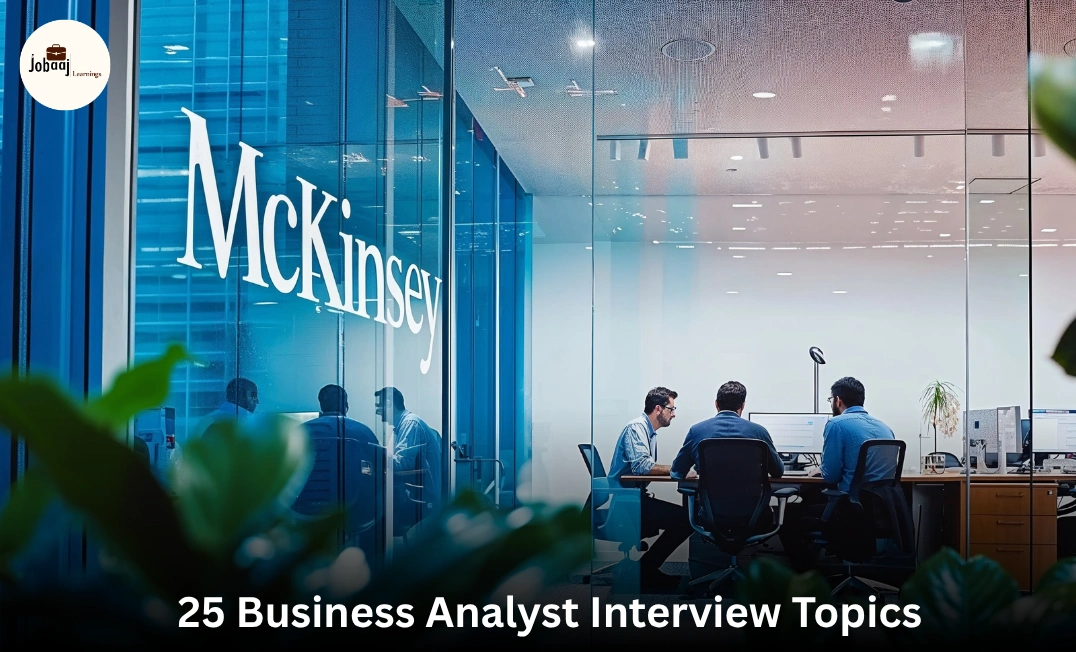
Interviews for business analyst positions at top consulting firms like McKinsey can be intense and challenging. As a business analyst, you're expected to showcase not only your analytical and problem-solving skills but also your ability to communicate effectively and think critically. McKinsey, known for its rigorous hiring process, tests candidates on a range of topics, from technical analysis to behavioral and situational questions.
In this blog, we will cover 25 essential business analyst interview topics you should be prepared for when interviewing at McKinsey. We will also provide guidance on how to approach these questions and include sample answers to give you a better idea of how to structure your responses. By the end of this article, you’ll have a comprehensive understanding of what to expect and how to excel in your interview.
1. Tell me about yourself.
This is often the first question in an interview. While it may seem simple, it’s important to structure your answer to highlight your skills, experience, and motivation. Focus on your background, your key strengths, and how they align with the role of a business analyst at McKinsey.
Sample Answer:
"I am a recent graduate with a degree in Business Administration, where I developed strong analytical and problem-solving skills. During my internship at XYZ Corporation, I worked on several data-driven projects that involved gathering and analyzing large datasets to improve decision-making. I enjoy using data to solve business challenges, and I’m eager to bring my skills in quantitative analysis and my passion for problem-solving to McKinsey, where I can help clients tackle complex business issues."
2. Why do you want to work at McKinsey?
This question gauges your interest in McKinsey as a company and your long-term career goals. Be specific about why McKinsey stands out to you compared to other firms, and tie your response to your career aspirations and skills.
Sample Answer:
"I’ve always admired McKinsey’s commitment to delivering high-impact solutions for global clients. The company’s reputation for excellence in consulting, especially in the areas of strategy and operations, is unmatched. I am particularly drawn to McKinsey's focus on developing its consultants through continuous learning and exposure to diverse industries. I believe McKinsey is the ideal place for me to grow my analytical skills and apply them to solving real-world business challenges."
3. How do you approach problem-solving?
McKinsey values structured and methodical problem-solving skills. Talk about a systematic approach, such as breaking down complex problems into smaller, manageable components and using data to guide your decisions.
Sample Answer:
"When approaching a problem, I first ensure that I fully understand the context and scope. I then break the problem into smaller, manageable parts and identify key variables that could impact the solution. I prioritize these variables based on their significance and gather relevant data. From there, I analyze the data to uncover patterns or insights, and finally, I present solutions backed by data-driven recommendations, always keeping in mind the business impact of my decisions."
4. How do you handle multiple priorities and deadlines?
McKinsey values candidates who can manage multiple projects efficiently. Demonstrate your organizational skills and ability to prioritize tasks under pressure.
Sample Answer:
"I use a combination of prioritization and time management techniques. I start by listing all my tasks and identifying the most urgent and high-impact ones. I break down larger tasks into smaller milestones and allocate time for each. I also use project management tools like Trello and Microsoft Teams to track progress and collaborate with others. If I encounter roadblocks, I communicate early and adjust timelines as necessary to meet deadlines without compromising quality."
5. Describe a situation where you solved a complex problem.
This question is designed to assess your problem-solving skills and how you apply them in real-world situations. Use the STAR method (Situation, Task, Action, Result) to structure your response.
Sample Answer:
"In my previous internship, I was tasked with analyzing a client's sales data to identify trends that could help improve their marketing strategy. The data was messy and unstructured, so my first challenge was cleaning and organizing it. I used Excel and Python to automate the data cleaning process, which allowed me to focus on analysis. After uncovering a significant pattern in customer behavior, I recommended targeted marketing campaigns that led to a 15% increase in sales within three months."
6. What techniques do you use to analyze data?
McKinsey places a premium on analytical skills. Talk about specific tools and techniques you use, such as Excel, SQL, data visualization tools, and statistical methods.
Sample Answer:
"I primarily use Excel for data manipulation and basic analysis, but I’m also proficient in SQL for querying databases. For more advanced statistical analysis, I use R and Python to run regressions and conduct hypothesis testing. I also leverage data visualization tools like Tableau to present my findings in a clear and engaging manner, which helps stakeholders understand the key insights quickly."
7. How would you deal with a difficult team member?
This question tests your interpersonal and conflict-resolution skills. Emphasize communication, empathy, and collaboration.
Sample Answer:
"I believe in addressing issues directly and respectfully. If I had a difficult team member, I would first try to understand their perspective by listening to their concerns. I’d then have an open conversation to discuss how we can improve our collaboration. If needed, I would suggest finding common ground and setting clear expectations to avoid future misunderstandings. Ultimately, I aim to foster a productive, respectful working relationship for the benefit of the team."
8. Tell me about a time you used data to make a decision.
McKinsey places a lot of value on data-driven decision-making. Provide a concrete example of how you used data to solve a problem or make a strategic decision.
Sample Answer:
"During my internship, I worked on a project to improve the customer retention rate for an e-commerce client. I analyzed data from customer behavior and identified that users who engaged with the email newsletters were more likely to make repeat purchases. I used this data to recommend a new email marketing strategy targeting high-engagement customers, which resulted in a 20% increase in customer retention over the following quarter."
9. How would you handle a client who disagrees with your recommendations?
Consulting requires influencing clients and navigating disagreements diplomatically. Focus on communication, understanding their concerns, and adapting your approach.
Sample Answer:
"If a client disagrees with my recommendations, I would first listen carefully to their concerns and seek to understand their perspective. I would ask clarifying questions to identify the root of the disagreement. Then, I would explain my reasoning clearly, backed by data and analysis, to help them see the value of the recommendation. If the client remains unconvinced, I’d be open to adjusting my approach or proposing alternatives that align with their needs while still delivering the best possible solution."
10. What is the most challenging project you’ve worked on?
This is a common interview question that helps interviewers understand your problem-solving abilities and resilience. Focus on a project that challenged you but also highlighted your strengths.
Sample Answer:
"The most challenging project I worked on was helping a client streamline their supply chain process. The complexity came from coordinating between multiple teams and managing data from various sources. To overcome this, I developed a centralized data repository and created a dashboard that allowed for real-time tracking of key supply chain metrics. It took a lot of collaboration, but the outcome was a 10% reduction in supply chain costs within the first three months."
11. How would you approach a market sizing question?
Market sizing questions are commonly asked at consulting firms. They assess your problem-solving and estimation skills. Walk through your logical steps and assumptions.
Sample Answer:
"To approach a market sizing question, I would start by breaking the problem down into smaller, manageable pieces. For example, if asked to size the market for a new smartphone, I would estimate the number of people in the target market (e.g., smartphone owners), estimate the market penetration rate, and calculate potential sales. I would also consider factors such as customer demographics, buying patterns, and growth trends to refine the estimate. Throughout, I would clearly communicate my assumptions and reasoning."
12. How do you handle ambiguous situations or tasks?
This question tests your ability to navigate uncertainty and ambiguity, which is common in consulting. Focus on staying organized, breaking down the problem, and seeking clarity.
Sample Answer:
"When faced with an ambiguous situation, I first try to clarify the objective and gather as much information as possible. I break the task down into smaller steps to make it more manageable. If needed, I consult with colleagues or stakeholders to gain additional insights or perspectives. Once I have a clearer understanding, I create a structured plan and move forward with confidence, adjusting as new information comes in."
13. How do you prioritize tasks when working on multiple projects?
McKinsey consultants often juggle multiple tasks at once. Discuss your time management strategies and how you prioritize based on importance and deadlines.
Sample Answer:
"I prioritize tasks by assessing their urgency and impact. I use a project management tool like Trello to organize tasks by deadlines and importance. I break down larger tasks into smaller milestones and allocate specific time slots for each. Additionally, I always keep communication open with my team to ensure we’re aligned on priorities and timelines. If new tasks come up, I reassess and adjust as needed."
14. What motivates you to work as a business analyst?
This question seeks to understand your intrinsic motivation and passion for the role. Focus on your interest in solving complex problems, using data to make decisions, and working in dynamic environments.
Sample Answer:
"I’m motivated by the challenge of solving complex business problems and the opportunity to create meaningful impact. I enjoy analyzing data, identifying patterns, and using those insights to drive business strategy. The dynamic nature of business analysis, where every project presents new challenges, keeps me engaged and excited about continuous learning."
15. How do you handle stress and pressure in a fast-paced environment?
McKinsey consultants often work under tight deadlines. Emphasize your ability to stay calm, stay organized, and maintain a solution-oriented mindset.
Sample Answer:
"I handle stress by staying organized and focused. I prioritize tasks based on urgency and impact and break down larger projects into manageable steps. I also make sure to take breaks to clear my mind and avoid burnout. If I feel overwhelmed, I communicate early with my team or manager to set realistic expectations and get additional support when needed."
16. How do you handle ambiguity when solving a business problem?
Consulting roles often require dealing with unclear or incomplete information. Explain your approach to breaking down complex, ambiguous problems into manageable pieces, identifying key assumptions, and seeking clarity when needed.
Sample Answer:
"When faced with ambiguity, I start by trying to gather as much information as possible, either from available data, stakeholders, or colleagues. I then break the problem down into smaller, more defined parts and prioritize which areas need more focus. I rely on data analysis and customer feedback to guide my decisions. If needed, I seek input from more experienced team members or external experts to ensure I’m on the right track."
17. How do you ensure your analysis is data-driven?
McKinsey values data-driven decisions. Talk about the importance of collecting relevant data, ensuring its accuracy, and using it to derive actionable insights that guide business strategy.
Sample Answer:
"I always start by identifying the key metrics that align with the business objectives. I gather data from reliable sources and ensure its accuracy by cleaning and validating it. I then use tools like Excel, SQL, and Python for analysis and visualization, allowing me to uncover trends and insights. I base my recommendations solely on data, making sure they are grounded in objective analysis rather than assumptions."
18. Can you describe a time when you worked with a difficult stakeholder?
This question assesses your interpersonal and communication skills. Describe how you handled a difficult situation with a stakeholder, focusing on your ability to navigate conflict while maintaining professionalism.
Sample Answer:
"During a previous project, I worked with a stakeholder who was very resistant to change. They didn’t agree with our proposed strategy, which could have delayed the project. I scheduled a one-on-one meeting with them, listened to their concerns, and worked to understand their perspective. I then explained how our approach addressed their concerns and provided data-backed evidence to support my recommendations. By being patient and respectful, I was able to align our goals and move forward with the project successfully."
19. What is your approach to conducting market research?
This question aims to test your research skills. Explain the steps you take to conduct thorough market research, from identifying research objectives to analyzing findings and drawing conclusions.
Sample Answer:
"My approach to market research involves starting with clear objectives—understanding the questions we need to answer and what insights are needed. I gather secondary data from credible sources like industry reports and competitor analysis. I also conduct primary research through surveys, interviews, or focus groups to gain deeper insights. Finally, I analyze the data, look for trends, and present actionable findings that can influence business decisions."
20. How do you prioritize tasks in a fast-paced environment?
Explain how you stay organized and focused when handling multiple tasks or projects. Showcase your time management skills and your ability to maintain quality while meeting deadlines.
Sample Answer:
"In a fast-paced environment, I prioritize tasks based on their urgency and importance. I use tools like Trello and Asana to organize my workload and set clear deadlines for each task. If multiple tasks are competing for my time, I assess which ones will have the most significant impact on the project or the company’s goals. I also keep open communication with my team and manager to ensure that we are aligned on priorities."
21. Explain a time when you worked on a project with tight deadlines.
Consulting often involves working under tight timelines. Share a specific example where you successfully delivered results under pressure, demonstrating your ability to handle high-stress situations.
Sample Answer:
"During my last internship, I was tasked with analyzing customer feedback for a new product launch. The deadline was tight, and there was a lot of data to sift through. I broke the task into smaller chunks, prioritized the most critical data points, and collaborated with my team to divide the work. By staying organized and focused, I was able to complete the analysis on time, and the insights I provided helped the marketing team adjust their strategy for the product launch."
22. How do you measure the success of a project?
This question assesses your ability to evaluate outcomes. Talk about the key performance indicators (KPIs) and metrics you use to measure success and how you assess whether a project is meeting its goals.
Sample Answer:
"I measure the success of a project by first defining clear objectives and key performance indicators (KPIs) upfront. These could include metrics like ROI, customer satisfaction, time-to-market, or cost efficiency. Throughout the project, I monitor progress and compare results against the KPIs. After completion, I evaluate the overall impact of the project whether it achieved the business goals and created value for the client or company."
23. How do you handle data inconsistencies or errors in your analysis?
Handling data inconsistencies is an important part of being a business analyst. Explain how you validate data, identify errors, and correct them to ensure accurate insights.
Sample Answer:
"When I encounter data inconsistencies, my first step is to identify where the issue originated, whether it’s from the source, collection process, or during data cleaning. I verify the data with original sources and cross-check against multiple datasets if available. If errors are found, I correct them and document the changes. Additionally, I implement checks and balances to prevent future inconsistencies and ensure the accuracy of my analysis."
24. What tools or software are you proficient in for data analysis?
McKinsey looks for candidates who are proficient with data analysis tools. Mention the tools you are comfortable using, such as Excel, SQL, Python, Tableau, or others, and give examples of how you’ve used them in your work.
Sample Answer:
"I am proficient in several data analysis tools, including Excel for data manipulation and pivot tables, SQL for querying large datasets, and Python for statistical analysis and automation. I also have experience with Tableau for data visualization, which I’ve used to create dashboards and interactive reports. These tools have allowed me to efficiently analyze data, uncover insights, and present my findings in a clear and visually appealing way."
25. How do you deal with uncertainty in a project?
Uncertainty is common in consulting. Explain how you manage uncertain situations by staying flexible, making data-driven decisions, and communicating effectively with the team and clients.
Sample Answer:
"When faced with uncertainty in a project, I focus on gathering as much information as possible and breaking down the problem into smaller, more manageable parts. I remain flexible and adjust my approach based on the data available. I also communicate with the team and clients to ensure we’re aligned on expectations and can adapt as new information arises. By staying organized and adaptable, I can manage uncertainty and deliver results even in unpredictable situations."
Conclusion
Preparing for a business analyst interview at McKinsey requires both technical and interpersonal skills. By practicing your answers to these common interview questions, you can confidently showcase your problem-solving abilities, analytical skills, and communication style. Make sure to focus on your strengths, back up your responses with examples, and stay calm and confident throughout the interview process.
With the right preparation and mindset, you’ll be well on your way to acing your McKinsey business analyst interview.
Frequently asked questions
What are the most common interview questions at McKinsey for business analysts?
Common questions include problem-solving scenarios, past experiences, teamwork, data analysis, and market research. McKinsey also focuses on your ability to work under pressure and communicate effectively.
How can I prepare for McKinsey's case study interviews?
To prepare, practice solving case studies, improve your problem-solving and analytical skills, and focus on structuring your responses clearly. Don’t forget to communicate your thought process while working through the case.
How do I stand out in a McKinsey business analyst interview?
To stand out, demonstrate your strong analytical skills, communication abilities, and attention to detail. Provide real-world examples that showcase your experience with problem-solving, team collaboration, and project management.
What tools do McKinsey business analysts use in their daily work?
McKinsey business analysts frequently use tools like Excel, SQL, Python, Tableau, and Power BI for data analysis and visualization. Familiarity with these tools can help you demonstrate technical proficiency during your interview.
What should I do if I don’t know the answer to a question in the interview?
If you don’t know the answer, remain calm. Acknowledge the gap in knowledge, but show how you would approach solving the problem. McKinsey values candidates who can think critically and problem-solve on the spot.

Join 5,00,000+ Subscribers
Be a part of our ever growing community.