Categories














/content/learnings/assets/header/ManagementConsulting.svg)
/content/learnings/assets/header/InvestmentBanking.svg)


























/content/learnings/assets/header/programs/1.png)
/content/learnings/assets/header/programs/4.png)

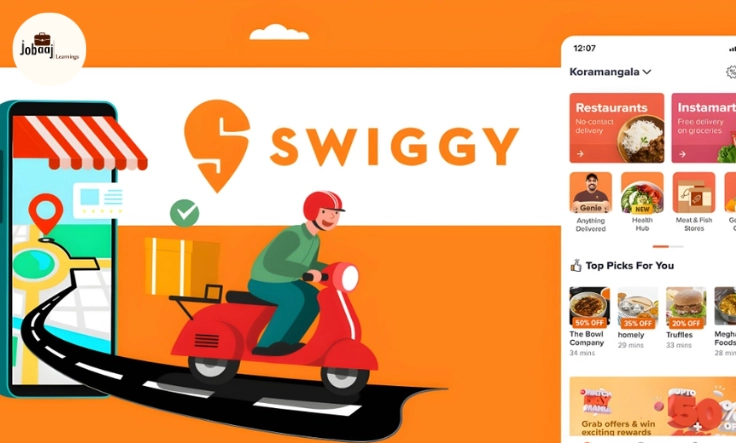
Ever had your biryani show up cold and soggy? Total letdown, right? Few things can ruin a foodie’s excitement faster than a meal arriving late or losing its flavor during the journey. Swiggy understands this frustration, and that’s exactly why they’ve built one of the most advanced data-driven delivery systems in the industry. Behind every steaming plate of food that lands at your doorstep on time is not just a delivery executive rushing through traffic—it’s a powerful engine of real-time analytics working silently in the background. This system is constantly learning, predicting, and optimizing, all so that your cravings are met quickly and in the best possible condition.
What makes this even more fascinating is how Swiggy’s technology mimics human instincts at scale. Just as you might choose a different route to avoid a traffic jam or estimate how long a takeaway order will take, Swiggy’s algorithms do this—but for millions of orders daily. They take into account not only traffic but also unpredictable variables like sudden rain showers, peak lunch-hour chaos, and even rider fatigue. By weaving all these moving parts into one synchronized system, Swiggy has turned food delivery into a science that balances precision with speed.
The Data-Driven Delivery Dance
Swiggy’s daily operations can be compared to a perfectly choreographed dance where every step is data-driven. From the moment you place an order, a massive stream of information flows into Swiggy’s system: the restaurant’s cooking time, the distance to your location, the available fleet of delivery executives nearby, and even the current road conditions. This constant inflow of data becomes the backbone of their route optimization strategies.
Picture a delivery executive juggling three different orders at once—one biryani, one pizza, and one salad. Without a system, this could be chaos. But Swiggy’s algorithms map out the most efficient sequence of pickups and drop-offs. They not only decide which order to pick first but also predict how long the restaurant might take to prepare each dish, how traffic will change in the next 20 minutes, and where shortcuts can save precious seconds. Every decision is calculated to reduce idle time, prevent backtracking, and ensure that food reaches you as quickly as possible without compromising quality.
The result? Customers get hot, fresh meals while delivery executives cover more ground with less effort. This boosts efficiency, lowers operational costs, and ultimately ensures that Swiggy stays ahead in the fiercely competitive food delivery market.
Predictive Analytics: Anticipating the Hunger Pangs
Swiggy doesn’t just wait for orders to come flooding in—it actively anticipates them. By digging deep into historical data, the platform can predict when and where hunger will strike. For instance, Swiggy knows that during monsoon evenings in Mumbai, pakora and chai orders spike. On cricket match nights, pizzas, burgers, and soft drinks take center stage. During festivals like Diwali, sweet shops see overwhelming demand, while in December, cake orders skyrocket.
Swiggy uses this knowledge to prepare in advance. Restaurants are notified of expected surges so they can stock up on ingredients, and delivery executives are strategically positioned in hotspots to reduce wait times. Think of it like a chess game—Swiggy moves its pieces into the right places before the game heats up. So when you order, the system doesn’t scramble—it simply executes a well-thought-out plan.
This level of foresight not only ensures faster deliveries but also reduces the environmental impact. By clustering deliveries and avoiding unnecessary travel, Swiggy cuts down fuel usage and lowers carbon emissions. It’s a fine example of how data science can drive both customer satisfaction and sustainability at the same time.
The Impact: Beyond Speedy Deliveries
The most obvious benefit of Swiggy’s data-driven model is, of course, speed. But the impact goes much deeper. Operational efficiency is improved across the board, meaning less wasted fuel, better utilization of the workforce, and fewer customer complaints. Delivery executives benefit as well—they spend less time idling on the road, complete more deliveries per shift, and earn more while expending less effort. Restaurants too gain from this ecosystem, as faster and more reliable deliveries encourage repeat orders and higher customer ratings.

Moreover, Swiggy’s focus on analytics isn’t static—it’s evolving. With every order completed, the system learns and refines itself, becoming better at predicting bottlenecks and offering solutions. Over time, this creates a compounding effect: shorter delivery times, optimized costs, and a smoother customer journey that keeps people coming back. In a market where customer loyalty can shift with just one bad experience, Swiggy’s investment in data is its strongest competitive moat.
Case Study: How Swiggy Uses Data Analytics for Route Optimization
Consider a busy Friday evening in Bengaluru, where thousands of orders are placed simultaneously. Without analytics, the chaos would be unimaginable—drivers stuck in traffic, restaurants overwhelmed, and customers growing impatient. But Swiggy’s predictive systems step in to organize the madness. They assign delivery executives not just based on proximity but also on predicted cooking times, traffic density, and drop-off clusters.
For example, if three people in the same apartment complex place orders from three different restaurants, Swiggy’s system may assign one executive to handle them in sequence instead of sending three separate riders. This reduces road congestion, cuts delivery costs, and ensures efficiency without sacrificing service quality. Multiply this across a city with millions of residents, and the scale of optimization becomes mind-boggling.
Conclusion
Swiggy’s success story isn’t just about delivering food—it’s about how intelligent use of data can transform an entire industry. By continuously refining its algorithms, predicting customer needs, and optimizing every leg of the journey, Swiggy has built a delivery engine that is faster, smarter, and greener.
They’ve proven that data is not just about numbers and dashboards—it’s about enhancing real human experiences. From reducing delays and cutting costs to ensuring that your biryani arrives hot and your dessert stays intact, Swiggy is redefining what it means to serve delight at scale. And as technology evolves, we can only expect their systems to grow sharper, more efficient, and even more customer-focused.
So, the next time you open the Swiggy app and your food shows up right on time, remember—it wasn’t just luck. It was data, working tirelessly behind the scenes to make your craving count.
Dreaming of a Data Analytics Career? Start with Data Analytics Certificate with Jobaaj Learnings.
Frequently asked questions
How does Swiggy use data analytics for route optimization?
Swiggy leverages data analytics and predictive modeling to analyze real-time traffic, order volume, and delivery driver locations, dynamically optimizing routes for faster and more efficient deliveries.
What is the impact of route optimization on Swiggy's operations?
Optimized routes lead to reduced delivery times, improved fuel efficiency, and increased driver productivity, ultimately resulting in lower operational costs and higher customer satisfaction.
What technologies does Swiggy use for route optimization?
Swiggy employs various technologies, including machine learning algorithms and AI-powered systems, to analyze vast datasets and predict the optimal routes in real-time, considering various factors like traffic and weather.
How does route optimization improve customer satisfaction?
Faster and more reliable deliveries translate to happier customers. Hot food arrives promptly, leading to increased customer loyalty and positive reviews. On-time delivery is a key differentiator.
What are the key benefits of Swiggy's route optimization strategy?
The key benefits are increased delivery efficiency, improved on-time delivery rates, enhanced customer satisfaction, reduced operational costs, and a competitive advantage in the food delivery market.

Join 5,00,000+ Subscribers
Be a part of our ever growing community.