Categories













/content/learnings/assets/header/ManagementConsulting.svg)
/content/learnings/assets/header/InvestmentBanking.svg)
























Understanding Correlation and Causation: What They Mean and How They Differ

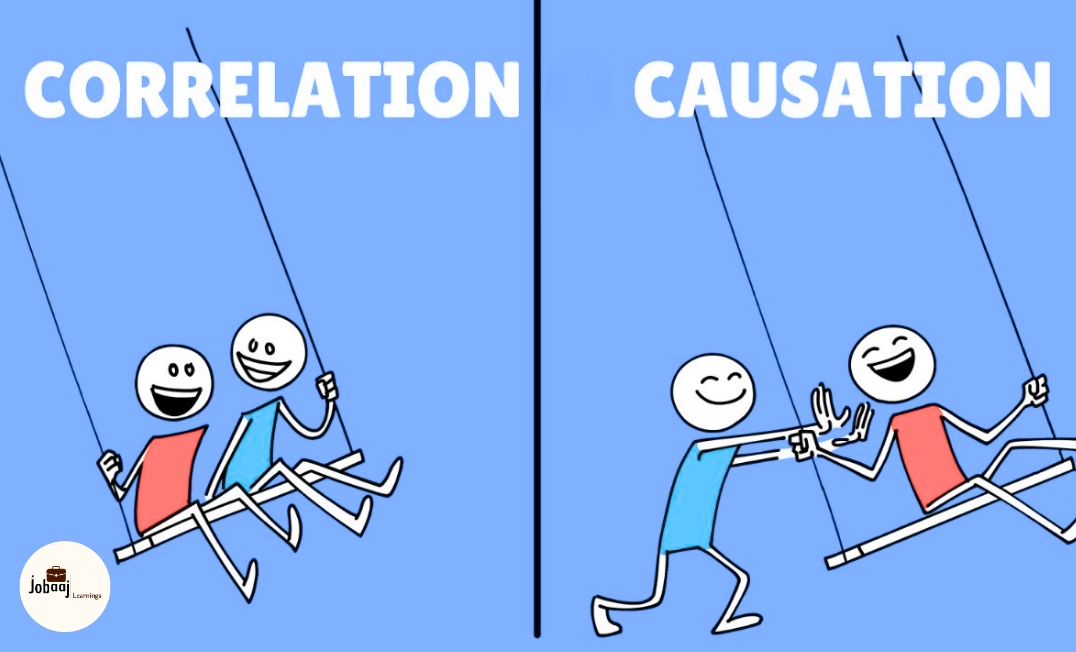
In the world of data analysis, correlation and causation are two fundamental concepts that often get confused, even by seasoned researchers. These terms are used to describe relationships between variables, but they mean very different things. Understanding the difference is essential for making accurate inferences from data and avoiding misleading conclusions.
Exploring a career in Data and Business Analytics? Apply Now!
Imagine this: You notice that ice cream sales go up when there is an increase in shark attacks. The data shows a strong correlation between the two, but that doesn’t mean eating ice cream causes shark attacks. This is a classic example of how correlation does not imply causation.
In this blog, we will break down the concept of correlation, explain its importance, and highlight the crucial difference between correlation and causation. By the end, you’ll have a deeper understanding of both, allowing you to interpret data more accurately and make smarter decisions.
What is Correlation?
Correlation refers to a statistical relationship between two variables. When two variables are correlated, it means that there is a pattern or association between them. If one variable changes, the other is likely to change as well, but it doesn’t necessarily mean that one causes the other.
Types of Correlation
- Positive Correlation
In a positive correlation, as one variable increases, the other also increases. For example, as education level increases, income level tends to increase as well. Both variables change in the same direction. - Negative Correlation
A negative correlation happens when one variable increases while the other decreases. For example, as hours spent watching TV increase, academic performance may decrease. The two variables move in opposite directions. - Zero or No Correlation
In some cases, there may be no relationship between the variables. For example, there’s likely no correlation between shoe size and IQ. The two are completely unrelated.
Measuring Correlation
The correlation coefficient (denoted as r) quantifies the relationship between two variables. It ranges from -1 to +1:
- r = +1: Perfect positive correlation
- r = -1: Perfect negative correlation
- r = 0: No correlation
A value close to +1 or -1 indicates a strong correlation, while a value close to 0 means there is no correlation.
What is Causation?
Causation refers to a relationship where one variable directly affects or causes the other. In other words, causation goes beyond mere association; it implies that a change in one variable will lead to a predictable change in the other.
For example, smoking causes lung cancer. There is a causal relationship because the action of smoking directly leads to the development of cancer over time. This is a key distinction from correlation, where one variable might be associated with another without any direct effect.
Establishing Causation
Establishing causation requires more than just observing a pattern between two variables. It often involves a controlled experiment or further analysis to prove that:
- A change in one variable (X) leads to a change in another variable (Y).
- The relationship is not coincidental (i.e., it’s not just due to random chance).
- There is a clear mechanism or reason why X affects Y.
How Correlation Differs from Causation
1. Direction of the Relationship
Correlation shows that two variables move together, but it doesn’t tell you if one causes the other.
Causation explicitly states that one variable causes the other to change.
For example, if studies show a correlation between sleep and academic performance, it doesn’t automatically mean that sleep causes higher grades. It might be that good students tend to sleep well, but it could also be the case that students with better grades are less stressed and sleep more.
2. Underlying Factors and Confounding Variables
In many cases, a third variable or confounding factor could be influencing both of the correlated variables. For example, there may be a correlation between ice cream sales and shark attacks because both happen more often during the summer months. The summer heat is the confounding factor driving both variables.
In contrast, with causation, you need to establish a clear causal link between the variables that holds true even when other factors are accounted for.
3. Implication for Decision-Making
Correlation helps you identify patterns and trends but doesn’t tell you what actions to take. It can be used for predictive purposes but doesn’t imply control.
Causation, on the other hand, allows you to make decisions that will influence outcomes. If you know that increasing exercise causes improved health, you can use this knowledge to create actionable plans for improving well-being.
Real-Life Examples of Correlation vs. Causation
Example 1: Ice Cream and Shark Attacks
Correlation: There is a positive correlation between ice cream sales and shark attacks during summer months.
Causation: The two are not causally related; rather, summer weather causes both the increase in ice cream sales and people swimming in the ocean, leading to more shark attacks.
Example 2: Smoking and Lung Cancer
Correlation: Studies have found a strong correlation between smoking and lung cancer.
Causation: It’s well-established that smoking causes lung cancer due to the harmful chemicals in tobacco.
How to Avoid Confusing Correlation with Causation
1. Look for Confounding Variables
Before concluding that one variable causes another, check if there are any other factors at play that could explain the relationship. In other words, look for any third variables that may be affecting the outcome.
2. Use Experimental Design
The gold standard for proving causation is conducting randomized controlled trials (RCTs) where variables can be controlled and tested in isolation. This helps eliminate other factors that could influence the results.
3. Consider the Mechanism
If you want to claim causation, consider whether there is a logical and physical mechanism that can explain why one variable leads to a change in another. For instance, the mechanism behind smoking causing cancer is well understood at the biological level.
Conclusion
Understanding the difference between correlation and causation is crucial for interpreting data accurately and making informed decisions. While correlation can show us trends and patterns, only causation provides the certainty that one event will lead to another. For anyone working with data, recognizing the difference is key to avoiding misleading conclusions and making more reliable predictions.
Whether you’re a researcher, a business owner, or simply someone looking to understand the world better, it’s essential to ask: Does this correlation imply causation, or is there another factor at play?
Aspiring for a career in Data and Business Analytics? Begin your journey with a Data and Business Analytics Certificate from Jobaaj Learnings.
Frequently asked questions
What is the difference between correlation and causation?
Correlation refers to a relationship between two variables where they change together, but it doesn’t imply that one causes the other. Causation, on the other hand, indicates that one variable directly causes a change in another.
Can correlation imply causation?
No, correlation does not imply causation. Just because two variables are correlated doesn’t mean one causes the other. A third variable might be influencing both.
How do we prove causation?
To prove causation, experiments such as randomized controlled trials (RCTs) are necessary to isolate the effect of one variable on another while controlling for other factors.
What is an example of correlation but not causation?
An example is the correlation between ice cream sales and shark attacks in summer. The real cause is the hot weather that leads to both higher ice cream sales and more people swimming in the ocean, which increases the risk of shark attacks.
Why is understanding correlation important in data analysis?
Understanding correlation helps identify patterns and trends, but it’s crucial to recognize that correlation alone doesn’t explain cause-and-effect relationships. This distinction helps make accurate decisions and predictions.
Join 5,00,000+ Subscribers
Be a part of our ever growing community.