Categories













/content/learnings/assets/header/ManagementConsulting.svg)
/content/learnings/assets/header/InvestmentBanking.svg)
























Decentralized Applications (dApps) Explained: How They Work and Differ from Traditional Apps

In the digital era, most of the apps we use whether social media, banking, or productivity tools rely on centralized servers controlled by a company. Decentralized applications, or dApps, challenge this model by running on blockchain networks, offering security, transparency, and user control in ways traditional apps cannot.
Exploring a career in Web Development? Apply now!
Understanding dApps is essential for anyone interested in blockchain technology, cryptocurrency, or decentralized digital ecosystems, as they represent a fundamental shift in how software can operate in a trustless environment.
What Decentralized Applications Are
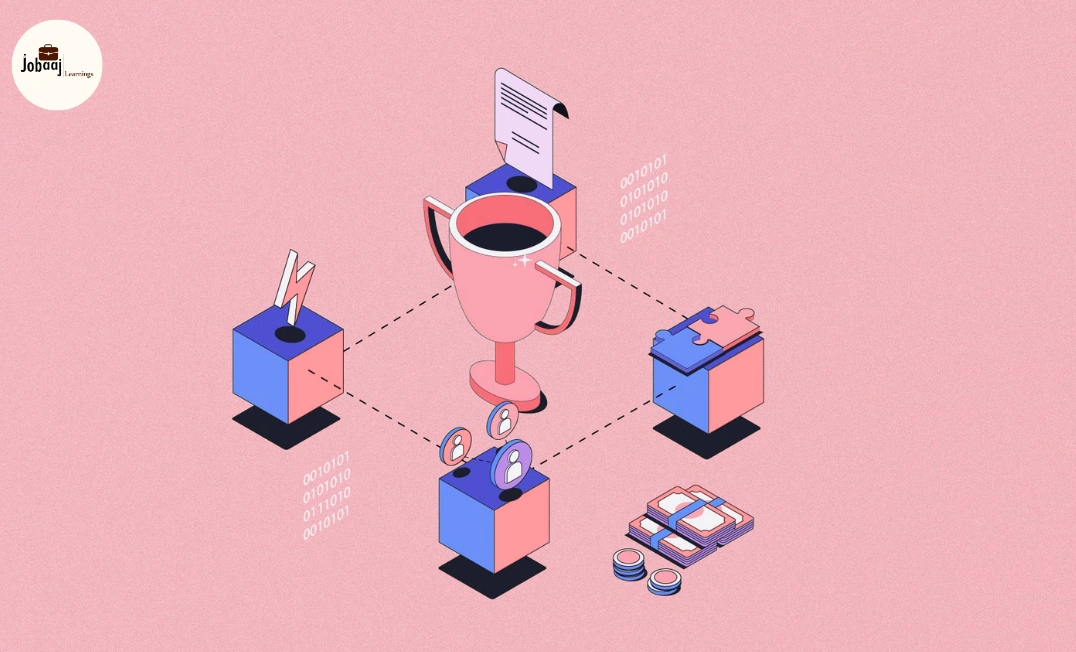
Decentralized applications (dApps) are software applications that run on blockchain networks rather than centralized servers. Unlike traditional apps that rely on a single entity to manage data and execute logic, dApps leverage a network of nodes to:
- Verify and execute transactions
- Store data in a decentralized ledger
- Enforce rules through smart contracts
The result is an app that is tamper-proof, transparent, and resistant to censorship, giving users direct control over their data and interactions.
How dApps Work
dApps combine several key blockchain concepts:
- Smart Contracts: The core logic of a dApp runs in self-executing code on the blockchain. When conditions are met, actions like payments, data updates, or token transfers happen automatically.
- Blockchain Network: Transactions and app operations are recorded on the blockchain, which ensures immutability and transparency.
- Front-End Interface: Users interact with the dApp through a familiar web or mobile interface, often using digital wallets to authenticate and authorize transactions.
Example: A decentralized finance (DeFi) app allows users to lend, borrow, and trade assets without a bank. Smart contracts automatically execute these transactions, and the blockchain records all activity publicly.
Key Differences Between dApps and Traditional Apps
|
Aspect |
Traditional Apps |
Decentralized Apps (dApps) |
|
Control |
Managed by a central authority or company |
Operate on a blockchain network; control distributed across nodes |
|
Data Storage |
Centralized servers |
Stored on blockchain; immutable and transparent |
|
Reliability |
Vulnerable to server outages or hacks |
Resilient due to distributed nodes; no single point of failure |
|
Privacy & Security |
Data often controlled by app owner; privacy depends on policies |
Users maintain ownership; cryptographic security ensures data integrity |
|
Execution |
App logic runs on company-controlled servers |
Logic runs through blockchain smart contracts; execution is automated and trustless |
|
Monetization |
Company-defined, may include ads or subscriptions |
Often token-based, rewarding users and developers through blockchain mechanisms |
|
Censorship Resistance |
Company can block or restrict access |
Network-wide consensus prevents censorship or unilateral shutdown |
Examples of dApps in Action
dApps are already widely used across industries, demonstrating their potential and versatility:
- Decentralized Finance (DeFi): Applications like Aave, Compound, and Uniswap allow users to lend, borrow, and trade assets without banks. Smart contracts automatically handle lending terms, interest calculations, and repayments, removing intermediaries and reducing costs.
- Gaming: Blockchain games like Axie Infinity and Decentraland give players true ownership of in-game assets. Players can trade items freely, and ownership is verified on the blockchain, unlike traditional games where items exist only on centralized servers.
- NFT Marketplaces: Platforms such as OpenSea and Rarible allow creators to mint, sell, and trade NFTs securely. Smart contracts automatically enforce royalties and ownership transfers, ensuring fairness and transparency.
- Digital Identity: dApps are being used to create secure, verifiable digital identities. Users can control access to personal information, sharing only what’s necessary while retaining ownership of their data.
- Supply Chain Management: Companies like VeChain use blockchain to track goods from production to delivery, ensuring authenticity, preventing counterfeiting, and improving transparency for customers and regulators.
These examples show that dApps can be applied wherever trust, transparency, and automation are critical.
Benefits of Using dApps
The adoption of dApps comes with several tangible benefits:
- Security: The decentralized structure and cryptographic protections make dApps resistant to hacking and tampering.
- Transparency: All transactions are recorded on a public ledger, allowing auditing and accountability.
- User Control: Users retain ownership of their data and digital assets, reducing reliance on central authorities.
- Censorship Resistance: No single entity can block access or alter the application, ensuring uninterrupted usage.
- Automation: Smart contracts enable self-executing logic, reducing manual intervention and potential errors.
These features make dApps particularly attractive in finance, gaming, digital collectibles, and any industry requiring trustless operations.
Challenges in Adopting dApps
Despite their potential, dApps face several challenges that must be considered:
- Scalability: Public blockchain networks can struggle with high transaction volumes, leading to slower performance and higher costs.
- Complexity: Users need digital wallets, cryptocurrency, and understanding of blockchain mechanics, which can create a steep learning curve.
- Legal and Regulatory Uncertainty: Many jurisdictions are still defining how decentralized applications and their transactions fit into existing laws.
- Integration Difficulties: Incorporating dApps into existing business processes requires careful planning and technical expertise.
- User Adoption: A decentralized app’s value often depends on network participation; low user engagement can limit functionality.
Understanding these limitations is crucial for developers and businesses looking to adopt dApps effectively.
Conclusion
Decentralized applications are redefining how software operates in a digital economy. By combining blockchain technology with smart contracts, dApps provide automation, transparency, and security that traditional apps cannot match. From financial services to gaming, NFTs, digital identity, and supply chains, dApps are proving that decentralization is not just a trend it’s the future of digital interaction.
Whether you are a developer, entrepreneur, or tech enthusiast, understanding how dApps function, their differences from traditional applications, and their practical applications is essential for navigating the emerging decentralized web.
Dreaming of a Web Development Career? Start with Web Development Certificate with Jobaaj Learnings.
Frequently asked questions
What are decentralized applications (dApps)?
dApps are applications that run on blockchain networks instead of centralized servers. They use smart contracts to automate transactions and provide security, transparency, and user control.
How are dApps different from traditional apps?
Unlike traditional apps controlled by a company, dApps operate on decentralized networks, store data on the blockchain, and execute logic automatically via smart contracts, giving users ownership and reducing reliance on intermediaries.
Where are dApps used today?
dApps are widely used in decentralized finance (DeFi), blockchain gaming, NFT marketplaces, digital identity systems, and supply chain management, where trust, transparency, and automation are critical.
What benefits do dApps offer over traditional apps?
dApps provide transparency, security, user data ownership, censorship resistance, and automated execution of agreements, improving reliability and trust in digital interactions.
What are the challenges of using dApps?
Challenges include scalability, user complexity, regulatory uncertainty, integration difficulty with existing systems, and dependency on network adoption for functionality.
Join 5,00,000+ Subscribers
Be a part of our ever growing community.