Categories








































In late 2024, a young developer named Rohan landed his first freelance project: building an e-commerce site for a local clothing brand. Excited but overwhelmed, he soon realized that plain HTML, CSS, and JavaScript wouldn’t be enough to deliver a polished, scalable website. That’s when he discovered web development frameworks. Within weeks, he learned the basics of React and Node.js, and suddenly, the impossible felt achievable. His client was thrilled, and Rohan’s career took off.
Exploring a career in Web Development? Apply now!
Stories like Rohan’s are common. Frameworks are no longer optional they are the backbone of modern web development. With technology evolving faster than ever, 2026 brings new trends, stronger frameworks, and sharper tools every developer should know. But which ones are truly essential? Let’s dive in.
What Are Web Development Frameworks?
A web development framework is a pre-built set of tools, libraries, and best practices that simplify the process of building websites and applications. Instead of starting from scratch, frameworks provide ready-made structures for managing code, handling requests, creating user interfaces, and ensuring scalability.
Frameworks save time, reduce errors, and make collaboration easier. More importantly, they prepare developers for industry demands, since most companies prefer hiring developers skilled in popular frameworks.
Essential Frontend Frameworks for 2026
ReactJS
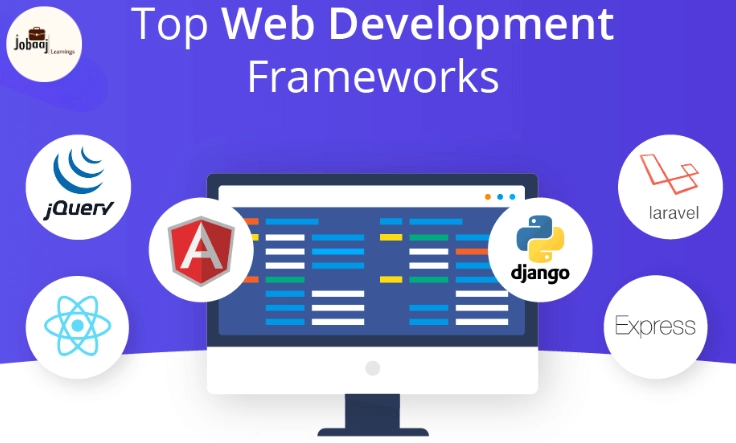
ReactJS remains one of the most widely used libraries for building user interfaces. Its component-based architecture allows developers to create reusable parts, making apps scalable and efficient. The virtual DOM ensures fast updates, while its massive ecosystem supports everything from mobile apps (React Native) to advanced server-side rendering (Next.js).
Angular
Angular, developed by Google, is a complete framework that offers powerful tools for building large-scale, enterprise-level applications. With TypeScript at its core, Angular ensures strong typing, cleaner code, and long-term scalability. It comes with built-in solutions for routing, state management, and testing.
Vue.js
Vue.js is loved for its simplicity and flexibility. It combines the best of Angular and React while being lightweight and beginner-friendly. In 2026, Vue continues to grow thanks to its gentle learning curve and adaptability, making it perfect for startups and small-to-medium businesses.
Essential Backend Frameworks for 2026
Node.js with Express
Node.js, powered by JavaScript, allows developers to build scalable backend services. With Express.js as its most popular framework, developers can create APIs and web applications that are fast and efficient. Its non-blocking architecture makes it perfect for real-time applications like chat apps and streaming platforms.
Django
Django is a Python-based framework known for its “batteries-included” philosophy. It provides almost everything out of the box authentication, database management, and security features. Django is highly reliable and used in industries like healthcare, fintech, and education.
Ruby on Rails
Ruby on Rails has stood the test of time with its developer-friendly environment and rapid prototyping capabilities. Startups love Rails because it allows them to launch products quickly without sacrificing quality. In 2026, Rails still powers many successful web applications across the globe.
Laravel
Laravel, built with PHP, continues to dominate the PHP ecosystem. It offers elegant syntax, a strong community, and tools for authentication, routing, and database management. For businesses still relying on PHP infrastructure, Laravel is often the framework of choice.
Why Learning Frameworks Matters in 2026
In 2026, employers are not just looking for coders they want problem solvers who can work with industry-standard frameworks. Frameworks bridge the gap between theory and practice, making developers job-ready and future-proof.
Whether you aim to join a startup, freelance, or land a corporate role, mastering a few essential frameworks ensures you stay competitive in a rapidly changing tech world.
Conclusion
Frameworks are the foundation of modern web development. ReactJS, Angular, and Vue continue to dominate the frontend, while Node.js, Django, Rails, and Laravel shape the backend. Each has unique strengths, but all share one goal: to make building powerful, user-friendly applications easier.
If you’re stepping into 2026 determined to grow as a developer, investing time in these frameworks will open doors to exciting projects, global opportunities, and long-term career success.
Dreaming of a Web Development Career? Start with Web Development Certificate with Jobaaj Learnings.
Frequently asked questions
What are web development frameworks?
Web development frameworks are pre-built tools and libraries that simplify building websites and applications by providing structure, reusable code, and best practices.
Which frontend frameworks should I learn in 2026?
In 2026, the most essential frontend frameworks are ReactJS, Angular, and Vue.js due to their popularity, scalability, and strong community support.
What are the top backend frameworks for 2026?
Backend frameworks to focus on in 2026 include Node.js with Express, Django, Ruby on Rails, and Laravel. These offer speed, reliability, and flexibility.
Why are frameworks important for web developers?
Frameworks save time, reduce errors, and make collaboration easier. They also match industry expectations, making developers more job-ready.
Is learning ReactJS still valuable in 2026?
Yes, ReactJS remains one of the most in-demand skills for frontend developers. It powers applications at major companies and startups worldwide.
Which framework is best for beginners in web development?
Vue.js and Django are often recommended for beginners due to their simplicity, strong documentation, and beginner-friendly learning curve.

Join 5,00,000+ Subscribers
Be a part of our ever growing community.