Categories














/content/learnings/assets/header/ManagementConsulting.svg)
/content/learnings/assets/header/InvestmentBanking.svg)


























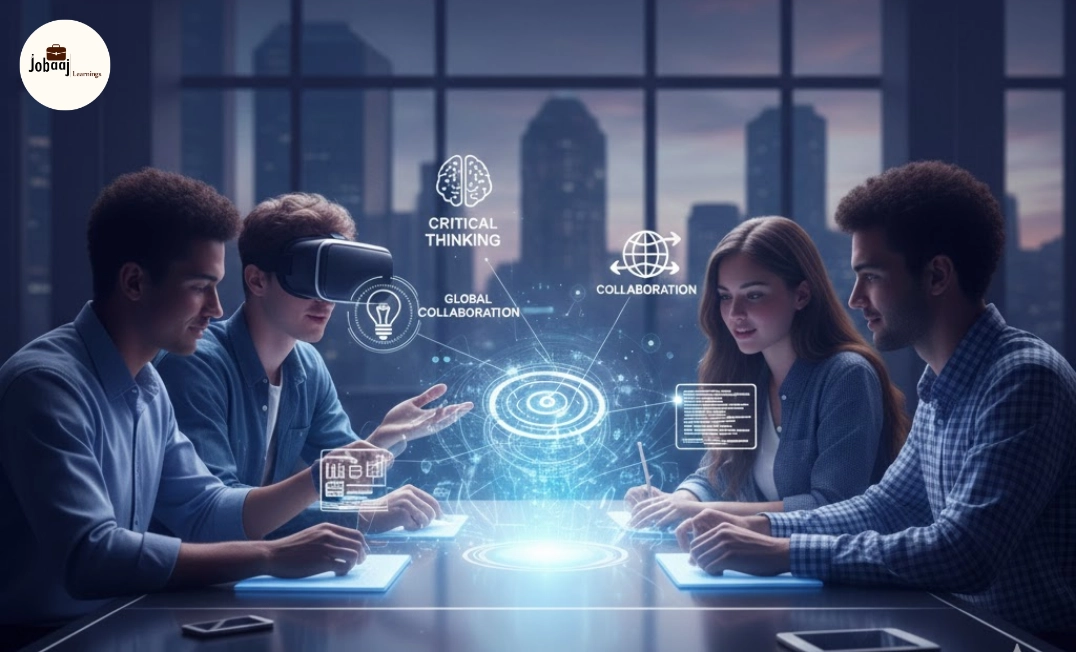
The job market of 2026 is going to look very different from what we see today. As technology advances, industries are evolving, and new skills are emerging faster than ever before. For students preparing to enter this future, staying ahead of the curve is essential. The skills that will set you apart in the job market aren't just technical they're a combination of digital proficiency, creativity, emotional intelligence, and adaptability.
In this blog, we’ll explore the fastest-growing skills that students need in 2026 to not only secure their dream job but to thrive in an ever-changing work environment. These skills will help students future-proof their careers, adapt to new trends, and build a foundation for long-term success in the modern workplace.
1. Artificial Intelligence and Machine Learning
AI and Machine Learning are at the heart of every emerging technology, from automation to data analysis. In 2026, industries like healthcare, finance, marketing, and even entertainment will rely on AI to increase efficiency, reduce costs, and improve customer experiences.
Students who master AI and ML will be equipped for a range of careers—from data scientists to AI engineers. By learning how algorithms work, students can contribute to creating smarter applications, improving predictive models, and even automating tasks. The demand for AI talent is growing exponentially, making it one of the most valuable skill sets for future professionals.
Key Tools and Technologies to Learn:
-
TensorFlow
-
Python (especially for ML)
-
Data Science Libraries (Pandas, Numpy, Matplotlib)
-
Natural Language Processing (NLP)
2. Data Science and Analytics
Data is the new oil, and businesses are collecting more of it than ever before. With vast amounts of data available, organizations need skilled professionals who can interpret, analyze, and derive actionable insights. Data science and analytics will continue to be critical in 2026 for decision-making, market research, product development, and more.
Students who specialize in data science can work across industries, analyzing large datasets to uncover trends and patterns that can lead to smarter business decisions. With expertise in data visualization, statistics, and predictive analytics, students will have the opportunity to impact key business decisions.
Key Skills to Develop:
-
SQL and NoSQL Databases
-
Statistical Analysis
-
Data Visualization Tools (Tableau, Power BI)
-
Machine Learning Basics
3. Cybersecurity
As technology grows, so does the threat of cyberattacks. The rise in digitalization, cloud computing, and IoT (Internet of Things) devices means cybersecurity will remain a top priority for businesses. With cyber threats becoming more sophisticated, the need for cybersecurity professionals is expected to surge in 2026.
Cybersecurity professionals play a critical role in protecting sensitive data, ensuring privacy, and preventing malicious attacks. For students interested in IT, network security, or ethical hacking, cybersecurity is an indispensable skill. It offers not only high-paying roles but also job security, as every industry requires a robust defense against data breaches.
Key Skills and Certifications:
-
Ethical Hacking
-
Network Security
-
Firewalls and Encryption
-
Cybersecurity Certifications (e.g., CompTIA Security+, CISSP)
4. Cloud Computing
The shift to the cloud is one of the most significant transformations happening in IT today. Cloud computing enables businesses to store and access data over the internet rather than local servers, which allows for greater flexibility, scalability, and efficiency. As more organizations move their infrastructure to the cloud, the need for cloud computing professionals continues to grow.
In 2026, students with cloud computing skills will be equipped for roles in cloud infrastructure, DevOps, and cloud-based application development. Cloud platforms like AWS, Microsoft Azure, and Google Cloud will be central to IT services, and expertise in these platforms will give students an edge in tech careers.
Key Platforms to Focus On:
-
Amazon Web Services (AWS)
-
Microsoft Azure
-
Google Cloud Platform
-
Docker and Kubernetes
5. Emotional Intelligence (EQ)
While technical skills are essential, emotional intelligence (EQ) is becoming increasingly important in the workplace. EQ involves the ability to understand and manage your emotions, as well as the emotions of others. This skill is crucial for building strong relationships, working in teams, and navigating complex work environments.
Students who develop their EQ will find it easier to collaborate with diverse teams, manage stress, and lead effectively. As workplaces become more collaborative and diverse, emotional intelligence is key to fostering a positive, productive work culture.
Key Aspects to Develop:
-
Self-awareness
-
Empathy
-
Conflict resolution
-
Adaptability
6. Creative Thinking and Problem-Solving
In a rapidly changing world, the ability to think creatively and solve problems is an invaluable skill. Creative thinking involves approaching problems from new angles and coming up with innovative solutions, while problem-solving requires analytical thinking to break down issues and find actionable answers.
Students who can think creatively will be able to come up with new ideas, solutions, and strategies that will set them apart in their careers. These skills are especially valuable in industries like marketing, product development, and entrepreneurship.
Key Strategies to Develop:
-
Brainstorming techniques
-
Design thinking methodology
-
Ideation and innovation
-
Systems thinking
7. Blockchain Technology
Blockchain, initially known for cryptocurrency, has now expanded into industries like finance, healthcare, logistics, and supply chain management. By securely storing data across multiple systems, blockchain technology provides transparency, security, and decentralization.
Blockchain has become a game-changer in securing data, creating smart contracts, and tracking transactions. Students who learn blockchain can work in industries like fintech, logistics, or even government services, where secure, transparent data systems are critical.
Key Areas to Focus On:
-
Smart contracts
-
Cryptocurrency basics
-
Decentralized apps (dApps)
-
Blockchain frameworks (Ethereum, Hyperledger)
8. Virtual and Augmented Reality (VR & AR)
VR and AR are gaining traction in industries like gaming, healthcare, retail, and education. By immersing users in virtual environments or overlaying digital information on the physical world, these technologies offer unique opportunities for innovation.
For students with a passion for gaming, design, or tech, VR and AR offer exciting career prospects. These skills are applicable in industries that focus on simulation, training, education, and entertainment.
Key Technologies to Explore:
-
Unity for game development
-
Unreal Engine
-
Augmented Reality development tools (ARKit, ARCore)
-
VR headset development
9. 5G Technology
With 5G networks set to revolutionize how we connect and interact with the digital world, students with expertise in 5G technology will be in high demand. This next-gen mobile network promises faster speeds, more reliable connections, and lower latency, enabling the growth of IoT, autonomous vehicles, and smart cities.
As 5G technology becomes more widespread, it will drive innovation in industries such as telecommunications, automotive, and healthcare. Students can position themselves as leaders in this field by learning how 5G works and how it can be applied to various sectors.
Key Areas to Study:
-
Wireless communication principles
-
5G network architecture
-
IoT and smart devices
-
Mobile network management
10. Foreign Language Proficiency
With globalization continuing to shape the world, being able to communicate in multiple languages is a skill that will never go out of style. Students who can speak more than one language will have a competitive edge in the job market, especially in roles that require international collaboration or customer interaction.
In 2026, companies are expanding their global reach, and being multilingual can help students engage with diverse teams, clients, and partners. Language proficiency can also open up opportunities in global marketing, translation services, and international relations.
Top Languages to Learn:
-
Mandarin
-
Spanish
-
French
-
German
-
Arabic
Conclusion
As we move toward 2026, students need to prioritize skills that will not only help them succeed today but also future-proof their careers in an ever-evolving job market. By focusing on a mix of technical and soft skills such as AI, data science, emotional intelligence, and language proficiency students can position themselves as highly valuable professionals ready to take on the challenges of tomorrow’s workforce.
The world is changing rapidly, and those who invest in learning the fastest-growing skills will be well-equipped to thrive in 2026 and beyond. The future is in your hands start developing these skills today to ensure a successful tomorrow.
Frequently asked questions
Why are these skills important for students in 2026?
These skills are crucial for students because the job market is evolving rapidly. By learning these in-demand skills, students can future-proof their careers and stay competitive in a technology-driven world.
How can students learn these skills?
Students can learn these skills through online courses, workshops, boot camps, and practical projects. Many platforms offer affordable or even free resources for self-paced learning.
Which skill should I learn first in 2026?
It depends on your interests and career goals. However, skills like AI, data science, and cybersecurity are highly versatile and in demand across various industries. Start with one that aligns with your passions or desired career path.
Are soft skills like emotional intelligence still important in 2026?
Absolutely! While technical skills are essential, soft skills such as emotional intelligence will remain crucial. They help with communication, teamwork, and leadership, which are vital in any career.
Can learning multiple languages help in the global job market?
Yes, language proficiency opens doors to international opportunities and helps in working with global teams. Being multilingual is a valuable asset in today’s interconnected world.

Join 5,00,000+ Subscribers
Be a part of our ever growing community.