Categories














/content/learnings/assets/header/ManagementConsulting.svg)
/content/learnings/assets/header/InvestmentBanking.svg)


























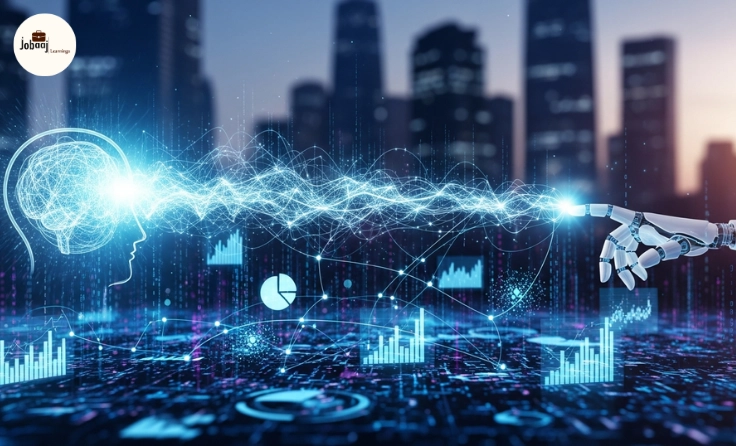
A world where data analytics isn’t just a manual, human-driven process. A world where artificial intelligence (AI) steps in to process, analyze, and even make decisions based on vast amounts of data faster, more accurately, and without human bias. Sounds like a futuristic dream, right? Well, this is the reality we’re moving towards, and it’s happening sooner than we think.
Exploring a career in Data and Business Analytics? Apply Now!
In this blog, we’re going to explore how AI is transforming data analytics and what the future of AI in data analytics holds. From automated data analysis to predictive analytics and real-time decision-making, we’ll break down the exciting possibilities and how businesses can leverage these advancements to stay ahead of the competition.
What is AI in Data Analytics?
Before we dive into the future, let’s quickly define AI in data analytics. In simple terms, AI-powered data analytics refers to using artificial intelligence technologies like machine learning (ML), deep learning, and natural language processing (NLP) to enhance and automate the process of analyzing data.
While traditional data analytics relies on human-driven processes and basic algorithms to generate insights, AI takes this a step further. AI systems can automatically learn patterns, make predictions, and even adapt their algorithms based on new data, all while working at scale and in real-time. This allows businesses to gain deeper insights, make better decisions, and stay agile in a fast-paced world.
The Role of AI in Revolutionizing Data Analytics
The integration of AI in data analytics has already begun, and the results are transformative. AI tools are helping businesses extract valuable insights from data faster and more efficiently than ever before. Here’s how AI is revolutionizing data analytics:
1. Automating Data Processing
One of the most significant benefits of AI in data analytics is its ability to automate time-consuming tasks. Data preparation and cleaning two of the most tedious aspects of data analysis are now being handled by AI-powered tools. AI can identify and fix errors in data, remove duplicates, and standardize data formats without human intervention.
This automation speeds up the entire analytics process and frees up data professionals to focus on more complex tasks, such as interpreting the results and generating actionable insights. With AI handling data cleaning and preprocessing, businesses can analyze data faster, leading to quicker decision-making.
2. Predictive Analytics and Forecasting
One of the most powerful applications of AI in data analytics is predictive analytics. By analyzing historical data and identifying patterns, AI models can forecast future trends, behaviors, and outcomes. This is particularly valuable in industries like retail, finance, and healthcare.
For example, AI can predict which products are likely to sell well during a specific season, help banks identify potential loan defaults, or enable healthcare providers to predict patient outcomes. By leveraging AI to make these predictions, businesses can make data-driven decisions that are not just based on past trends but also on future probabilities.
3. Real-Time Analytics
In the past, data analysis was a process that took time hours, days, or even weeks depending on the volume of data being analyzed. But with AI-driven real-time analytics, businesses can now analyze data as it’s generated, making it possible to make immediate, data-driven decisions.
For example, AI systems in e-commerce platforms can track customer behavior in real-time and adjust pricing or offer personalized discounts to drive sales. In manufacturing, AI can monitor production lines and instantly detect anomalies, reducing downtime and increasing efficiency. Real-time analytics powered by AI is enabling businesses to stay agile and responsive in an ever-changing environment.
4. Enhanced Data Visualization
Data visualization has always been an essential part of data analysis, helping stakeholders understand complex data through charts, graphs, and dashboards. AI is taking data visualization to the next level by automating the creation of these visualizations and highlighting key insights that might otherwise be missed.
AI tools can automatically identify trends and generate visualizations that present the data in the most meaningful way, making it easier for decision-makers to absorb and act on the information. AI can even predict future trends and incorporate those predictions into dynamic, interactive visualizations, helping businesses stay one step ahead.
5. Improving Customer Insights and Personalization
AI is enabling businesses to gain deeper insights into their customers’ preferences, behaviors, and purchasing patterns. By analyzing big data from customer interactions across multiple touchpoints, AI can help businesses understand their customers on a more personal level.
This leads to better personalized marketing strategies, more effective customer engagement, and improved customer service. For example, AI can recommend products to customers based on their previous purchases or even predict when a customer might churn, allowing businesses to proactively intervene and retain valuable customers.
The Future of AI in Data Analytics: What’s Next?
So, what’s next for AI in data analytics? The future looks incredibly promising, and here are a few trends to watch out for:
1. AI-Powered Automation at Scale
As AI continues to evolve, we can expect even greater automation in the data analytics process. In the near future, AI will not only automate data processing but also handle more advanced tasks such as hypothesis testing, model selection, and feature engineering. This means that businesses will be able to scale their data analytics efforts without increasing their team size.
2. Deeper Integration with Business Operations
The future of AI in data analytics isn’t just about data scientists or analysts working with AI tools. We’ll see deeper integration of AI-powered analytics across business operations. For example, sales teams could use AI-powered predictive analytics to forecast leads, while marketing teams could automate content generation based on customer behavior. AI will become an integral part of daily operations, driving efficiency and insight across departments.
3. Natural Language Processing for Data Queries
Currently, data analysis involves writing complex queries or using specialized tools to extract insights. But with advancements in natural language processing (NLP), AI will allow business users to simply ask questions in natural language (like "What were the top-selling products last quarter?") and receive insights instantly. This will democratize access to data and make data analysis more accessible to people without technical expertise.
4. Ethical AI and Bias Reduction
As AI becomes more involved in data analytics, one of the biggest challenges will be ensuring that the algorithms are fair, transparent, and unbiased. In the future, AI tools will be designed with ethical considerations in mind, ensuring that decisions made using AI are fair and equitable. There will also be increased emphasis on addressing and reducing biases in AI models to make sure they reflect reality accurately and do not disadvantage certain groups.
Conclusion
The future of AI in data analytics is full of exciting possibilities. AI is already transforming how we process and analyze data, making it faster, more efficient, and more accurate. From automated data processing to predictive analytics and real-time insights, AI is changing the way businesses operate and make decisions. As AI continues to advance, we can expect even greater automation, personalization, and integration across business operations.
If you’re in the world of data or planning to enter it, now is the perfect time to start exploring how AI can enhance your analytics skills. Whether you’re using AI to analyze customer behavior, make data-driven decisions, or improve operational efficiency, AI-powered data analytics is set to define the future of the industry.
Aspiring for a career in Data and Business Analytics? Begin your journey with a Data and Business Analytics Certificate from Jobaaj Learnings.
Frequently asked questions
What is AI in data analytics?
AI in data analytics refers to the use of artificial intelligence technologies like machine learning, natural language processing, and deep learning to automate and enhance the process of analyzing data.
How does AI improve predictive analytics?
AI helps improve predictive analytics by analyzing historical data and identifying patterns that can be used to forecast future trends and behaviors. AI models continuously learn from new data to improve predictions over time.
Can AI automate data analysis?
Yes, AI can automate many aspects of data analysis, such as data cleaning, preprocessing, and even generating insights. AI tools can handle these tasks much faster and more accurately than humans.
What is the role of AI in real-time analytics?
AI plays a crucial role in real-time analytics by processing and analyzing data as it’s generated. This allows businesses to make immediate decisions based on up-to-the-minute data, improving responsiveness and agility.
How will AI impact the future of data analytics?
In the future, AI will continue to automate data analysis, predict trends, and help businesses make data-driven decisions. It will also enhance the user experience by providing more accessible and intuitive ways to interact with data.
What ethical concerns exist with AI in data analytics?
As AI becomes more involved in data analytics, it’s important to address ethical concerns such as algorithmic bias and transparency. Ensuring fairness and accuracy in AI-driven insights will be key to the future of the industry.

Join 5,00,000+ Subscribers
Be a part of our ever growing community.