Categories








































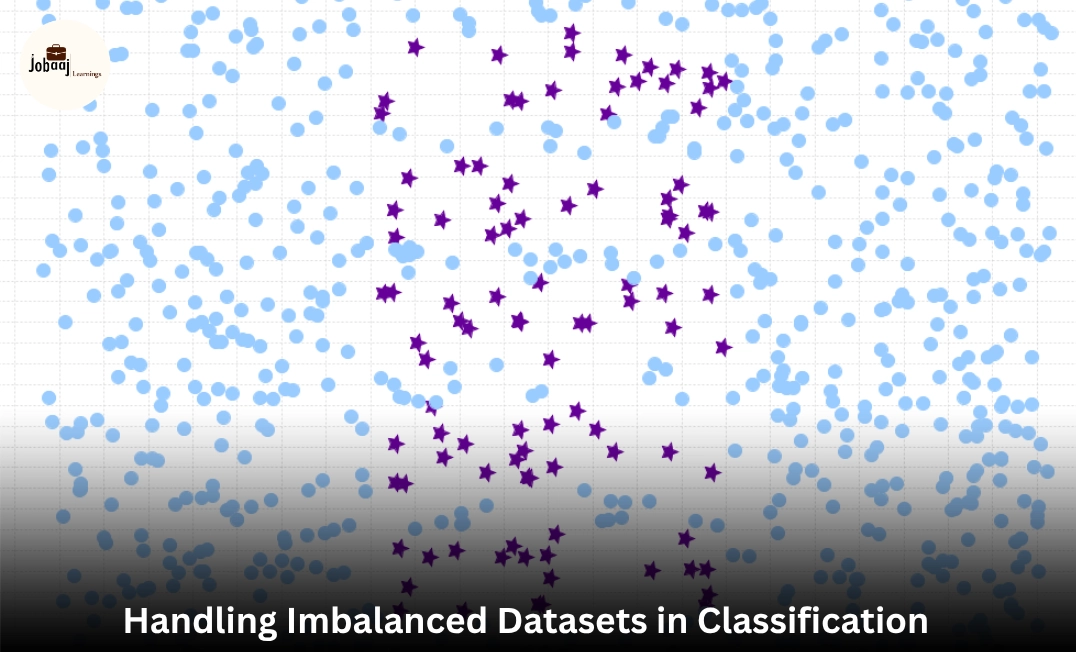
In real-world machine learning problems, perfectly balanced datasets are rare. Most of the time, you will encounter situations where one class significantly outweighs the other. This is known as an imbalanced dataset, and it is especially common in areas like fraud detection, medical diagnosis, and spam filtering.
Exploring a career in Data and Business Analytics? Apply Now!
At first glance, this may not seem like a major issue. However, it can completely mislead your model’s performance. A model trained on imbalanced data may show high accuracy while failing to detect the minority class which is often the most important one.
That is why handling imbalanced datasets is a critical skill for anyone working with classification problems. In this guide, you will learn practical techniques, real-world understanding, and Python-based solutions to handle imbalance effectively.
What is an Imbalanced Dataset?
An imbalanced dataset occurs when the number of observations in one class is much higher than the other.
For example, imagine a dataset where:
- 98% of transactions are normal
- 2% are fraudulent
If your model predicts everything as “normal,” it will still achieve 98% accuracy but it completely fails its purpose.
This is why accuracy alone is not enough.
Quick Summary
If you’re in a hurry, here’s what you need to know:
- Do not rely on accuracy → use precision, recall, F1-score
- Balance your data → oversampling or undersampling
- Use techniques like SMOTE
- Apply class weights in models
- Try ensemble models like Random Forest
- Fine-tune prediction thresholds
Why Imbalanced Data is a Serious Problem
The issue with imbalanced data is not just unequal distribution it is how models interpret it.
Most algorithms aim to reduce overall error. So naturally, they favor the majority class. This leads to:
- Poor detection of minority class
- Misleading accuracy scores
- Weak real-world performance
This becomes critical in cases where the minority class is actually the most valuable, such as detecting fraud or diseases.
Step-by-Step Methods to Handle Imbalanced Data
1. Use the Right Evaluation Metrics
Instead of accuracy, focus on metrics that reflect true performance:
- Precision → how many predicted positives are correct
- Recall → how many actual positives are detected
- F1-score → balance between precision and recall
These metrics ensure that your model is not ignoring the minority class.
2. Oversampling the Minority Class
Oversampling increases the number of minority class samples so the model can learn better patterns.
One of the most effective methods is SMOTE, which creates synthetic data instead of duplicating existing samples.
Python Example (SMOTE)
from imblearn.over_sampling import SMOTE
from collections import Counter
X_resampled, y_resampled = SMOTE().fit_resample(X, y)
print("Original dataset:", Counter(y))
print("Resampled dataset:", Counter(y_resampled))
This helps balance the dataset without losing information.
3. Undersampling the Majority Class
Undersampling reduces the number of majority class samples to balance the dataset.
Python Example (Undersampling)
from imblearn.under_sampling import RandomUnderSampler
rus = RandomUnderSampler()
X_resampled, y_resampled = rus.fit_resample(X, y)
This method is simple but should be used carefully, as it may remove useful data.
4. Using Class Weights
Instead of modifying the dataset, you can tell the model to give more importance to the minority class.
Python Example (Class Weights)
from sklearn.linear_model import LogisticRegression
model = LogisticRegression(class_weight='balanced')
model.fit(X_train, y_train)
This approach is clean and works well in many real-world scenarios.
5. Using Better Algorithms
Some algorithms perform better with imbalanced data. Ensemble methods like Random Forest and boosting techniques are good choices.
Python Example (Random Forest)
from sklearn.ensemble import RandomForestClassifier
model = RandomForestClassifier()
model.fit(X_train, y_train)
These models can capture complex patterns and reduce bias.
6. Threshold Tuning
Most models classify data using a default threshold (usually 0.5). You can adjust this threshold to improve minority class detection.
Example
Instead of predicting:
- Probability > 0.5 → Positive
You can try:
- Probability > 0.3 → Positive
This increases recall for minority classes.
Real-World Example
Imagine you are building a fraud detection system. Out of 10,000 transactions, only 200 are fraud cases.
Without handling imbalance, your model may ignore fraud completely. But by applying SMOTE, using class weights, and adjusting thresholds, the model becomes capable of detecting fraud more effectively.
This directly improves business outcomes and reduces risk.
Common Mistakes to Avoid
- Relying only on accuracy
- Oversampling too much (causes overfitting)
- Removing too much data during undersampling
- Ignoring evaluation metrics
- Not testing on real-world scenarios
Conclusion
Handling imbalanced datasets is not just a technical step it is a critical part of building reliable machine learning models. The goal is not just to improve accuracy, but to ensure that the model performs well for all classes, especially the minority class.
By combining the right techniques such as resampling, class weighting, proper evaluation metrics, and model tuning you can build systems that are both accurate and meaningful.
With practice, handling imbalanced data becomes an essential skill that sets you apart in machine learning and data science.
Aspiring for a career in Data and Business Analytics? Begin your journey with a Data and Business Analytics Certificate from Jobaaj Learnings.
Frequently asked questions
How do you handle imbalanced datasets in Python?
You can handle imbalanced datasets using techniques like SMOTE, undersampling, class weighting, and proper evaluation metrics in Python libraries like sklearn and imblearn.
What is SMOTE and why is it used?
SMOTE is a technique that generates synthetic minority class samples to balance datasets and improve model performance.
Which metric is best for imbalanced classification?
Metrics like precision, recall, and F1-score are better than accuracy for evaluating imbalanced datasets.
Can Random Forest handle imbalanced data?
Yes, Random Forest can handle imbalanced data better than many basic algorithms, especially when combined with other techniques.
Is oversampling better than undersampling?
Both have advantages. Oversampling preserves data while undersampling reduces dataset size, and the best choice depends on the problem.

Join 5,00,000+ Subscribers
Be a part of our ever growing community.