Categories








































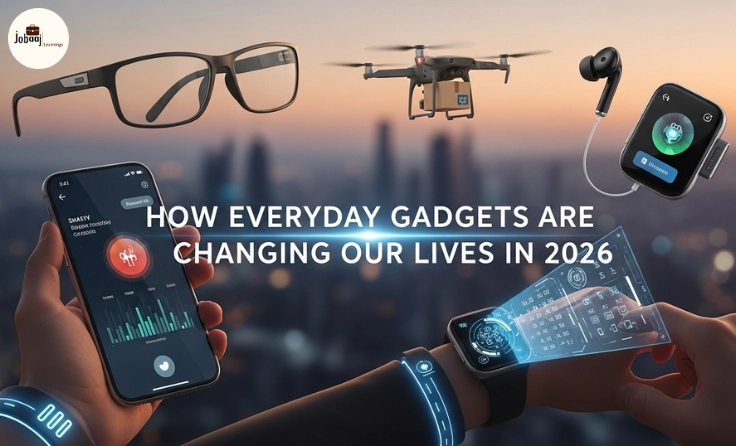
Waking up to the gentle sound of your smart speaker. It’s not just playing your favorite playlist, but it’s also telling you the weather, updating you on your schedule, and even reminding you to drink a glass of water. You head to the kitchen, where your smart coffee maker has already brewed your coffee, exactly the way you like it. By the time you’re ready to start your day, your smart home has already made everything easier, more efficient, and more enjoyable.
In 2026, gadgets aren’t just tools anymore. They’ve become personal assistants, health monitors, and life organizers. Every device we use is becoming more intuitive, connected, and capable of making decisions that improve our daily lives. Whether it’s a smart speaker, a wearable health tracker, or a home automation system, technology is deeply embedded into our routines in ways we never imagined a decade ago.
Let’s dive into how these everyday gadgets are changing the way we live, work, and interact with the world around us.
The Rise of Smart Homes: Our Homes Are Getting Smarter
Imagine a home that knows exactly what you want. A home that adjusts the temperature when you walk into a room, dims the lights as the sun sets, and even starts preparing your favorite meal based on the time of day. It might have sounded like a futuristic dream just a few years ago, but in 2026, it’s a reality for many. Smart homes are no longer a luxury; they’re becoming the norm.
With the help of AI-powered devices, everything from thermostats to refrigerators has become smarter. Your smart thermostat learns your preferences over time and adjusts the heating and cooling to suit your habits. Your smart fridge can remind you when you’re running low on groceries and even suggest recipes based on what you have available. Security systems are now equipped with cameras that can identify faces and alert you if anything unusual happens, making your home not just more comfortable but also safer.
In 2026, smart homes do more than respond to commands they anticipate your needs. From smart lighting that adjusts automatically to voice-controlled appliances that make tasks like cooking and cleaning easier, these gadgets are making everyday life smoother and more efficient.
Wearable Tech: More Than Just a Fitness Tracker
In the past, wearables like fitness trackers were mainly used for tracking steps, calories, and sleep. But in 2026, wearables have evolved into full-fledged personal health assistants. These devices go far beyond fitness they now monitor heart rate, blood pressure, and even mental well-being.
Let’s consider a smartwatch. Today, it’s no longer just a device that tells time. Your smartwatch can give you real-time health insights, track your stress levels, recommend breathing exercises, and even remind you to stay active. It can detect irregularities in your heart rate and alert you if something seems off. When wearables are paired with AI, they become even smarter. These devices learn from your habits and provide personalized health recommendations based on real-time data.
Some wearables can even predict potential health issues by analyzing trends over time. If a device detects changes in your sleep patterns, exercise habits, or heart health, it can suggest steps to help you stay on track. These gadgets don’t just collect data they interpret it, making it easier to stay healthy and informed.
The Evolution of Smartphones: Smarter Than Ever
Smartphones have come a long way, and by 2026, they’re more powerful, personalized, and integrated into our lives than ever before. The typical smartphone experience now involves much more than checking emails or scrolling through social media. These devices are central hubs that manage everything from personal schedules to home automation and even health tracking.
With advancements in 5G technology, smartphones are faster and more responsive, enabling you to stream content, run apps, and communicate seamlessly. Thanks to AI-powered features, your phone can now anticipate your needs. It can suggest the best time for a meeting based on your calendar, remind you to take breaks, and even adjust the brightness and volume based on the environment around you.
The camera systems in smartphones are now capable of producing professional-quality photos and videos, with features like AI-enhanced portraits and night mode for stunning low-light shots. Beyond photography, smartphones have become augmented reality (AR) tools, allowing you to visualize products, try on clothes virtually, and even navigate the world using interactive AR maps.
In 2026, your smartphone is no longer just a tool for communication. It’s an extension of your daily life, making everything more connected and easier to manage.
AI-Powered Gadgets: Making Everything Smarter
From your coffee maker to your vacuum cleaner, AI is making gadgets more intelligent, intuitive, and personal. AI-powered gadgets don’t just respond to commands; they learn from your habits and anticipate your needs.
For example, your AI-powered coffee machine knows your perfect brew strength and temperature. It can even start brewing based on your morning routine, ensuring a fresh cup is ready by the time you wake up. Similarly, your AI-powered vacuum cleaner learns the layout of your home, automatically cleaning in the most efficient way possible and remembering areas that need more frequent attention.
With AI embedded in everyday gadgets, we’re not just interacting with machines we’re developing relationships with them. These devices adapt to our preferences, making life not only easier but also more personalized.
Health and Fitness Gadgets: A New Era of Monitoring
In 2026, health and fitness gadgets have transformed from basic trackers to advanced health companions. These devices now go beyond counting steps they track your heart rate, sleep quality, hydration, and even stress levels. With AI, they provide real-time feedback on your physical and mental health, offering personalized recommendations based on the data they collect.
Smart health gadgets can also offer early warnings about potential health issues. For instance, a smart scale can track weight trends, but it also measures body fat percentage and muscle mass, giving you a deeper understanding of your health. Meanwhile, smartwatches can detect irregularities in your heart rate and alert you to possible heart conditions before they become serious.
These health gadgets empower people to become more proactive about their well-being. Instead of waiting for a doctor’s visit to catch health issues, these devices offer continuous monitoring and the tools needed to stay on top of your health every day.
Conclusion
In 2026, everyday gadgets have evolved from being simple tools to integral parts of our lives. From smart homes that adjust to our preferences, to wearables that track our health, to AI-powered devices that anticipate our needs, technology is changing the way we live in ways we never thought possible. These gadgets are not just making life easier they’re enhancing our well-being, improving efficiency, and deepening our connection with the world around us.
As technology continues to evolve, these gadgets will only get smarter, more personalized, and further integrated into our daily routines. They are helping us live healthier, more efficient, and more connected lives, making 2026 feel like the future we’ve always dreamed of.
Frequently asked questions
How are everyday gadgets improving our lives in 2026?
Everyday gadgets are becoming smarter and more personalized. From smart homes that adjust to our preferences to wearables that track health metrics, technology is making our lives more efficient, connected, and healthier.
What are the most common AI-powered gadgets in 2026?
AI-powered gadgets in 2026 include smart homes, wearables like fitness trackers, smart coffee makers, voice-controlled assistants, and AI-driven security systems that make our daily routines more seamless and efficient.
How do smart homes work in 2026?
Smart homes in 2026 use AI to automate tasks like adjusting temperature, managing lighting, and even ordering groceries. They learn from your behavior to create a more personalized living environment.
Can AI wearables help improve my health?
Yes, AI-powered wearables in 2026 track not only your fitness but also your stress levels, sleep patterns, and heart health. They provide real-time feedback and personalized recommendations to improve your overall well-being.
What is the role of AI in voice-controlled devices?
AI helps voice-controlled devices like **Amazon Echo** and **Google Nest** understand natural language and provide more accurate, context-aware responses. These devices also adapt to your habits, making them more intuitive and useful over time.
Are health gadgets in 2026 accurate enough to replace doctor visits?
While health gadgets are great for monitoring everyday wellness, they are not a replacement for professional medical advice. However, they can help detect early warning signs and provide ongoing insights into your health.

Join 5,00,000+ Subscribers
Be a part of our ever growing community.