Categories














/content/learnings/assets/header/ManagementConsulting.svg)
/content/learnings/assets/header/InvestmentBanking.svg)


























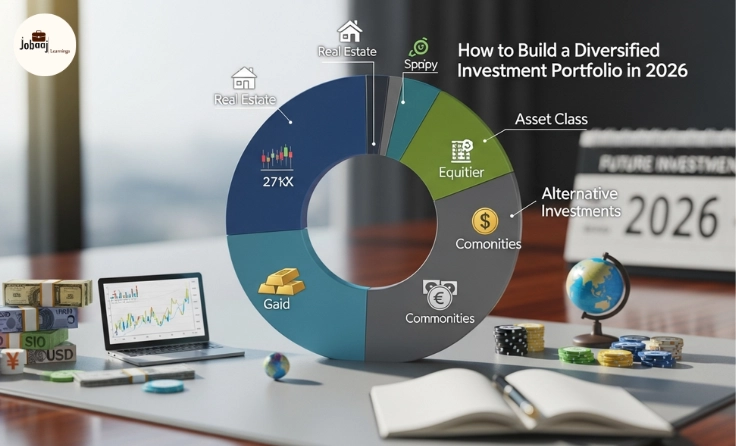
In 2026, the financial landscape is evolving rapidly. With new investment opportunities, innovative financial tools, and shifting market conditions, building a diversified investment portfolio is more critical than ever. Whether you're a seasoned investor or just starting, creating a well-rounded portfolio can help mitigate risk and ensure long-term financial growth.
Exploring a career in Investment Banking? Apply now!
In this guide, we’ll walk you through the essential steps to build a diversified investment portfolio in 2026, tailored to your financial goals, risk tolerance, and time horizon.
Why Diversification is Key in 2026
Diversification is the strategy of spreading investments across various asset classes—stocks, bonds, real estate, commodities, and more. The primary goal is to reduce risk by not putting all your eggs in one basket. A diversified portfolio helps shield you from market volatility and ensures that no single investment or sector can derail your financial future.
In 2026, diversification is more important than ever. Global markets are experiencing unprecedented shifts, including advancements in technology, the rise of alternative investments, and changes in economic policies. A well-balanced portfolio helps you navigate these uncertainties while maximizing your potential for growth.
Step 1: Understand Your Risk Tolerance
Before you start picking assets for your portfolio, it’s crucial to understand your risk tolerance. Risk tolerance refers to how much risk you are willing to take on in pursuit of returns. It varies from person to person and depends on factors such as age, financial goals, income stability, and market knowledge.
To assess your risk tolerance:
-
Low Risk: If you're nearing retirement or prefer stability, your portfolio should consist of conservative investments like bonds and dividend-paying stocks.
-
Moderate Risk: For investors seeking balanced growth with moderate risk, consider a mix of stocks, bonds, and real estate.
-
High Risk: Younger investors or those with a longer investment horizon may opt for higher-risk assets, such as growth stocks, tech investments, and even cryptocurrencies.
Step 2: Allocate Across Different Asset Classes
The foundation of a diversified portfolio lies in asset allocation. Asset allocation is the process of spreading your investments across different types of assets, each of which performs differently in various market conditions.
In 2026, the following asset classes should be considered for a balanced portfolio:
-
Equities (Stocks):
-
Growth Stocks: These stocks are expected to grow at an above-average rate compared to other companies. Tech stocks and green energy companies have shown promising growth.
-
Dividend Stocks: Stocks that provide regular dividend payments can offer income and stability.
-
-
Bonds:
-
Government Bonds: These are safe investments but offer lower returns. They provide stability in turbulent market times.
-
Corporate Bonds: Bonds issued by companies can offer higher returns but come with greater risk. Corporate bonds are an excellent choice if you want a balance between risk and reward.
-
-
Real Estate:
-
REITs (Real Estate Investment Trusts): These are a great way to invest in real estate without owning physical property. They offer dividends and can help balance the risk in your portfolio.
-
Direct Property Investments: If you’re looking for long-term investment growth, real estate properties in high-demand areas can provide both appreciation and income.
-
-
Commodities:
-
Commodities like gold, silver, and oil can act as hedges against inflation. Investing in physical commodities or through ETFs can diversify your portfolio.
-
-
Alternative Investments:
-
Cryptocurrencies: While highly volatile, cryptocurrencies like Bitcoin and Ethereum have made waves in the investment world. A small allocation to these assets can increase potential returns.
-
Private Equity: For high-net-worth investors, private equity offers the chance to invest in private companies or start-ups with high growth potential.
-
Step 3: Consider Geographic Diversification
In 2026, global markets are more interconnected than ever. Geographic diversification means spreading your investments across different regions to take advantage of growth in emerging markets or safe havens in developed economies.
-
U.S. and Developed Markets: These markets offer stability and a wealth of diversified industries. Large-cap stocks like those in the S&P 500 are ideal for risk-averse investors.
-
Emerging Markets: Countries in Asia, Africa, and Latin America provide significant growth opportunities but also come with higher risks. Emerging market ETFs can give you exposure without the need for direct investments in individual companies.
Step 4: Rebalance Your Portfolio Regularly
Building a diversified portfolio is not a one-time task; it requires regular maintenance. Over time, some investments will outperform others, changing the overall risk profile of your portfolio. Rebalancing means adjusting your portfolio to restore the original asset allocation.
For example, if your stock investments have grown substantially, you may need to sell some shares and reinvest the proceeds into underperforming assets, like bonds or real estate. This helps maintain the right balance of risk and return.
Step 5: Utilize Tax-Advantaged Accounts
In 2026, it’s essential to take full advantage of tax-efficient investment strategies. Tax-advantaged accounts like 401(k)s, IRAs, and HSAs (Health Savings Accounts) offer various benefits, including tax-deferred growth and tax-free withdrawals (in certain cases).
-
401(k): Contribute to your employer-sponsored 401(k) to take advantage of tax deferrals and employer matching contributions.
-
Roth IRA: A Roth IRA allows your investments to grow tax-free, and withdrawals in retirement are also tax-free.
-
HSAs: For healthcare-focused investors, an HSA provides a triple tax advantage: contributions are tax-deductible, earnings grow tax-free, and withdrawals for medical expenses are tax-free.
Step 6: Monitor Your Portfolio Performance
To ensure your portfolio is performing as expected, regular monitoring is key. Tracking the performance of individual assets and overall portfolio returns allows you to make adjustments as needed.
-
Set Realistic Expectations: Understand that not every investment will perform well every year. Focus on long-term growth rather than short-term gains.
-
Use Investment Tools: Leverage apps, financial advisors, or online tools to help you track your investments and stay informed about market trends.
Conclusion: Building a Diversified Portfolio for the Future
In 2026, a diversified investment portfolio is the key to achieving long-term financial success. By carefully considering your risk tolerance, choosing the right mix of asset classes, and rebalancing regularly, you can build a portfolio that protects you against market volatility and positions you for growth.
Remember, diversification is not just about spreading your money; it’s about strategically placing your investments in assets that complement each other and align with your financial goals. Whether you're just getting started or looking to optimize your current portfolio, following these steps will help you create a balanced, resilient investment strategy.
Dreaming of a Finance career? Start with Investment Banking Certification with Jobaaj Learnings.
Frequently asked questions
What is a diversified investment portfolio?
A diversified investment portfolio is a strategy that spreads investments across various asset classes (stocks, bonds, real estate, etc.) to reduce risk and improve long-term returns. The idea is to ensure that if one asset class underperforms, the others will help balance it out.
Why is diversification important in 2026?
Diversification is more crucial than ever in 2026 due to market volatility, economic uncertainties, and the emergence of new investment opportunities. A diversified portfolio helps investors navigate these challenges, ensuring stability and growth over time.
How do I know my risk tolerance?
Risk tolerance refers to how much risk you are willing to take with your investments. To assess it, consider factors such as your age, financial goals, and current income. Younger investors might opt for higher-risk assets like stocks or cryptocurrencies, while those nearing retirement may prefer safer investments like bonds.
What types of assets should I include in my portfolio?
Your portfolio should typically include a mix of equities (stocks), bonds, real estate, commodities, and alternative investments like cryptocurrencies. The exact allocation depends on your risk tolerance and financial goals.
How often should I rebalance my portfolio?
It’s recommended to rebalance your portfolio at least once a year, or whenever there’s a significant change in your financial situation or market conditions. Rebalancing ensures that your portfolio remains aligned with your investment goals and risk tolerance.
Should I invest in emerging markets?
Investing in emerging markets can offer high growth potential, but it comes with higher risks. If you're looking for growth and can tolerate volatility, consider allocating a small portion of your portfolio to emerging market investments. Make sure to research these markets thoroughly before investing.
What are tax-advantaged accounts and why should I use them?
Tax-advantaged accounts, like 401(k)s and IRAs, offer tax benefits that can help your investments grow more efficiently. For instance, contributions to these accounts may be tax-deferred or tax-free, allowing you to save more for retirement or other financial goals.

Join 5,00,000+ Subscribers
Be a part of our ever growing community.