Categories














/content/learnings/assets/header/ManagementConsulting.svg)
/content/learnings/assets/header/InvestmentBanking.svg)

























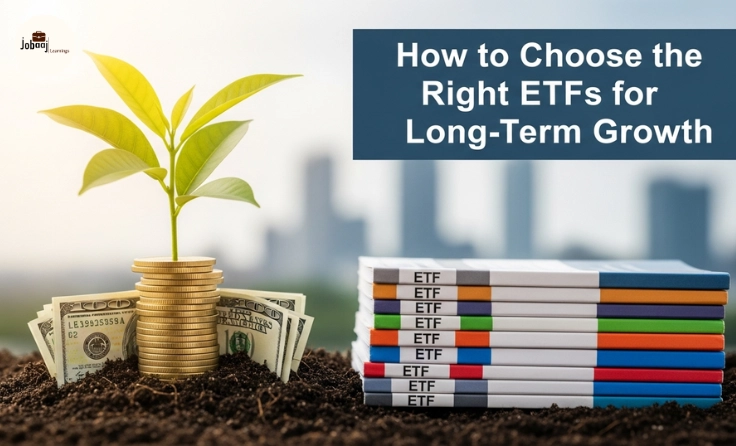
Investing for long-term growth is a goal shared by many, and in India, Exchange-Traded Funds (ETFs) have become an increasingly popular investment option. Whether you’re a seasoned investor or just starting out, the appeal of ETFs lies in their simplicity, diversification, and low-cost structure. However, choosing the right ETF can be tricky, especially with the growing variety of options available in the Indian market.
So, how do you decide which ETFs to choose for long-term growth? In this blog, we’ll break down the factors you need to consider to make an informed decision, and we’ll explore some of the best ETFs in India for building wealth over time. By the end of this post, you’ll have a clearer understanding of how to pick the best ETFs suited for your financial goals.
Exploring a career in Investment Banking? Apply now!
1. Understand What ETFs Are and How They Work
Before diving into the selection process, it’s crucial to understand what an ETF is and how it works. At its core, an ETF is a type of investment fund that is traded on stock exchanges, much like individual stocks. ETFs hold assets such as stocks, bonds, commodities, or a mix of different types of assets, and they are designed to track the performance of a specific index or sector.
ETFs allow you to buy into a basket of assets with a single investment. This makes them a great way to diversify your portfolio without having to pick individual stocks or bonds. What’s more, ETFs are known for their low expense ratios, making them a cost-effective investment option for long-term growth.
2. Look for ETFs That Align with Your Long-Term Goals
The first step in choosing the right ETF is aligning it with your investment goals. Are you looking for capital appreciation, regular income, or a balanced approach? Knowing your objectives will guide your ETF selection.
For example, if you are planning for retirement, your focus may be on ETFs that track broad market indices, providing steady growth over time. Alternatively, if you're looking for higher returns, you might lean toward ETFs that track specific sectors like technology or healthcare, which tend to grow faster but come with more risk.
What You’ll Learn:
-
Identifying your investment time horizon and goals
-
Understanding the risk tolerance involved in different types of ETFs
-
Choosing ETFs based on expected returns and risk profiles
3. Diversification is Key: Look for Broad-Based ETFs
When investing for long-term growth, one of the most important factors to consider is diversification. Diversifying your investments helps reduce risk by spreading your investments across different assets, sectors, and regions.
In India, many investors choose broad-based ETFs that track well-known indices like the Nifty 50, Sensex, or the Nifty Next 50. These ETFs hold stocks from a wide range of industries, ensuring that you are not overly exposed to any one sector. The Nifty 50 ETF, for instance, includes 50 of India’s largest and most stable companies, making it a solid choice for conservative long-term investors.
What You’ll Learn:
-
Why diversification helps mitigate risks
-
How broad-based ETFs can provide exposure to large-cap stocks across different sectors
-
Benefits of investing in indices like Nifty and Sensex for steady growth
4. Evaluate the Expense Ratios and Costs
One of the key advantages of ETFs is their low expense ratios compared to mutual funds, but it’s important to still evaluate the costs. The expense ratio is the annual fee that the ETF charges to cover operating expenses. This fee is expressed as a percentage of the total assets in the fund.
While many ETFs in India have expense ratios as low as 0.05% to 0.25%, this may vary depending on the ETF's management and tracking method. The lower the expense ratio, the better it is for your long-term returns, as high fees can erode your investment gains over time.
What You’ll Learn:
-
How to calculate the impact of fees on your returns over time
-
Comparing expense ratios across different ETFs
-
Understanding other hidden costs such as trading commissions
5. Consider Liquidity and Trading Volume
Liquidity refers to how easily an asset can be bought or sold without affecting its price. ETFs with higher trading volumes tend to have better liquidity, meaning you can enter or exit the market more easily. Low-liquidity ETFs may have wider bid-ask spreads, meaning you could pay more to buy or sell them.
When choosing an ETF, look for those that have consistent trading volume. For example, ETFs tracking major indices like the Nifty 50 or Sensex tend to have high liquidity because they are widely traded by investors. This ensures that you can buy and sell units of these ETFs without significant price fluctuations.
What You’ll Learn:
-
How to identify liquid ETFs that offer good trading volumes
-
Understanding the bid-ask spread and its impact on your investment
-
The importance of liquidity for easy entry and exit from your investments
6. Investigate the ETF’s Performance History
Past performance is not always an indicator of future results, but it does give you a sense of how well the ETF has tracked its underlying index or sector. When evaluating an ETF, take a look at its historical performance over various time periods—1 year, 3 years, and 5 years—to understand how it has performed in different market conditions.
A well-managed ETF should track its index closely, with minimal tracking error. For instance, if an ETF tracks the Nifty 50, you should expect its returns to align closely with the performance of the index, minus a small management fee.
What You’ll Learn:
-
How to interpret historical performance data
-
Identifying ETFs with minimal tracking error
-
Evaluating an ETF's resilience during market downturns
7. Choose ETFs Based on Your Risk Tolerance
Risk tolerance plays a crucial role when selecting an ETF. Different ETFs carry different levels of risk depending on the underlying assets they hold. For example, an ETF tracking the Nifty 50 is less volatile than an ETF focused on a specific sector like technology or small-cap stocks.
If you have a higher risk tolerance, you might consider sector-specific ETFs or thematic ETFs that focus on high-growth industries like renewable energy or artificial intelligence. On the other hand, if you're more conservative and looking for steady growth, broad-market ETFs are a safer bet.
What You’ll Learn:
-
Understanding your own risk tolerance
-
How to assess the volatility of different types of ETFs
-
Matching your risk profile with the right ETF for long-term growth
8. Explore Tax Implications of ETF Investments
In India, ETFs are subject to capital gains tax. Long-term capital gains (LTCG) tax applies when you hold an ETF for more than three years. As of now, LTCG tax on ETFs is 10% without the benefit of indexation. Short-term capital gains (STCG) tax applies to gains made by holding an ETF for less than three years, and it is taxed at 15%.
It’s essential to consider the tax implications of your ETF investments, as this can affect your overall returns. You may want to explore tax-efficient strategies such as holding your ETFs for the long term to minimize taxes.
What You’ll Learn:
-
Understanding LTCG and STCG tax in India
-
How taxes impact your long-term returns
-
Strategies to minimize tax liabilities on ETF investments
Conclusion
Choosing the right ETF for long-term growth in India requires careful consideration of your investment goals, risk tolerance, costs, and tax implications. By following the steps outlined in this blog, you can make more informed decisions that align with your financial objectives.
Remember, ETFs offer a low-cost and effective way to invest in diversified assets, but choosing the right one involves more than just picking the popular ones. Whether you're a beginner or an experienced investor, taking the time to research and evaluate your options will help you build a portfolio that’s well-suited for long-term growth.
Start by choosing broad-based, low-cost ETFs with high liquidity, then refine your choices as you learn more about your investment preferences and risk tolerance. With the right strategy, you’ll be well on your way to achieving your financial goals.
Dreaming of a Finance career? Start with Investment Banking Certification with Jobaaj Learnings.
Frequently asked questions
What are ETFs and how do they work?
ETFs (Exchange-Traded Funds) are investment funds that hold a collection of assets like stocks or bonds. They are traded on stock exchanges, just like individual stocks, and aim to track the performance of an index, sector, or asset class.
How do I choose the right ETF for long-term growth in India?
To choose the right ETF, align it with your investment goals, risk tolerance, and time horizon. Look for low-cost, diversified ETFs like those tracking the Nifty 50 or Sensex, and evaluate performance history, liquidity, and tax implications.
Are ETFs a good option for long-term investment in India?
Yes, ETFs are a great option for long-term investments in India due to their low-cost structure, diversification, and ease of access. ETFs provide exposure to a wide range of assets and can be an efficient way to invest in the Indian stock market.
What is the expense ratio of an ETF?
The expense ratio is the annual fee that an ETF charges to cover its operating expenses. Look for ETFs with low expense ratios to ensure more of your investment goes towards your portfolio rather than fees.
Do I need to pay taxes on ETF gains in India?
Yes, ETF gains are subject to capital gains tax. Long-term capital gains (LTCG) are taxed at 10% after three years, while short-term capital gains (STCG) are taxed at 15% if sold before three years.
How do I evaluate the performance of an ETF?
To evaluate an ETF, look at its historical performance, tracking error, and how closely it follows its underlying index. Also, consider factors like liquidity, costs, and how well it fits your investment goals.

Join 5,00,000+ Subscribers
Be a part of our ever growing community.