Categories













/content/learnings/assets/header/ManagementConsulting.svg)
/content/learnings/assets/header/InvestmentBanking.svg)
























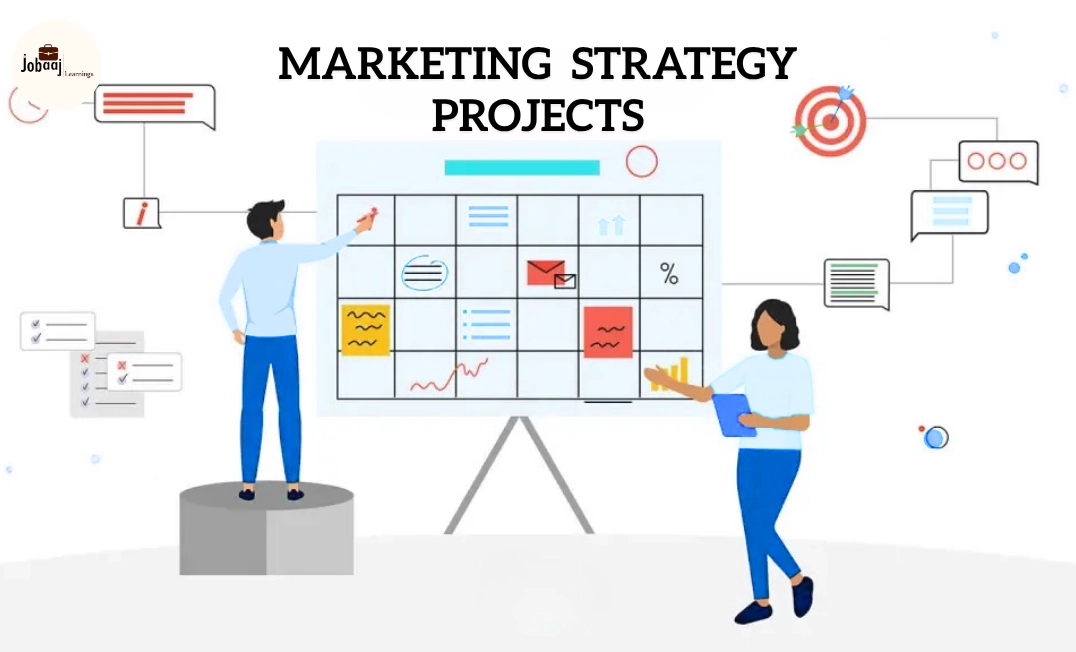
Marketing today is not just about running ads or posting content online. It is about understanding people how they think, what they need, and why they make decisions.
Every strong brand you see today is built on one thing: a clear marketing strategy that connects business goals with real customer behavior.
That is why marketing strategy projects are extremely important for students and professionals. They help you think beyond theory and start thinking like a brand strategist, growth marketer, or business consultant.
Why Marketing Strategy Projects Are Important
Marketing strategy projects are powerful because they teach you how real businesses actually grow.
They help you understand:
- Why customers choose one brand over another
- How companies position themselves in competitive markets
- How growth happens through strategy, not luck
- How decisions are made using data and customer insights
These skills are essential for careers in:
- Marketing and brand management
- Consulting and strategy roles
- Startup growth and product marketing
- Business analytics and planning
15 Marketing Strategy Project Ideas for 2026
1. Brand Positioning Study for a Product
You take any product (example: a mobile app, clothing brand, or food brand) and study how it should be positioned in the market.
How you do it
- Identify target audience (age, income, behavior)
- Study competitors in the same category
- Understand what makes each competitor different
- Decide how your chosen product should stand out
You learn how companies create identity in a crowded market and how positioning influences customer choice.
2. Competitor Marketing Analysis Project
You compare 2–3 competing brands in the same industry.
How you do it
- Analyze their social media presence
- Study pricing models
- Look at advertisements and messaging style
- Identify strengths and weaknesses
You understand why some brands grow faster and how competition actually works in real markets.
3. Customer Segmentation Strategy Project
You divide customers into groups based on behavior.
How you do it
- Collect sample customer data or survey responses
- Group customers by age, income, or buying habits
- Create separate marketing strategies for each group
You learn how companies don’t treat all customers the same and use personalization for better results.
4. Social Media Growth Strategy Project
You design a strategy to grow a brand on Instagram, LinkedIn, or YouTube.
How you do it
- Decide content themes (educational, entertaining, promotional)
- Create posting schedule
- Plan engagement techniques (polls, reels, comments)
- Analyze competitor pages
You understand how brands grow organically without spending money on ads.
5. Product Launch Strategy Project
You create a full plan to launch a new product.
How you do it
- Build pre-launch awareness strategy
- Design launch campaign (ads, influencers, emails)
- Plan post-launch engagement
- Define success metrics (sales, engagement)
You understand how companies build hype and convert attention into sales.
6. Startup Customer Acquisition Project
You design how a new startup can get its first 100–1000 customers.
How you do it
- Identify low-cost marketing channels
- Suggest referral programs
- Explore organic growth methods
- Analyze user journey
You learn how early-stage companies grow without big budgets.
7. Pricing Strategy Analysis Project
You study how pricing affects customer decisions.
How you do it
- Compare competitor pricing
- Study customer willingness to pay
- Analyze premium vs budget strategy
- Suggest ideal pricing model
You understand that pricing is not just numbers it directly affects demand.
8. Content Marketing Strategy Project
You design how a brand can use content to grow.
How you do it
- Plan blog topics or video ideas
- Identify SEO keywords
- Define audience pain points
- Suggest content calendar
You learn how content builds long-term trust and visibility.
9. Email Marketing Campaign Project
You design email campaigns for customer engagement.
How you do it
- Create welcome email sequence
- Design promotional emails
- Plan re-engagement emails
- Define open and click targets
You understand how companies retain customers after first purchase.
10. Influencer Marketing Strategy Project
You plan influencer campaigns for a brand.
How you do it
- Identify relevant influencers
- Compare engagement rates
- Suggest campaign structure
- Estimate ROI
You learn how brands use trust-based marketing to grow.
11. Conversion Funnel Optimization Project
You study how customers move from awareness to purchase.
How you do it
- Map customer journey
- Identify drop-off points
- Analyze reasons for abandonment
- Suggest improvements
You learn how companies improve sales conversion step by step.
12. Rebranding Strategy Project
You redesign an old or outdated brand.
How you do it
- Study current brand image
- Identify problems in perception
- Suggest new logo, messaging, and tone
- Define new target audience
You understand how brands evolve to stay relevant.
13. Market Entry Strategy Project
You plan how a company should enter a new market or country.
How you do it
- Study local competitors
- Analyze cultural behavior
- Check demand for product
- Suggest entry strategy
You understand risk, expansion, and international marketing strategy.
14. Digital Marketing Channel Strategy Project
You decide which marketing platforms a business should focus on.
How you do it
- Compare SEO, social media, ads, email marketing
- Analyze where target audience is active
- Suggest best channel mix
You learn how companies choose where to spend marketing budget.
15. Customer Retention Strategy Project
What you do
You design strategies to keep customers long-term.
How you do it
- Study customer repeat behavior
- Design loyalty programs
- Suggest engagement campaigns
- Identify churn reasons
You understand why keeping customers is more important than just getting new ones.
Skills You Develop From These Projects
By working on these projects, you develop:
- Strategic marketing thinking
- Customer behavior understanding
- Brand positioning skills
- Growth and conversion analysis
- Business decision-making ability
These are essential for careers in marketing, consulting, and business strategy roles.
Use Cases of These Projects
These projects are useful for:
- MBA case interview preparation
- Marketing internships
- Consulting interviews
- Startup strategy roles
- Portfolio building
Career Relevance
These projects help you think like professionals working in:
- McKinsey / BCG style consulting roles
- Brand management teams
- Product marketing teams
- Startup growth teams
They build real-world thinking, not just academic knowledge.
Conclusion
Marketing strategy is not about memorizing frameworks it is about understanding how real businesses grow in competitive markets.These projects help you think like a strategist, understand customer behavior, and build structured growth plans that companies actually use.The more you practice these, the closer you get to thinking like a real marketer, consultant, or business leader in 2026 and beyond.
Ready to Take the Next Step in Your Career? Apply Now!
Frequently asked questions
What are marketing strategy projects?
They are real-world business scenarios where you design how a brand attracts, engages, and retains customers.
Why are marketing strategy projects important?
They help students understand real business growth and decision-making strategies.
Are these useful for interviews?
Yes, especially for marketing, consulting, and product management roles.
Do I need tools for these projects?
No, these are mainly focused on strategic thinking and analysis.
How do I start a marketing strategy project?
Pick a brand or product, analyze the market, and design a structured growth strategy.

Join 5,00,000+ Subscribers
Be a part of our ever growing community.