Categories














/content/learnings/assets/header/ManagementConsulting.svg)
/content/learnings/assets/header/InvestmentBanking.svg)

























Imagine this: A product manager, who doesn’t have a technical background, comes up with an idea for a new feature that could completely enhance their product’s user experience. In the past, the only option was to involve developers, wait for their availability, and go through lengthy development cycles. But today, they can use no-code or low-code tools to quickly prototype, test, and even launch that feature—all by themselves.
Exploring a career in Product Management? Apply Now!
In 2025, no-code and low-code platforms have transformed product management by enabling managers to create applications, build features, and solve problems without needing to write complex code. These tools have democratized product development, allowing product managers to be more self-reliant and agile. In this blog, we’ll explore how these game-changing platforms are revolutionizing product management and helping managers accelerate development, streamline workflows, and drive innovation.
What Are No-Code and Low-Code Tools?
Before we dive into their impact on product management, let’s define no-code and low-code tools.
-
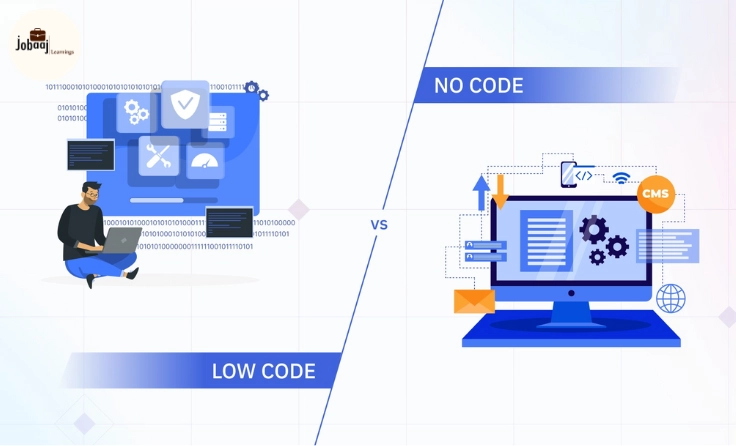
No-code tools allow users to build fully functional applications or websites without writing a single line of code. They come with intuitive drag-and-drop interfaces and pre-built templates that make it easy to customize and deploy applications.
-
Low-code tools are similar, but they offer a little more flexibility for users with basic coding knowledge. These platforms allow for greater customization and more complex features, but still require far less coding than traditional development.
Both types of tools are aimed at enabling people without a technical background to create applications, automations, and prototypes quickly and efficiently.
Why Are No-Code and Low-Code Tools a Game-Changer for Product Managers?
1. Faster Product Development and Iteration
In product management, speed is everything. Whether you're developing new features, creating prototypes, or testing ideas, the faster you can iterate, the better. No-code and low-code tools allow product managers to:
-
Prototype quickly: Build and test new product features in a fraction of the time it would take using traditional coding.
-
Iterate instantly: Adjust and refine features based on real-time feedback from users or stakeholders without waiting for developers.
This leads to faster time-to-market and ensures products are adapted to user needs more effectively.
2. Empowering Non-Technical Product Managers
Traditionally, product managers often had to rely heavily on development teams to turn their ideas into reality. This dependency on technical teams could lead to delays and bottlenecks. No-code and low-code tools eliminate this barrier, empowering non-technical product managers to:
-
Build and test ideas independently.
-
Automate tasks and workflows that would have otherwise required technical expertise.
By removing the technical barrier, product managers can focus on creative solutions, user experience, and business outcomes instead of worrying about how the feature will be built.
3. Cost-Effective Solution
Hiring developers and building complex code from scratch can be costly and time-consuming. No-code and low-code platforms provide a cost-effective alternative, allowing product teams to:
-
Reduce reliance on expensive development resources.
-
Focus on rapid experimentation and quick prototyping without draining the budget.
This is particularly beneficial for startups or companies with limited resources but a strong desire to innovate.
4. Boosting Collaboration and Efficiency
No-code and low-code tools enhance cross-functional collaboration between product managers, designers, marketers, and even sales teams. These tools allow:
-
Real-time collaboration: Teams can build and modify applications together, without the need for technical expertise, ensuring that everyone is aligned and can contribute effectively.
-
Improved communication: Non-technical stakeholders can see and interact with prototypes, providing immediate feedback and avoiding lengthy back-and-forth with developers.
By improving collaboration, these tools increase the overall efficiency of product development teams and reduce misunderstandings between departments.
5. Enabling Personalization and Customization
In today’s competitive market, personalization is key to a successful product. No-code and low-code platforms offer:
-
Customizable templates: Product managers can modify pre-existing templates to suit their brand, features, and goals without relying on development teams.
-
Flexible features: These platforms offer drag-and-drop capabilities, which allow managers to create custom features tailored to specific use cases.
This level of personalization is crucial for creating products that stand out and meet the unique needs of your target audience.
Real-World Examples of No-Code & Low-Code Tools in Action
Many successful companies are already using no-code and low-code platforms to build and enhance their products. Here are a few examples:
-
Webflow: A no-code platform for web design and development, used by product managers to create highly customized, responsive websites without needing to know how to code.
-
Airtable: A low-code database tool that allows teams to manage projects and track products seamlessly, integrating with other platforms and automating workflows.
-
Bubble: A popular no-code platform that helps product managers build interactive web applications without writing any code.
These tools have already helped countless organizations streamline their workflows, reduce costs, and create products more effectively. The future of product management is undoubtedly tied to these platforms.
Conclusion: Embrace the Power of No-Code and Low-Code for Product Success
As product managers face increasing demands for faster product launches, enhanced collaboration, and smarter decision-making, no-code and low-code tools have emerged as the perfect solution. These tools allow greater innovation, faster development, and more efficient collaboration. By embracing no-code and low-code platforms, product managers are empowered to create better products, drive business growth, and focus on what truly matters—delivering value to customers. The era of relying solely on technical teams is over, and the future of product management is in the hands of those who embrace these innovative platforms.
Dreaming of a Product Management Career? Start with Product Management Certificate with Jobaaj Learnings.
Frequently asked questions
What are no-code and low-code tools?
No-code tools allow users to build applications without writing any code, while low-code tools require minimal coding but offer more flexibility for customization. Both enable faster product development.
How do no-code and low-code tools help product managers?
These tools help product managers by enabling them to create, test, and iterate on product features without needing technical expertise, leading to faster development and more efficient workflows.
What are some examples of no-code and low-code tools?
Examples of no-code tools include Webflow, Airtable, and Bubble, which allow product managers to build websites, databases, and interactive applications quickly without needing to code.
How can no-code tools reduce product development costs?
No-code tools eliminate the need for extensive developer involvement in early-stage product creation, reducing the cost of hiring technical staff and allowing product managers to create prototypes themselves.
Can non-technical product managers use no-code tools effectively?
Yes, no-code tools are designed specifically to be user-friendly and accessible to non-technical individuals. They allow product managers to create, modify, and test product features without any coding knowledge.
Why are no-code and low-code tools the future of product management?
These tools enable faster product iterations, better collaboration, and greater innovation. They allow product managers to focus on strategy and user experience instead of technical hurdles, leading to faster growth and more successful products.

Join 5,00,000+ Subscribers
Be a part of our ever growing community.