Categories










/content/learnings/assets/header/ManagementConsulting.svg)
/content/learnings/assets/header/InvestmentBanking.svg)
























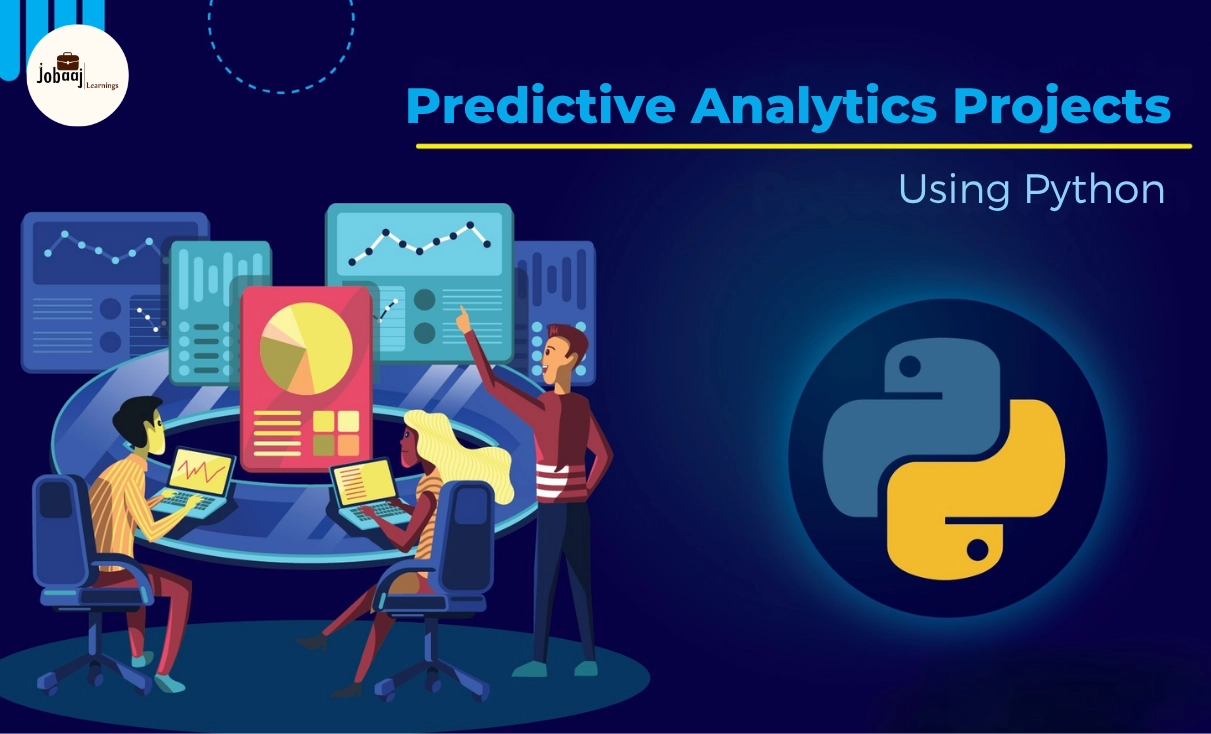
Predictive analytics is no longer just a technical skill used by data scientists sitting behind complex dashboards. Today, it is used by banks to detect fraud, hospitals to predict patient risk, e-commerce brands to forecast sales, and startups to understand customer behavior before it changes.
That is exactly why predictive analytics projects using Python are so valuable for students, freshers, and working professionals.
A normal Python project shows that you can write code. A predictive analytics project shows something bigger. It proves that you can use data to solve a real business problem.
If you want to build a strong data analytics, data science, or machine learning portfolio, predictive analytics is one of the best areas to focus on.
What Is Predictive Analytics?
Predictive analytics is the process of using historical data, statistics, machine learning, and business logic to predict what may happen in the future.
It does not guarantee the future. Instead, it gives a data-backed estimate.
For example, a company may use predictive analytics to answer questions like:
- Will this customer leave next month?
- Which product is likely to sell more during the festive season?
- Can this transaction be fraudulent?
- Which student is at risk of dropping out?
- How much revenue can we expect next quarter?
The goal is simple. Predictive analytics helps businesses make better decisions before a problem becomes expensive.
Why Python Is Best for Predictive Analytics Projects
Python is one of the most popular languages for predictive analytics because it is simple, flexible, and supported by a huge ecosystem of libraries.
Students can start with basic data cleaning and slowly move toward machine learning models without changing the language.
Python also works well for real-world analytics because it can handle data collection, preprocessing, visualization, model building, evaluation, and deployment.
Key reasons Python is useful for predictive analytics
Python has beginner-friendly syntax, so students can focus more on logic and less on complex coding rules.
It has powerful libraries like pandas, NumPy, scikit-learn, Matplotlib, Seaborn, XGBoost, LightGBM, and TensorFlow.
It works well with Jupyter Notebook, Google Colab, SQL databases, Excel files, APIs, and cloud platforms.
It is widely used in data analyst, data scientist, machine learning engineer, and business analyst roles.
Best Predictive Analytics Projects Using Python
Below are some of the best predictive analytics project ideas for students, beginners, and professionals who want to build a strong portfolio.
Each project can be done using Python, pandas, scikit-learn, visualization libraries, and machine learning models.
1. Customer Churn Prediction Project
Customer churn prediction is one of the most practical predictive analytics projects using Python.
In this project, you predict whether a customer is likely to stop using a service. This is common in telecom, banking, SaaS, OTT platforms, insurance, and subscription businesses.
Problem statement
A company wants to identify customers who may leave soon so that the retention team can offer discounts, support, or better service before the customer cancels.
Dataset ideas
You can use telecom churn datasets, banking customer datasets, or subscription-based customer datasets from Kaggle or open data platforms.
Python skills used
Data cleaning, missing value treatment, encoding categorical variables, feature selection, classification models, model evaluation, confusion matrix, ROC-AUC score, and business interpretation.
Recommended models
Logistic Regression, Decision Tree, Random Forest, XGBoost, and LightGBM.
Business insight
Instead of only saying the model has 85% accuracy, explain which factors increase churn. For example, long customer support wait time, high monthly charges, low usage, or short contract duration may increase churn risk.
This makes the project more realistic and useful for interviews.
2. Sales Forecasting Project
Sales forecasting is a classic predictive analytics project. It helps businesses estimate future sales based on historical sales patterns.
This project is useful for retail, e-commerce, FMCG, restaurants, fashion brands, and inventory-heavy businesses.
Problem statement
A business wants to forecast product sales for the next few weeks or months to manage stock, discounts, staffing, and marketing campaigns.
Dataset ideas
You can use retail sales data, Walmart sales data, supermarket sales data, or e-commerce transaction data.
Python skills used
Time series analysis, trend detection, seasonality, data visualization, date-time handling, moving averages, feature engineering, and forecasting models.
Recommended models
ARIMA, SARIMA, Prophet, Random Forest Regressor, XGBoost Regressor, and LSTM for advanced learners.
Business insight
A strong project should explain why sales increase or decrease. Do not only show a forecast line. Add insights about weekends, holidays, discounts, seasonality, product categories, and regional demand.
3. House Price Prediction Project
House price prediction is one of the most beginner-friendly predictive modeling projects using Python.
It teaches regression, feature engineering, outlier detection, and model evaluation in a very practical way.
Problem statement
A real estate company wants to predict property prices based on location, area, number of rooms, property type, amenities, and market trends.
Dataset ideas
Use housing datasets from Kaggle, Boston housing alternatives, Indian city property datasets, or scraped real estate data if you know web scraping.
Python skills used
Exploratory data analysis, feature engineering, correlation analysis, regression modeling, residual analysis, and error metrics.
Recommended models
Linear Regression, Ridge Regression, Lasso Regression, Random Forest Regressor, Gradient Boosting, and XGBoost.
Business insight
The best projects explain which features affect property prices the most. Location, carpet area, number of bathrooms, furnishing status, nearby transport, and property age often matter more than people expect.
4. Loan Default Prediction Project
Loan default prediction is a strong project for students interested in fintech, banking, risk analytics, and credit scoring.
It predicts whether a borrower is likely to repay a loan or default.
Problem statement
A financial institution wants to reduce loan risk by predicting high-risk applicants before approval.
Dataset ideas
Use loan prediction datasets, credit risk datasets, lending club datasets, or bank loan datasets.
Python skills used
Classification modeling, imbalanced data handling, feature selection, probability scoring, precision-recall tradeoff, and risk interpretation.
Recommended models
Logistic Regression, Random Forest, XGBoost, CatBoost, and LightGBM.
Business insight
Accuracy alone is not enough here. In loan default prediction, false negatives can be costly because the model may wrongly classify risky borrowers as safe.
Explain precision, recall, F1-score, and risk threshold clearly.
5. Fraud Detection Project
Fraud detection is one of the most in-demand predictive analytics projects using Python.
It is used in banking, insurance, UPI payments, credit cards, e-commerce, and cybersecurity.
Problem statement
A company wants to detect suspicious transactions before they cause financial loss.
Dataset ideas
Use credit card fraud datasets, online payment fraud datasets, or transaction anomaly datasets.
Python skills used
Anomaly detection, imbalanced classification, scaling, feature engineering, fraud pattern analysis, and evaluation using recall and precision.
Recommended models
Logistic Regression, Random Forest, XGBoost, Isolation Forest, One-Class SVM, and Autoencoders for advanced learners.
Business insight
Fraud datasets are usually highly imbalanced. That means fraud cases are very small compared to normal transactions.
A model with high accuracy may still be useless if it fails to catch fraud. Focus on recall, precision, and false positive cost.
6. Employee Attrition Prediction Project
Employee attrition prediction is a valuable HR analytics project.
It predicts which employees are likely to leave an organization based on salary, job role, overtime, satisfaction level, promotion history, and work-life balance.
Problem statement
An HR team wants to identify employees at risk of leaving so they can improve retention.
Dataset ideas
Use IBM HR analytics dataset or employee attrition datasets available on Kaggle.
Python skills used
Classification, categorical encoding, correlation analysis, feature importance, HR metrics, and dashboard storytelling.
Recommended models
Logistic Regression, Decision Tree, Random Forest, Gradient Boosting, and XGBoost.
Business insight
This project becomes stronger when you explain actionable recommendations. For example, employees with frequent overtime, low job satisfaction, and no recent promotion may need targeted retention programs.
7. Student Performance Prediction Project
This is a good predictive analytics project for education, edtech, coaching institutes, and learning platforms.
It predicts student performance based on attendance, previous grades, study time, parental education, test scores, and engagement.
Problem statement
An education platform wants to identify students who may score low or drop out so teachers can support them early.
Dataset ideas
Use student performance datasets from UCI, Kaggle, or school performance open data.
Python skills used
Regression, classification, feature analysis, missing value treatment, model evaluation, and education analytics.
Recommended models
Linear Regression, Random Forest, Decision Tree, XGBoost, and Logistic Regression.
Business insight
The project should not sound like marks are only predicted by study hours. Add deeper factors such as attendance, practice tests, past performance, and course engagement.
8. Healthcare Disease Risk Prediction Project
Healthcare predictive analytics is a powerful area, but it must be handled carefully.
The goal is not to replace doctors. The goal is to support early risk detection using available patient data.
Problem statement
A healthcare provider wants to predict whether a patient is at risk of a condition such as diabetes, heart disease, or stroke.
Dataset ideas
Use diabetes prediction datasets, heart disease datasets, stroke prediction datasets, or healthcare risk datasets.
Python skills used
Data preprocessing, classification, feature scaling, model evaluation, recall-focused analysis, and responsible interpretation.
Recommended models
Logistic Regression, Random Forest, SVM, XGBoost, and Neural Networks for advanced learners.
Business insight
In healthcare projects, false negatives can be dangerous. Explain recall clearly because missing a high-risk patient is usually more serious than flagging someone for further checkup.
9. Stock Price Movement Prediction Project
Stock prediction is popular, but beginners should be careful with it.
A weak stock prediction project can look unrealistic if it claims guaranteed profits. A better version predicts price movement direction or analyzes risk patterns.
Problem statement
A financial analyst wants to predict whether a stock may move up or down based on historical prices, volume, volatility, and technical indicators.
Dataset ideas
Use Yahoo Finance data, NSE/BSE data, or financial market APIs.
Python skills used
Time series analysis, feature engineering, technical indicators, rolling averages, volatility analysis, and model evaluation.
Recommended models
Logistic Regression, Random Forest, XGBoost, ARIMA, LSTM, and Prophet.
Business insight
Do not present this project as a trading guarantee. Focus on probability, trend analysis, risk signals, and model limitations.
That makes your project more mature.
10. Demand Forecasting for Inventory Management
Demand forecasting helps businesses manage stock levels and reduce wastage.
This is useful in retail, grocery, fashion, medicine, food delivery, and manufacturing.
Problem statement
A business wants to predict product demand so it can avoid overstocking and stockouts.
Dataset ideas
Use retail inventory datasets, sales transaction datasets, grocery demand datasets, or product-level order data.
Python skills used
Forecasting, regression, time series analysis, feature engineering, inventory KPIs, and business recommendation writing.
Recommended models
ARIMA, Prophet, XGBoost Regressor, Random Forest Regressor, and LightGBM.
Business insight
A good demand forecasting project should connect predictions to inventory decisions. Explain how the forecast can help reorder planning, warehouse management, and discount strategy.
11. Customer Lifetime Value Prediction
Customer lifetime value, or CLV, predicts how much revenue a customer may generate over time.
This is a strong project for marketing analytics and business analytics portfolios.
Problem statement
A company wants to identify high-value customers and design better marketing campaigns.
Dataset ideas
Use e-commerce transaction data, customer purchase history, online retail datasets, or CRM datasets.
Python skills used
Customer segmentation, RFM analysis, regression modeling, cohort analysis, and revenue prediction.
Recommended models
Linear Regression, Random Forest, XGBoost, BG/NBD model, and Gamma-Gamma model.
Business insight
This project is powerful because it connects data science with revenue. You can show which customers deserve retention offers, loyalty programs, or premium campaigns.
12. Movie or OTT Recommendation Prediction Project
Recommendation systems are not always called predictive analytics, but they are closely related.
They predict what a user is likely to watch, buy, listen to, or click.
Problem statement
An OTT platform wants to predict which movies or shows a user may like based on past behavior and similar users.
Dataset ideas
Use MovieLens dataset, Netflix-style datasets, or user rating datasets.
Python skills used
Similarity scores, collaborative filtering, content-based filtering, matrix factorization, and evaluation metrics.
Recommended models
KNN, cosine similarity, collaborative filtering, SVD, and hybrid recommendation models.
Business insight
This project becomes stronger when you explain how recommendations improve watch time, engagement, retention, and user satisfaction.
Comparison of Predictive Analytics Project Ideas
|
Project |
Difficulty Level |
Best For |
Main Skill Tested |
|
Customer Churn Prediction |
Beginner to Intermediate |
Data Analyst, Business Analyst |
Classification and business insights |
|
Sales Forecasting |
Intermediate |
Business Analytics, Retail Analytics |
Time series forecasting |
|
House Price Prediction |
Beginner |
Data Science Beginners |
Regression modeling |
|
Loan Default Prediction |
Intermediate |
Finance, Risk Analytics |
Classification and risk scoring |
|
Fraud Detection |
Intermediate to Advanced |
Fintech, Banking, Cybersecurity |
Imbalanced data handling |
|
Employee Attrition Prediction |
Beginner to Intermediate |
HR Analytics |
Feature importance and storytelling |
|
Healthcare Risk Prediction |
Intermediate |
Healthcare Analytics |
Recall-focused classification |
|
Inventory Demand Forecasting |
Intermediate |
Supply Chain Analytics |
Forecasting and business planning |
|
Customer Lifetime Value |
Intermediate |
Marketing Analytics |
Revenue prediction |
|
Recommendation System |
Advanced |
AI, Product Analytics |
Personalization models |
Approximate salary range by role in India
|
Role |
Entry-Level Range |
Mid-Level Range |
|
Data Analyst |
₹4 LPA – ₹8 LPA |
₹8 LPA – ₹15 LPA |
|
Business Analyst |
₹5 LPA – ₹10 LPA |
₹10 LPA – ₹18 LPA |
|
Data Scientist |
₹6 LPA – ₹12 LPA |
₹12 LPA – ₹30 LPA |
|
Machine Learning Engineer |
₹7 LPA – ₹15 LPA |
₹15 LPA – ₹35 LPA |
|
Risk Analyst |
₹5 LPA – ₹10 LPA |
₹10 LPA – ₹22 LPA |
|
Product Analyst |
₹6 LPA – ₹12 LPA |
₹12 LPA – ₹25 LPA |
These are broad market ranges. Actual salary can be lower or higher depending on skills, company, interview performance, and location.
Predictive Analytics vs Machine Learning vs Data Analytics
These terms are connected, but they are not the same.
|
Term |
Meaning |
Example |
|
Data Analytics |
Understands what happened and why |
Sales dropped by 12% last month |
|
Predictive Analytics |
Predicts what may happen next |
Sales may increase next month |
|
Machine Learning |
Uses algorithms to learn from data |
A model predicts customer churn |
|
Business Intelligence |
Tracks KPIs and performance |
Dashboard showing revenue and users |
|
Artificial Intelligence |
Builds systems that mimic intelligent behavior |
Recommendation engine or chatbot |
Predictive analytics often uses machine learning, but it also needs statistics, business understanding, and communication.
Frequently asked questions
What are the best predictive analytics projects using Python for beginners?
The best beginner projects include house price prediction, student performance prediction, customer churn prediction, employee attrition prediction, and basic sales prediction. These projects help students learn data cleaning, regression, classification, visualization, and model evaluation without becoming too complex in the beginning.
Is Python enough for predictive analytics?
Python is enough to start predictive analytics, but you should also learn statistics, SQL, Excel, and data visualization. Python helps you clean data, build models, and evaluate predictions. SQL helps you extract data, while statistics helps you understand whether your results actually make sense.
Which Python libraries are used in predictive analytics?
The most common Python libraries for predictive analytics are pandas, NumPy, scikit-learn, Matplotlib, Seaborn, XGBoost, LightGBM, Statsmodels, and Prophet. Beginners should start with pandas, NumPy, Matplotlib, and scikit-learn before moving to advanced libraries.
Can predictive analytics projects help me get a data analyst job?
Yes, predictive analytics projects can improve your chances if they are presented properly. A strong project should include a clear problem statement, clean analysis, model evaluation, visualizations, and business recommendations. Recruiters value projects that show practical thinking, not just code copied from tutorials.
What is the career scope of predictive analytics?
Predictive analytics has strong career scope in finance, healthcare, retail, marketing, product analytics, insurance, logistics, and technology. Common roles include data analyst, business analyst, data scientist, risk analyst, product analyst, and machine learning engineer. Demand is growing because companies want data-backed future planning.

Join 5,00,000+ Subscribers
Be a part of our ever growing community.