Categories








































Rishi's Jobaaj Learnings Review: From CFA Level 2 to Analyst at Oxan Partners

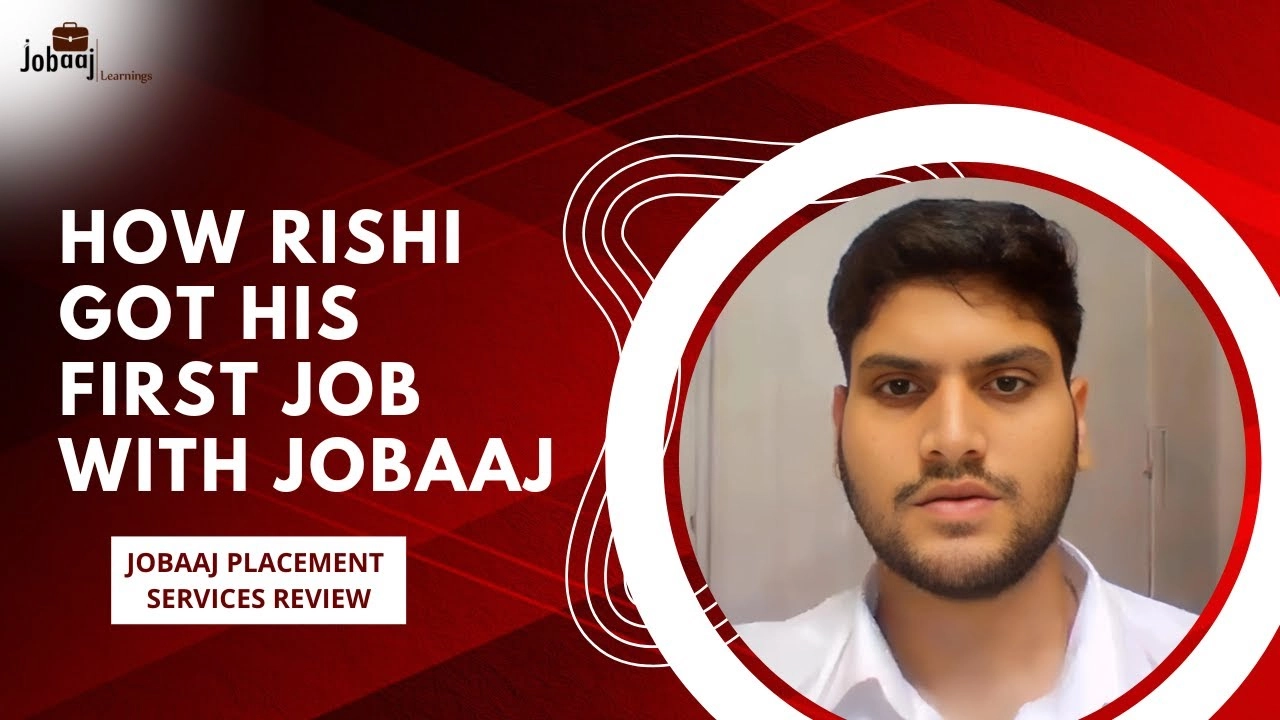
"She first told me about a role in Hyderabad and scheduled my interview there. After completing two rounds in Hyderabad, she found another opportunity in Gurgaon and helped me prepare for that too. I had one round in Gurgaon, and after that, I got the job." — Rishi
Rishi is from Delhi. He completed B.Com Honours at Zakir Husain College in 2022, cleared CFA Level 1 in 2023 and CFA Level 2 in January 2024, and freelanced during his preparation to get some real-world experience. He was a fresher with no analyst experience when a recruiter contacted him — and he is now an Analyst at Oxan Partners.
Worth establishing up front: asked directly whether he was charged anything, Rishi's answer was “No, it was completely free. I didn't have to pay anything.” He was contacted by a recruiter rather than enrolling in a paid programme. So what this page evidences is the free recruitment and placement service — interview scheduling, preparation topics, status updates — not a training course. We have kept that distinction rather than presenting it as a course outcome.
If you are searching “is Jobaaj real or fake” or “is Jobaaj Learnings genuine”, what is checkable here is a named employer, a named role, a described two-city interview process, and a clear statement that no fee was charged. Read it alongside the other conversations in our Interview Series and the wider feedback on the reviews page.
Key Takeaways: Rishi's Jobaaj Review
- Profile: B.Com Honours, Zakir Husain College Delhi, class of 2022. CFA Level 1 (2023) and CFA Level 2 (January 2024).
- Experience: a fresher — only freelancing done alongside CFA preparation.
- How it started: he was contacted by a recruiter. He did not go looking for a course.
- He paid nothing. Asked directly, he says the service was completely free.
- The first opportunity didn't convert. Two rounds in Hyderabad, then a second opportunity in Gurgaon, one round, and an offer.
- What he rates: communication — a single named contact, clear updates, and the specific topics to prepare for each round.
- Outcome: Analyst at Oxan Partners. Salary not disclosed.
- His advice: prepare properly — “Many people don't take the time to prepare, but that's key to success.”
Who Is Rishi? Two CFA Levels and No Job
Rishi's academic timeline is straightforward:
- B.Com Honours, Zakir Husain College, Delhi — graduated 2022
- CFA Level 1 — completed 2023
- CFA Level 2 — completed January 2024
- Freelancing during his CFA preparation, to gain real-world experience
Asked whether he had prior analyst experience, his answer was: “No, I'm a fresher. I only had some freelancing experience prior to this.”
Two years post-graduation, two CFA levels cleared, and still a fresher looking for a first analyst role. That is worth noting alongside Vasu Bansal's account elsewhere in this series — “CFA makes you job-ready, but it doesn't give you a job.” Two independent candidates, the same qualification, the same conclusion.
How the Opportunity Reached Him
Rishi's route in was passive rather than active:
"I was contacted by a recruiter, and that's how I found out about Jobaaj."
He did not search for a course, compare providers or attend a workshop. Someone approached him about a role, and the process started from there.
The Interview Process: Two Cities, Three Rounds
The detail Rishi gives is unusually specific, and it includes an opportunity that did not convert:
| Stage | What happened |
|---|---|
| First opportunity — Hyderabad | Interview scheduled; he completed two rounds |
| Second opportunity — Gurgaon | Found afterwards; he was helped to prepare for it |
| Gurgaon interview | One round — and he got the job |
The Hyderabad process is the useful part. Two rounds that went nowhere, followed by a different opportunity found for him rather than the process ending. That continuity — a coordinator moving a candidate to the next role after one falls away — is the same behaviour Rishab describes elsewhere in this series.
What He Says Makes the Difference
Asked to compare the experience with ordinary job portals, Rishi's answer is entirely about communication:
"I think communication is key. I was able to easily connect with the person who was helping me, and the communication was very clear. They kept me updated regularly, which was very helpful."
Specifically, what he says the placement side did:
- Scheduled his interviews
- Gave him updates on interview status — rather than leaving him guessing after each round
- Provided the topics to prepare for each round — the single most practically valuable item on the list
- A single named point of contact he could reach easily
Knowing what a given round will cover is the difference between preparing and revising everything. That is what a job portal cannot do.
He Paid Nothing
The most important exchange in the conversation is also the shortest:
Q: "And did they charge you anything for their services?"
Rishi: "No, it was completely free. I didn't have to pay anything."
The Outcome: Analyst at Oxan Partners
Rishi was placed as an Analyst at Oxan Partners, the same firm where Durga Prasana — a qualified Chartered Accountant featured elsewhere in this series — was also hired. Two independent accounts naming the same employer.
No salary or package is disclosed, and the conversation does not go into what the role involves day to day.
Pros and Cons, Based on Rishi's Account
What worked:
- A single, reachable point of contact throughout
- Interview scheduling handled for him
- Regular status updates rather than silence between rounds
- Round-specific preparation topics — the most useful thing on his list
- A second opportunity found after the first did not convert
- No fee
What this account does not cover:
- Any training. No course, mentors, assignments or modules are mentioned.
- The first opportunity failed. Two rounds in Hyderabad without an offer.
- No salary is disclosed, and no rating was asked for or given.
- He arrived with CFA Level 2 already cleared — a substantial credential most candidates will not have.
- No criticism at all. He raises none, so there is nothing to report and we have not invented one.
Investment Banking Analyst Interview Questions
What's the difference between enterprise value and equity value?
Model answer: Enterprise value is the value of the whole business regardless of who funds it — market capitalisation plus debt, minus cash. Equity value is only the portion attributable to shareholders, which is the market capitalisation. EV is the more useful comparison metric because it is capital-structure neutral: two identical businesses with different debt loads will have different equity values but similar enterprise values.
What is a DCF and how do you perform one?
Model answer: A valuation built from the company's own expected cash flows. Project free cash flow over a forecast horizon, calculate a terminal value for everything beyond it, then discount both back to present value using the weighted average cost of capital. The output is only as good as the growth and margin assumptions, so state them explicitly rather than burying them in the model.
How do you value a company with no profits?
Model answer: Move down the income statement to a metric that exists — revenue multiples, or gross profit multiples for a business with real unit economics. For genuinely pre-revenue companies, valuation becomes comparable-transaction based or scenario-driven rather than fundamental, and it is more honest to present a range with stated assumptions than a single number.
Walk me through the three financial statements.
Model answer: The income statement shows profitability over a period; the balance sheet shows position at a point in time; the cash flow statement reconciles the two by showing what actually moved in cash. Net income links all three — it is the starting line of the cash flow statement and flows into retained earnings on the balance sheet.
Why do you want to be an analyst?
Model answer: Because the work rewards being right rather than being persuasive — you build the analysis, and the analysis has to hold up when someone senior challenges it. Having gone through the CFA curriculum I know I enjoy the technical depth; what I want now is applying it to live situations rather than exam cases.
How do you prepare for an interview?
Model answer: Find out what the round actually covers before revising anything — a technical round and a fit round need entirely different preparation. Then practise the core valuation and accounting questions out loud rather than in your head, because articulating an answer under pressure is a separate skill from knowing it.
Rishi's Advice
"My advice would be to prepare well for the interview. Whether it's an analyst job or any other role, make sure you do your homework, practice the necessary skills, and go into the interview with confidence. Many people don't take the time to prepare, but that's key to success."
Three things worth pulling out:
- Preparation is the differentiator — and he thinks most candidates skip it.
- Ask what each round covers. Being given the topics is what he singles out as most useful; you can ask for the same thing yourself.
- A failed process isn't the end. Two rounds in Hyderabad produced nothing, and the next opportunity produced the job.
Full Podcast Transcript
The complete conversation, unedited.
Podcaster: Hi, basically Rishi, in this video, I just wanted to know your feedback on how Jobaaj helped you get placed in your dream job. Can you start by sharing a little bit about your educational background?
Rishi: So, I'm from Delhi. I did my BCom Honors from Zakir Husain College in Delhi and graduated in 2022. After that, I started pursuing my CFA Level 1, which I completed in 2023. I went on to finish my CFA Level 2 in January 2024. During my preparation, I also did some freelancing to gain real-world experience.
Podcaster: Great! And how did you come to know about Jobaaj?
Rishi: I was contacted by a recruiter, and that's how I found out about Jobaaj.
Podcaster: Okay, and how was your overall experience? How did they help you with the interview preparation and job placement?
Rishi: My experience has been really good. The placement team was very supportive. They helped me by scheduling interviews and giving me updates on the interview status. They also provided me with the necessary topics to prepare for each round, which made the process smoother.
Podcaster: That's awesome! And can you share which company you were placed at and your job role now?
Rishi: I was placed at Oxan Partners as an Analyst.
Podcaster: Analyst, great! Did you have prior experience in the analyst field?
Rishi: No, I'm a fresher. I only had some freelancing experience prior to this.
Podcaster: Alright. So, comparing Jobaaj with other job portals, what difference do you see?
Rishi: I think communication is key. I was able to easily connect with the person who was helping me, and the communication was very clear. They kept me updated regularly, which was very helpful.
Podcaster: Can you elaborate a bit on who you were connected with and how often you received updates?
Rishi: I was in touch with Vishakha, who was fantastic. She first told me about a role in Hyderabad and scheduled my interview there. After completing two rounds in Hyderabad, she found another opportunity in Gurgaon and helped me prepare for that too. I had one round in Gurgaon, and after that, I got the job.
Podcaster: That's fantastic! Is there anything else you would like to highlight or thank our team for?
Rishi: I've already shared the positive aspects of my experience. The team was excellent, very supportive, and helped me a lot in my job search. It's been a great experience overall.
Podcaster: And did they charge you anything for their services?
Rishi: No, it was completely free. I didn't have to pay anything.
Podcaster: That's good to hear! Lastly, if someone were to ask you for job recommendations, would you suggest they use Jobaaj?
Rishi: Absolutely! My advice would be to prepare well for the interview. Whether it's an analyst job or any other role, make sure you do your homework, practice the necessary skills, and go into the interview with confidence. Many people don't take the time to prepare, but that's key to success.
Frequently Asked Questions
Is Jobaaj genuine, or is it fake?
This page documents one recorded case: Rishi, a 2022 B.Com Honours graduate with CFA Level 2, contacted by a recruiter and placed as an Analyst at Oxan Partners after interviews in two cities. He states on camera that the service cost him nothing. It evidences the free recruitment side, not a training course. See the wider review set on the reviews page.
Did Rishi pay for this?
No. Asked directly, he said it was completely free and he did not have to pay anything. He was contacted by a recruiter rather than enrolling in a programme.
Does CFA Level 2 get you an analyst job?
Not by itself, on this evidence. Rishi had cleared Level 2 in January 2024 and was still a fresher looking for a first analyst role. Another candidate in this series with CFA Level 1 says the same thing more bluntly: it makes you job-ready, it does not give you a job.
What was the interview process?
Two rounds for a role in Hyderabad that did not convert, then a second opportunity in Gurgaon — one round, and an offer.
What did the placement team actually do?
Scheduled his interviews, gave him regular updates on status, and — the part he values most — told him the specific topics to prepare for each round.
What's his advice for analyst interviews?
Prepare properly. His view is that many candidates simply do not put the time in, and that doing the homework and practising the skills is what separates the ones who convert.
Join 5,00,000+ Subscribers
Be a part of our ever growing community.
Related reads
Ankit's Jobaaj Learnings Review: From Inventory to Remote Financial Controller at Blue Polaris
Vedant Jobaaj Learnings Review: From CFA Level 1 to Associate Analyst at CareEdge Advisory