Categories














/content/learnings/assets/header/ManagementConsulting.svg)
/content/learnings/assets/header/InvestmentBanking.svg)



























/content/learnings/assets/header/programs/1.png)
/content/learnings/assets/header/programs/4.png)

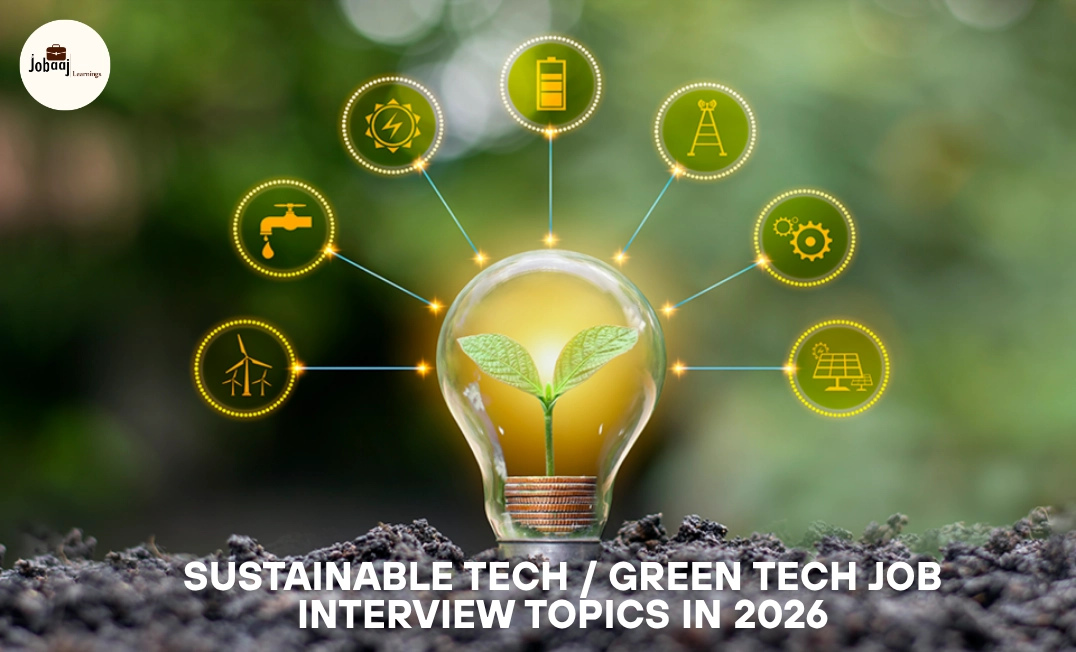
The world is increasingly turning its focus toward sustainability, and the green tech or sustainable tech sector is booming. As the demand for energy-efficient solutions, renewable energy, and eco-friendly technologies grows, companies are looking for talent in this area more than ever.
If you're aiming for a role in sustainable tech, it’s essential to be prepared for interviews that test your knowledge of both technical skills and environmental responsibility. In this blog, we’ll cover the top 25 interview topics in the green tech industry, providing you with insights on how to answer them effectively.
1. What is green technology, and why is it important?
Start by defining green technology as any technology that is environmentally friendly and helps reduce the negative impact on the environment. Explain that green tech is crucial because it addresses sustainability challenges, conserves resources, and mitigates environmental harm caused by traditional technologies.
Sample answer:
"Green technology refers to products, services, or systems that use renewable resources or processes to reduce environmental impact. This includes things like solar energy, wind power, sustainable agriculture, and energy-efficient technologies. As the world grapples with climate change, green tech plays a key role in reducing carbon emissions, conserving natural resources, and creating a cleaner, more sustainable future."
2. What are the main drivers for sustainable tech growth?
Discuss the factors driving growth, such as increasing environmental awareness, government regulations, advances in technology, and the need for cost savings through energy efficiency.
Sample answer:
"The growth of sustainable technology is driven by several factors, including global environmental concerns like climate change and resource depletion. Governments worldwide are implementing regulations that promote green tech, such as tax incentives for renewable energy. Technological advancements have made green solutions more affordable, while businesses see the financial benefits of energy efficiency and waste reduction."
3. How do renewable energy sources impact traditional energy systems?
Talk about how renewable energy sources, like solar and wind, are reducing reliance on fossil fuels, offering cleaner alternatives, and transforming energy systems.
Sample answer:
"Renewable energy sources like solar, wind, and hydro are transforming traditional energy systems by reducing the dependence on fossil fuels. They are cleaner, more sustainable alternatives that produce little to no greenhouse gas emissions. The integration of these technologies into traditional energy grids allows for greater energy independence, while also helping to reduce pollution and combat climate change."
4. What is energy efficiency, and why is it critical for sustainability?
Explain energy efficiency as the practice of using less energy to perform the same task. It's critical because it reduces energy consumption, saves money, and lowers emissions.
Sample answer:
"Energy efficiency means using less energy to accomplish the same task. For example, LED light bulbs are more energy-efficient than incandescent bulbs because they use less electricity to provide the same amount of light. Energy efficiency is critical for sustainability because it reduces the overall demand for energy, lowers costs, and helps decrease harmful emissions that contribute to climate change."
5. How can smart cities contribute to sustainability?
Discuss how smart cities leverage IoT (Internet of Things) and other technologies to optimize resource use, improve energy efficiency, and reduce waste.
Sample answer:
"Smart cities use technology to improve the quality of life for residents while making cities more sustainable. This includes IoT devices that monitor and optimize energy use, waste management systems that reduce waste sent to landfills, and smart traffic systems that reduce emissions from vehicles. These technologies help cities become more energy-efficient, reduce environmental impact, and promote sustainable urban living."
6. What role do electric vehicles (EVs) play in sustainable transportation?
Explain how EVs are replacing traditional vehicles that rely on fossil fuels, thereby reducing greenhouse gas emissions and contributing to cleaner air and a healthier planet.
Sample answer:
"Electric vehicles play a vital role in sustainable transportation by reducing our reliance on fossil fuels and lowering carbon emissions. Unlike traditional gasoline-powered cars, EVs run on electricity, which can be generated from renewable sources like solar or wind. As more EVs are adopted, they help reduce air pollution, mitigate climate change, and offer a sustainable alternative to conventional vehicles."
7. What are circular economy practices, and how do they relate to green tech?
Define the circular economy as an economic system aimed at eliminating waste and the continual use of resources by designing products for longer life cycles, repair, reuse, and recycling.
Sample answer:
"A circular economy is a system that minimizes waste and maximizes the use of resources by designing products that can be easily reused, repaired, or recycled. In green tech, this means creating products that have a smaller environmental footprint, such as energy-efficient electronics, or systems that allow for product take-back and recycling at the end of their life cycle. The circular economy is a sustainable approach that reduces resource consumption and helps prevent waste from ending up in landfills."
8. How do you stay updated on the latest trends and developments in sustainable tech?
Talk about your dedication to staying current, whether through online resources, industry publications, conferences, or networking with experts in the field.
Sample answer:
"I stay updated on the latest trends in sustainable tech by reading industry publications like Green Tech Media and attending conferences such as Sustainability Summit. I also follow experts on platforms like LinkedIn and participate in online forums to engage in discussions about new developments. I’m always learning and seeking ways to improve my knowledge and contribute to sustainable innovation."
9. What are the key challenges facing the green tech industry today?
Address challenges like high initial costs, regulatory hurdles, and the need for greater public awareness and adoption of sustainable technologies.
Sample answer:
"While green tech has made significant strides, challenges remain. High initial costs for renewable energy infrastructure, such as solar panels and wind turbines, can be a barrier for widespread adoption. Additionally, regulatory frameworks in some regions are still catching up, creating uncertainty for investors and companies. Lastly, public awareness and the adoption rate of green tech solutions need to improve for the industry to reach its full potential."
10. How do you measure the success of a sustainability initiative in a business?
Explain the importance of using both quantitative and qualitative metrics, such as energy savings, reduction in carbon footprint, and improvements in operational efficiency.
Sample answer:
"Measuring the success of sustainability initiatives involves both quantitative and qualitative metrics. Quantitative metrics include energy savings, carbon emissions reductions, and cost savings from more efficient operations. Qualitative measures might include improvements in brand image, customer satisfaction, and employee engagement around sustainability efforts. Both sets of data are essential for evaluating the effectiveness of green tech solutions in driving long-term sustainability."
11. How can sustainable technology contribute to cost savings for businesses?
Discuss how adopting sustainable technologies can lead to long-term cost savings through energy efficiency, waste reduction, and resource optimization.
Sample answer:
"Sustainable technologies, such as energy-efficient systems, renewable energy solutions, and waste reduction practices, can lead to significant cost savings over time. For instance, implementing energy-efficient lighting and heating systems can reduce utility bills. Similarly, solar power and wind energy can provide cost-effective, renewable energy alternatives. Additionally, waste reduction strategies like recycling and repurposing materials help cut disposal costs and reduce the need for new resources."
12. What is life cycle assessment (LCA), and how does it relate to green tech?
Explain life cycle assessment as a method used to evaluate the environmental impact of a product from creation to disposal.
Sample answer:
"Life cycle assessment (LCA) is a process used to evaluate the total environmental impact of a product, service, or system throughout its life cycle, from raw material extraction to production, use, and disposal. In the context of green tech, LCA helps identify areas where energy use, carbon emissions, or waste can be reduced. By considering the environmental impact across all stages, companies can make more sustainable decisions, ensuring that their products or services are truly eco-friendly."
13. How does carbon footprint reduction play a role in green tech?
Discuss how green tech solutions contribute to reducing carbon footprints by minimizing emissions during energy production, transportation, and manufacturing.
Sample answer:
"Green tech plays a crucial role in reducing carbon footprints by providing solutions that minimize emissions. For example, renewable energy sources like solar, wind, and hydropower produce little to no carbon emissions compared to fossil fuels. Electric vehicles (EVs) reduce emissions from the transportation sector, and energy-efficient buildings and smart grids lower energy consumption. These solutions help businesses and individuals decrease their carbon footprint and contribute to global efforts to combat climate change."
14. What are green building technologies, and how do they support sustainability?
Explain green building technologies as innovations that improve the sustainability of buildings through energy efficiency, sustainable materials, and waste reduction.
Sample answer:
"Green building technologies focus on designing and constructing buildings that are energy-efficient, use sustainable materials, and reduce environmental impact. For instance, using insulation materials that improve energy efficiency, installing solar panels for renewable energy, and employing smart HVAC systems that optimize heating and cooling can significantly reduce a building's carbon footprint. These technologies help businesses and homeowners save energy, lower utility costs, and minimize environmental impact."
15. How does sustainable agriculture contribute to green tech?
Discuss how sustainable agriculture practices, such as precision farming, reduce waste, conserve water, and minimize the environmental impact of food production.
Sample answer:
"Sustainable agriculture is crucial for reducing the environmental impact of food production. Technologies like precision farming use sensors, drones, and data analytics to optimize water usage, monitor soil health, and reduce pesticide and fertilizer application. This results in healthier crops, lower water consumption, and reduced pollution. Sustainable farming practices not only protect the environment but also improve food security and provide long-term solutions to global challenges."
16. What role do smart grids play in energy management?
Explain how smart grids optimize the generation, distribution, and consumption of electricity by integrating digital technologies.
Sample answer:
"Smart grids are advanced energy systems that use digital technology to improve the distribution and consumption of electricity. They enable real-time monitoring and control of energy usage, allowing utilities to better manage supply and demand. Smart grids also allow for the integration of renewable energy sources, such as solar and wind, into the grid more effectively. By reducing energy waste and improving efficiency, smart grids contribute to sustainability and can help lower overall energy costs for consumers."
17. How does solar energy compare to traditional energy sources in terms of cost and efficiency?
Compare solar energy with traditional energy sources like coal, oil, and natural gas, emphasizing its decreasing costs and increasing efficiency.
Sample answer:
"Solar energy has become much more cost-competitive with traditional energy sources. The cost of solar panels has dropped dramatically over the past decade, making it more affordable for both residential and commercial use. In terms of efficiency, modern solar panels can convert around 15-20% of sunlight into electricity, and new technologies are improving this rate. While traditional energy sources like coal and natural gas may be cheaper upfront, solar energy is a renewable resource, and over time, it can save consumers significant amounts on energy bills while reducing carbon emissions."
18. What is the role of green certifications (like LEED) in promoting sustainability?
Discuss how green certifications validate environmentally responsible practices in construction, manufacturing, and business operations.
Sample answer:
"Green certifications like LEED (Leadership in Energy and Environmental Design) are important because they provide a clear standard for sustainable practices. LEED certification recognizes buildings that meet rigorous criteria in energy efficiency, water conservation, sustainable materials, and indoor environmental quality. These certifications help companies demonstrate their commitment to sustainability, reduce operational costs, and attract environmentally-conscious customers."
19. How do you ensure that a green tech project is scalable?
Explain the importance of scalability in green tech projects and how you would design solutions that can grow as demand increases.
Sample answer:
"Scalability is crucial for green tech projects, especially as they aim to serve large populations or industries. I would ensure scalability by designing solutions that are flexible and adaptable. For example, in renewable energy projects like solar or wind farms, I would focus on modular designs that allow for easy expansion as demand for energy grows. Additionally, I would prioritize technologies and platforms that can be integrated with existing infrastructure, allowing for seamless growth without requiring a complete overhaul."
20. How do you approach life cycle management in green tech?
Discuss how managing the entire life cycle of a product or service from design to disposal can reduce its environmental impact.
Sample answer:
"Life cycle management is key to reducing the environmental impact of green tech products. This involves considering the product’s environmental footprint at every stage of its life, from material sourcing and manufacturing to disposal and recycling. I would work to select sustainable materials, ensure energy-efficient production processes, and design products that are easy to recycle or repurpose at the end of their life. By managing the full life cycle, we can reduce waste and resource consumption, creating more sustainable products in the long term."
21. What are biofuels, and how do they contribute to sustainable energy?
Define biofuels and explain how they provide an alternative to fossil fuels by using renewable organic materials.
Sample answer:
"Biofuels are renewable energy sources made from organic materials such as plants, algae, or animal waste. Unlike fossil fuels, which release harmful pollutants when burned, biofuels are considered cleaner and more sustainable. They can be used in transportation, heating, and electricity generation, offering an alternative to gasoline and diesel. Biofuels contribute to reducing carbon emissions, especially when compared to conventional fossil fuels, and help reduce dependency on non-renewable resources."
22. How do eco-friendly packaging solutions support green tech efforts?
Explain how sustainable packaging materials reduce waste, minimize environmental impact, and support recycling efforts.
Sample answer:
"Eco-friendly packaging solutions are critical in reducing the environmental impact of packaging waste. Materials like recycled paper, biodegradable plastics, and plant-based alternatives help minimize the use of petroleum-based products. Additionally, sustainable packaging is often designed to be recyclable or compostable, further supporting waste reduction efforts. Companies using these solutions not only contribute to environmental sustainability but also meet growing consumer demand for greener products."
23. How do green tech solutions contribute to energy independence?
Describe how green tech, like solar and wind power, helps reduce reliance on imported fossil fuels, promoting self-sufficiency.
Sample answer:
"Green tech solutions, such as solar panels and wind turbines, contribute significantly to energy independence by providing renewable energy that does not rely on fossil fuels. By investing in these technologies, individuals, communities, and nations can generate their own energy, reducing dependence on imported oil and gas. This not only promotes energy security but also helps stabilize energy prices and reduces the environmental impact associated with traditional energy production."
24. What is carbon capture and storage (CCS), and how does it help mitigate climate change?
Explain CCS as a technology that captures carbon dioxide emissions from industrial processes and stores them underground to prevent them from entering the atmosphere.
Sample answer:
"Carbon capture and storage (CCS) is a process that captures carbon dioxide (CO2) emissions from industrial sources like power plants or factories before they can enter the atmosphere. The CO2 is then transported and stored underground in geological formations, such as deep rock layers. CCS plays a critical role in mitigating climate change by reducing the amount of greenhouse gases released into the environment, helping industries transition to more sustainable practices while still utilizing existing infrastructure."
25. How do you evaluate the economic viability of a green tech project?
Discuss how you assess financial factors like cost, return on investment (ROI), and long-term savings when evaluating green tech projects.
Sample answer:
"When evaluating the economic viability of a green tech project, I consider the initial investment costs, projected return on investment (ROI), and long-term operational savings. For instance, solar energy systems may have a high upfront cost but can result in significant savings over time due to lower energy bills. Additionally, I factor in government incentives, tax breaks, and the potential for market growth in sustainable products. By conducting a cost-benefit analysis and considering the environmental impact, I can determine whether the project is economically viable in the long term."
Conclusion
The green tech and sustainable tech sectors offer vast opportunities for innovation and growth. As organizations and industries strive to achieve their sustainability goals, the demand for skilled professionals in this field continues to rise. By preparing for common interview topics and understanding the core principles behind green tech, candidates can position themselves as valuable contributors to a more sustainable future.
Frequently asked questions
What is green technology and why is it important?
Green technology refers to products and solutions that use renewable resources or help reduce environmental impact. It's essential because it addresses climate change, conserves resources, and offers sustainable alternatives to traditional technologies that harm the environment.
How do I prepare for a green tech interview?
To prepare for a green tech interview, stay informed about current trends in renewable energy, sustainable design, and eco-friendly technologies. Be ready to discuss how you can apply your skills to address the challenges of climate change, energy efficiency, and sustainability in the workplace.
What is a circular economy in the context of green tech?
A circular economy is a sustainable model where products are designed for reuse, recycling, or refurbishment, reducing waste and extending the lifecycle of resources. In green tech, this approach helps minimize the environmental impact of manufacturing and consumption.
How can I demonstrate my passion for sustainability in a job interview?
You can demonstrate your passion by discussing any related experience, volunteering, or coursework you've done. Be sure to mention any sustainability initiatives you've been a part of and explain why green tech matters to you personally and professionally.
What are some common challenges in the green tech industry?
Common challenges in the green tech industry include high upfront costs, regulatory hurdles, and the need for greater public awareness and adoption of green solutions. Overcoming these challenges requires innovation, collaboration, and policy support.

Join 5,00,000+ Subscribers
Be a part of our ever growing community.