Categories














/content/learnings/assets/header/ManagementConsulting.svg)
/content/learnings/assets/header/InvestmentBanking.svg)


























Starting out in the world of investing can feel a bit like standing at the edge of a vast ocean, unsure of where to step next. You’ve heard the term “investing” thrown around in conversations, in the news, and maybe even by friends, but it all seems so overwhelming. How do you even begin? Where do you put your hard-earned money? And what if you make the wrong choice?
The good news is, you’re not alone. Investing isn’t reserved for the wealthy or finance experts—it’s something anyone can learn, especially if you approach it with the right mindset and strategies. The key to getting started is understanding that small, consistent steps can lead to long-term success. Whether you want to save for retirement, buy a home, or build wealth, the right investment strategy can make a huge difference.
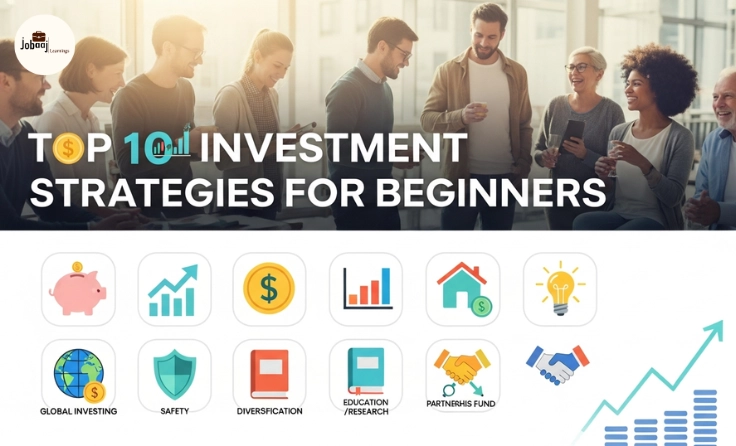
In this blog, we’ll break down the top 10 investment strategies that are perfect for beginners. By the end, you’ll feel confident and ready to start your own investment journey, with a clearer picture of where to put your money and how to make it grow.
Exploring a career in Investment Banking? Apply now!
Start with Index Funds
You’ve probably heard of index funds—and for good reason! They are one of the most popular and beginner-friendly investment options out there. Think of index funds as pre-built baskets of stocks or bonds that represent a specific segment of the market. For example, the S&P 500 index includes 500 of the largest companies in the U.S., such as Apple, Microsoft, and Amazon.
Index funds are a great starting point because they offer diversification—which means your money is spread across many different companies, reducing the risk of investing in just one stock. The beauty of index funds lies in their low cost and the fact that they track the performance of an entire market segment, rather than relying on an active manager to pick stocks. Over time, index funds have been proven to outperform most actively managed funds, making them a no-brainer for long-term growth.
As a beginner, investing in index funds is like buying a slice of the entire market. You don’t need to pick individual stocks—just invest in the entire market, and you’ll see your investment grow over time.
Diversify with ETFs
If you’re looking for something similar to index funds but with a bit more flexibility, Exchange-Traded Funds (ETFs) could be your perfect match. Think of ETFs as a hybrid between stocks and mutual funds. Like index funds, ETFs allow you to invest in a diversified portfolio of stocks or bonds. However, unlike mutual funds, which are bought and sold at the end of the trading day, ETFs trade just like individual stocks—buying and selling throughout the day.
One of the main benefits of ETFs is their diversification—you can buy into a variety of industries, from technology to healthcare, or even commodities like gold or oil. For example, there are sector-specific ETFs that let you invest only in technology or clean energy, or you can invest in global ETFs that give you exposure to international markets.
ETFs offer low fees and the ability to build a more personalized portfolio based on your risk tolerance and interests. So, whether you’re looking for exposure to a particular market or want to invest globally, ETFs make it simple to diversify your investment without complicating things.
Invest in Bonds for Stability
When you think of bonds, you might not immediately get excited. They don’t have the same flashy appeal as stocks, but they have their own unique benefits. Bonds are essentially loans you give to governments or companies, and in return, they pay you interest over time.
As a beginner, bonds can be an excellent way to balance your portfolio and reduce the overall risk of your investments. They’re less volatile than stocks, which means you’re less likely to experience large swings in value. While they don’t offer the same high returns as stocks, they provide steady income and greater stability, which can be particularly appealing if you’re in for the long haul.
Many investors recommend a mix of stocks and bonds in your portfolio. As you approach retirement, you might want to shift more of your investments into bonds to preserve capital and generate income without taking on too much risk. Bonds can be a great way to create a well-rounded, balanced investment strategy.
Start a Retirement Fund (401k or IRA)
It’s never too early to think about retirement. The earlier you start, the more time your money has to grow. A retirement fund, such as a 401(k) or an Individual Retirement Account (IRA), is a great way to begin investing for the future.
With a 401(k), you can contribute part of your paycheck to the fund, and often, your employer will match a percentage of your contributions—essentially giving you free money. An IRA is another tax-advantaged option that allows you to invest in stocks, bonds, and other assets. The key difference is that with an IRA, you have more control over the investments you choose.
Both options provide significant tax benefits, whether through tax-deferred growth in a 401(k) or tax-free growth in a Roth IRA. By starting early, even with a small amount, you give yourself the chance to take advantage of compounding—the idea that your investment earns returns on both the principal and the returns themselves.
Dollar-Cost Averaging
When it comes to investing, one of the most common mistakes beginners make is trying to time the market. In other words, buying when the market is low and selling when it’s high. While this strategy can be effective in theory, it’s incredibly difficult in practice, and most people get it wrong.
That’s where dollar-cost averaging comes in. This strategy involves investing a fixed amount of money on a regular basis, regardless of the market’s performance. For example, you might decide to invest $100 in an index fund every month. Whether the market is up or down, you stick to your plan.
This approach removes the emotions from investing, making it easier to stay on track. Over time, dollar-cost averaging helps you avoid the temptation to time the market and reduces the risk of buying at a bad time.
Real Estate Investment
If you’re looking for a more hands-on investment, real estate could be an option. Real estate has long been a great way to build wealth, whether you’re purchasing property to rent out or selling for a profit.
As a beginner, buying a property may seem daunting. But you don’t have to start by purchasing physical properties. Consider Real Estate Investment Trusts (REITs), which allow you to invest in a diversified portfolio of real estate without having to deal with tenants or maintenance. REITs pay out regular dividends, making them an attractive option for those looking for steady income.
Investing in real estate, even indirectly through REITs, can provide you with a hedge against inflation and the opportunity for both income and appreciation over time.
Build an Emergency Fund First
Before diving into investments, it’s important to ensure that you have a safety net in place. Building an emergency fund should be your first priority. Ideally, you should aim for at least three to six months’ worth of living expenses in a high-yield savings account or money market account.
Having an emergency fund ensures that you won’t need to sell off your investments in a rush if an unexpected expense comes up. It also gives you peace of mind knowing that you have money set aside for emergencies, allowing you to make investment decisions without the pressure of needing immediate funds.
Invest in What You Know
One of the best pieces of advice for beginners is to invest in what you know. If you use a particular product every day or have a strong understanding of a specific industry, consider investing in companies or funds within that sector.
When you understand a company’s products, services, and potential for growth, you’re in a better position to make informed decisions about whether it’s a good investment. For example, if you’re passionate about technology, you might want to invest in tech stocks or ETFs. Just remember that while familiarity can be beneficial, always diversify your investments to manage risk.
Consider Robo-Advisors
If managing investments seems overwhelming, you might want to consider a robo-advisor. Robo-advisors are automated platforms that use algorithms to build and manage a diversified portfolio for you. They automatically adjust your investments based on your financial goals and risk tolerance.
Robo-advisors can be a great solution for beginners who don’t have the time or expertise to manage their investments. They usually charge lower fees compared to traditional financial advisors, making them an affordable option for anyone looking to get started.
Be Consistent and Patient
Lastly, one of the most important investment strategies is simply being consistent and patient. Investing is not a get-rich-quick scheme; it’s about building wealth over time. Whether you’re investing in stocks, bonds, or real estate, staying consistent with your contributions and being patient during market fluctuations is key to long-term success.
Conclusion
Starting your investment journey doesn’t have to be intimidating. By following these top 10 investment strategies, you can build a solid foundation for your financial future, even as a beginner. Start small, stay consistent, and diversify your investments to reduce risk. Most importantly, be patient, and remember that investing is a long-term game. The earlier you start, the more time your money has to grow. So, take the first step today, and watch as your financial future unfolds!
Dreaming of a Finance career? Start with Investment Banking Certification with Jobaaj Learnings.
Frequently asked questions
What is the best investment strategy for beginners?
For beginners, index funds and ETFs are great options because they offer diversification and low fees. Additionally, building an emergency fund first and using dollar-cost averaging can help reduce risk.
What is dollar-cost averaging?
Dollar-cost averaging is an investment strategy where you invest a fixed amount of money at regular intervals, regardless of market conditions. This approach reduces the impact of market volatility and lowers the risk of buying at the wrong time.
Should I invest in real estate as a beginner?
Real estate can be a good investment, but it requires more capital and management. If you're just starting, consider **Real Estate Investment Trusts (REITs)**, which allow you to invest in property without buying physical real estate.
How much should I save before I start investing?
Before investing, it’s important to have an **emergency fund** in place. Aim for 3 to 6 months of living expenses saved in a **high-yield savings account** to cover unexpected costs.
What are robo-advisors, and should I use one?
Robo-advisors are AI-driven platforms that help manage your investments based on your goals and risk tolerance. They are a great option for beginners looking for a hands-off approach to investing with lower fees.
How do I know if I’m making the right investment choices?
It’s essential to start by diversifying your portfolio, focusing on long-term growth, and regularly reviewing your investments. As you gain experience, adjust your strategy to match your goals and risk tolerance.

Join 5,00,000+ Subscribers
Be a part of our ever growing community.