Categories














/content/learnings/assets/header/ManagementConsulting.svg)
/content/learnings/assets/header/InvestmentBanking.svg)


























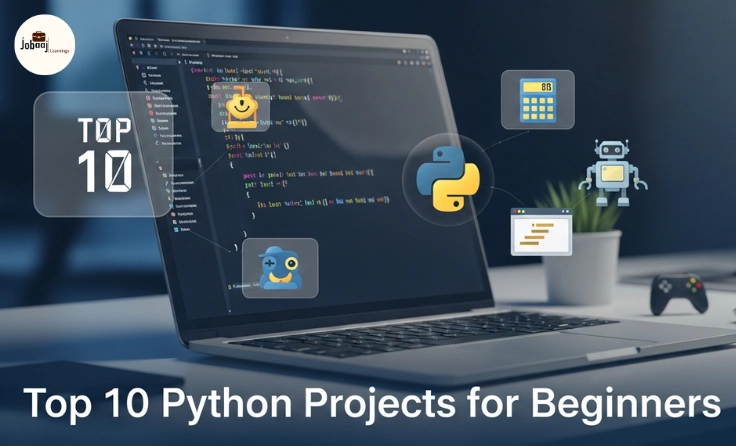
Starting with Python can feel like stepping into a vast world of possibilities. As one of the most popular programming languages, Python is not only beginner-friendly but also incredibly versatile. Whether you’re dreaming of building websites, creating games, or analyzing data, Python has something for everyone. However, as you begin your Python journey, it can be challenging to know where to start. How can you apply the concepts you’ve learned in a meaningful way?
The best approach is through hands-on practice, and the best way to practice is by building real projects. Working on projects will help reinforce what you’ve learned and give you the confidence to tackle more complex tasks down the line. In this blog, we’ll explore ten fantastic Python projects that are perfect for beginners. These projects will help you get comfortable with the language while learning important concepts like data structures, algorithms, file handling, and more.
Exploring a career in Web Development? Apply now!
1. Build a Simple Calculator
A simple calculator is one of the most basic projects for any beginner. The task is straightforward: create a calculator that can perform basic arithmetic operations like addition, subtraction, multiplication, and division. This project allows you to practice fundamental Python concepts such as handling user input, using conditional statements, and performing arithmetic operations. While this may seem simple, it's a great starting point that lays the foundation for more complex projects.
What You’ll Learn:
-
Working with user input and validating it
-
Using conditional statements for different operations
-
Performing arithmetic operations and understanding how the program flow works
Once you complete this project, you’ll have a working calculator that you can expand on later. For example, you could enhance it by adding a scientific calculator feature with more complex operations.
2. Create a To-Do List Application
A to-do list app is one of those projects that’s both simple and extremely practical. It teaches you how to handle user input, work with lists, and even manage file storage to save tasks for later use. Building a to-do list app with Python helps you understand how to work with lists to store and organize data, as well as how to read from and write to text files. It’s an essential skill for many applications that involve data persistence.
What You’ll Learn:
-
Handling user input and processing commands
-
Storing data in lists and manipulating it
-
Saving and loading tasks using file handling (i.e., saving the list to a text file and reading it back when the app restarts)
The simplicity of a to-do list app means you can expand it later with features like task deadlines, reminders, or even a graphical user interface (GUI) using libraries such as Tkinter.
3. Build a Web Scraper
Web scraping is a valuable skill that allows you to collect information from websites. It’s often used in data analysis, research, or to automate repetitive tasks. With Python, web scraping can be done using libraries like BeautifulSoup and requests, which allow you to retrieve and process the HTML content of a webpage. While it might seem daunting at first, a basic web scraper is a great project to teach you how to interact with APIs and external data.
What You’ll Learn:
-
How to make HTTP requests to retrieve web pages
-
Parsing and extracting data from HTML using BeautifulSoup
-
Saving and displaying the scraped data in a useful format (like CSV or JSON)
This project is especially beneficial if you’re interested in data science or automation, as web scraping plays a key role in collecting data for analysis.
4. Create a Number Guessing Game
A number guessing game is a classic beginner project that is both fun and a great way to learn Python basics. In this game, the computer generates a random number, and the player must guess it. Along the way, the computer will give hints whether the guessed number is too high or too low. This project will teach you about loops, conditional statements, and generating random numbers.
What You’ll Learn:
-
Generating random numbers using Python’s random module
-
Using loops to repeat the guessing process until the user guesses correctly
-
Creating conditional logic to provide feedback to the user
You can further enhance this project by adding features such as a score tracker, difficulty levels, or even a time limit for each guess.
5. Build a Simple Chatbot
Building a basic chatbot is a fantastic way to dive into text-based interaction and programming logic. A simple chatbot responds to user input with predefined responses, and by working on this project, you’ll get a good grasp of string manipulation and user input handling. This is a stepping stone for more advanced natural language processing projects.
What You’ll Learn:
-
How to process and match user input with predefined responses
-
Using if-else statements to simulate conversation
-
Basic natural language processing (NLP) techniques
This is just the beginning. You can enhance the chatbot by incorporating more sophisticated features like keyword detection or integrating with APIs for real-time responses.
6. Weather App with an API
With a weather app, you can learn how to integrate external data into your Python project by using an API. By accessing a free weather API, you can retrieve real-time weather data based on the user’s location and display it in a user-friendly format. This project gives you hands-on experience with making HTTP requests, processing API responses, and handling JSON data.
What You’ll Learn:
-
Using requests to fetch data from APIs
-
Handling JSON data to extract useful information
-
Building a simple command-line or GUI application to display results
Once you’re comfortable, you can expand this project by adding more features such as forecasting, user input for different locations, or even integrating maps to show weather conditions.
7. Build a Flashcard App for Learning
A flashcard app is a perfect project for beginners because it’s both interactive and practical. In this app, users can add their own flashcards (questions and answers) and test themselves. It’s a great project for learning how to work with lists, dictionaries, and file handling.
What You’ll Learn:
-
Storing flashcards in a dictionary or list
-
Saving flashcards to files and loading them when the app starts
-
Creating a simple user interface for easy interaction
As you grow more comfortable, you can make the app more complex by adding features like timer-based quizzes, score tracking, or even creating a mobile version of the app.
8. Create a Basic Blog with Flask
Flask is a popular Python web framework that is lightweight and perfect for building simple web applications. By creating a basic blog with Flask, you’ll get to learn how to handle web requests, display HTML content, and interact with a database (using SQLite or any other simple database). This project will introduce you to the concepts of web development and how to create dynamic websites.
What You’ll Learn:
-
Setting up routes and views in Flask
-
Handling form data to add, update, and delete blog posts
-
Connecting to a database to store content
With Flask, the possibilities are endless. You can later add more complex features like user authentication, comment sections, or even integrate Markdown for formatting blog posts.
9. Create a Basic Expense Tracker
A personal finance tracker is a project that combines data analysis and application development. The app will help users track their expenses, categorize them, and even display a simple report of their spending habits. This project will teach you how to handle databases, data processing, and visualizations (for graphs or charts).
What You’ll Learn:
-
Storing and categorizing data (using lists or databases)
-
Processing and analyzing financial data
-
Creating simple data visualizations (like pie charts or bar graphs)
This project is a great introduction to handling structured data and performing basic analytics.
10. Build a Tic-Tac-Toe Game
A Tic-Tac-Toe game is a classic project that’s perfect for beginners. It will introduce you to game logic, 2D arrays (or lists), and basic algorithms. You’ll be able to create a game board, handle user input, and check for winning conditions.
What You’ll Learn:
-
Using lists or arrays to represent the game board
-
Implementing game logic for checking wins, losses, and ties
-
Handling user input and alternating between players
As you become more familiar with Python, you can add enhancements like AI to play against, make the board graphical, or even create a multiplayer version using Flask or Django for web deployment.
Conclusion
As you begin your Python journey, it’s important to focus on building projects that not only help reinforce what you’ve learned but also excite you. Each of these top 10 Python projects for beginners will help you practice key concepts and build a portfolio of projects that you can showcase in the future. Whether you're interested in web development, game design, or data analysis, Python provides the perfect foundation to get started.
By tackling these projects, you'll gain hands-on experience and learn how to build real-world applications that can lead to more advanced opportunities. So, don’t hesitate start working on these projects today and take your first steps toward becoming a skilled Python developer.
Dreaming of a Web Development Career? Start with Web Development Certificate with Jobaaj Learnings.
Frequently asked questions
What is the best project for beginners in Python?
Some of the best beginner Python projects include building a simple calculator, a to-do list app, or a number guessing game. These projects introduce essential Python concepts and are fun to create.
Do I need to know a lot of programming to start Python projects?
No, Python is beginner-friendly, and these projects are designed for beginners. You'll learn along the way and can start with simple concepts before gradually tackling more complex tasks.
Can Python be used for web development?
Yes, Python is widely used in web development, especially with frameworks like Flask and Django. Building a simple blog with Flask is a great way to get started with web development in Python.
How do I improve my Python skills after completing these projects?
To improve your Python skills, try building more complex projects, contribute to open-source projects, or start working with advanced Python libraries and frameworks related to your areas of interest.
Are these Python projects suitable for absolute beginners?
Yes, these projects are designed with beginners in mind. They cover essential Python concepts and provide a hands-on learning experience that will help you get comfortable with the language.
What tools or libraries should I learn with Python?
Some important tools and libraries to learn alongside Python include **matplotlib** (for data visualization), **Flask** (for web development), **Pandas** (for data analysis), and **BeautifulSoup** (for web scraping).

Join 5,00,000+ Subscribers
Be a part of our ever growing community.