Categories














/content/learnings/assets/header/ManagementConsulting.svg)
/content/learnings/assets/header/InvestmentBanking.svg)



























/content/learnings/assets/header/programs/1.png)
/content/learnings/assets/header/programs/4.png)

Top 20 Interview Questions for Management Consultants at Boston Consulting Group

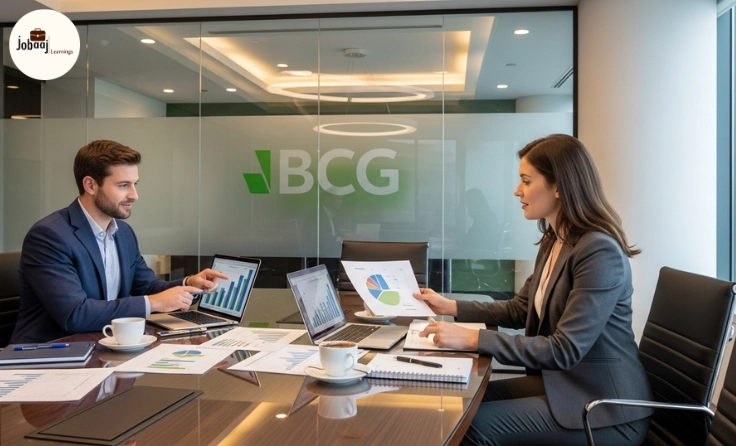
Landing an interview with Boston Consulting Group (BCG) is a prestigious milestone for anyone pursuing a career in management consulting. As one of the leading global consulting firms, BCG is known for its focus on solving complex business problems with a mix of strategy, innovation, and expertise. When applying for a management consultant role, you are not just seeking to work for a well-established company, but you're aiming to be part of a world-class team that shapes the future of industries.
Exploring a career in Management Consulting? Apply Now!
In this blog, we’ve compiled the top 20 interview questions you’re likely to encounter in your BCG management consultant interview. Along with these questions, we provide valuable tips on how to approach each one, ensuring that you are prepared to stand out and impress your interviewers.
1. Tell Me About Yourself
This opening question may seem simple, but it's a powerful opportunity to set the tone for the rest of the interview. It allows the interviewer to get to know you, your professional journey, and what drives you.
Sample Answer:
“I’m a recent graduate with a degree in economics, and I’ve always had a passion for problem-solving. During my time at university, I participated in a consulting project for a local company where we helped them improve their supply chain efficiency. After that, I interned at XYZ Consulting, where I gained hands-on experience in market analysis and client management. Now, I’m eager to apply my skills at BCG, where I can contribute to solving complex problems and driving impactful results for clients.”
Keep your answer concise and professional. Focus on your educational background, your career path, and specific accomplishments that led you to pursue a career in management consulting. Highlight your skills in problem-solving and collaboration, which are key to succeeding at BCG.
2. Why Do You Want to Work at BCG?
BCG is known for its unique culture, global presence, and emphasis on innovation and creativity. This question tests whether you have done your homework and understand what sets BCG apart.
Sample Answer:
“BCG has always stood out to me due to its global reputation for tackling high-impact challenges across diverse industries. The collaborative culture and focus on intellectual rigor is something I deeply admire. I’m particularly excited about BCG’s approach to innovation and technology-driven solutions, and I believe my skills in data analysis and strategic thinking would allow me to contribute effectively to the firm’s mission of transforming organizations.”
Mention specific aspects of BCG’s mission, such as their commitment to transforming industries, and how it aligns with your career goals. Talk about the cutting-edge projects BCG works on and how its values resonate with your personal and professional goals.
3. Describe a Time When You Solved a Complex Problem
Problem-solving is at the heart of consulting. This question allows you to showcase your analytical skills and your approach to solving challenging problems.
Sample Answer:
"During my internship at XYZ Consulting, I worked on a project for a retail client facing declining sales in a key market. After analyzing data, I found that the issue wasn’t just lower foot traffic, but customer dissatisfaction due to outdated store layouts and product offerings. I recommended a redesign of the store layout based on customer feedback and suggested introducing trending products. I collaborated with the design team to create mockups and helped launch a marketing campaign. As a result, sales increased by 15% in three months, and customer satisfaction improved by 20%, demonstrating the power of data-driven problem-solving."
Use the STAR method (Situation, Task, Action, Result) to explain a real-world example where you solved a complex business problem. Focus on the steps you took, the tools you used, and the outcome of your efforts.
4. How Do You Prioritize Tasks When Managing Multiple Projects?
Consulting requires juggling multiple projects simultaneously. This question evaluates how you manage competing demands while delivering results.
Sample Answer:
"When managing multiple projects, I prioritize tasks by assessing urgency and impact. First, I break down each project into smaller tasks and identify deadlines, dependencies, and critical milestones. I use a tool like Trello or Asana to organize tasks and ensure I’m aligned with each project's goals. I focus on high-impact tasks that drive progress and ensure I’m meeting deadlines. I also set aside time for regular check-ins with my team to address any bottlenecks and adjust priorities if needed. By staying organized, flexible, and maintaining open communication, I ensure each project gets the attention it needs without compromising quality."
Explain your time management strategies, such as using project management tools or prioritizing tasks based on urgency and impact. Share a specific example where you successfully managed multiple projects under tight deadlines.
5. Can You Walk Me Through a Recent Project You Led?
BCG seeks leaders who can guide teams and drive results. This question gives you an opportunity to demonstrate your leadership and project management skills.
Sample Answer:
"Recently, I led a market research project for a tech startup looking to expand its product line. I started by identifying key objectives, such as understanding customer needs and market trends. I coordinated a team of three researchers to gather and analyze data through surveys, competitor analysis, and customer interviews. We found a gap in the market that our client could capitalize on, which led to a strategic product launch. I presented our findings to the senior leadership team and worked with them to refine the product strategy. The project was a success, helping the client launch a new product that exceeded sales targets by 20% in the first quarter."
Share a project where you led a team, focusing on the objectives, challenges, and the outcome. Discuss how you motivated the team, delegated tasks, and mitigated risks to ensure the project’s success.
6. How Do You Stay Organized and Focused During High-Pressure Situations?
Consulting work can often be high-pressure, especially with tight deadlines and demanding clients. This question tests your ability to manage stress and stay organized.
Sample Answer:
"During high-pressure situations, I stay organized by breaking tasks into smaller, manageable steps and setting clear priorities based on deadlines and impact. I use project management tools like Asana to track progress and ensure nothing falls through the cracks. I also set aside specific time blocks for focused work, limiting distractions and focusing on one task at a time. When under pressure, I regularly reassess my workload, communicate with my team to delegate tasks, and stay flexible in case adjustments are needed. This approach allows me to maintain focus and stay on track, even in challenging situations."
Explain the techniques you use to maintain organization, such as task lists, time-blocking, or collaborative tools. Share an example of when you had to handle multiple demands simultaneously and how you maintained your composure and delivered high-quality work.
7. Tell Me About a Time You Had to Persuade Someone to Adopt Your Idea
Consultants need to convince clients and colleagues to embrace new ideas. This question assesses your persuasion and communication skills.
Sample Answer:
"In a recent project, I proposed a new digital marketing strategy to a client who was hesitant to shift from traditional advertising methods. I understood their concerns, so I first gathered data to show the effectiveness of digital strategies in their industry. I then presented a clear plan with measurable goals, emphasizing cost-efficiency and a higher return on investment. To build trust, I offered examples of similar companies that saw success with this approach. After addressing their doubts, they agreed to implement the strategy, which led to a 25% increase in lead generation within the first two months."
Provide an example where you successfully persuaded someone to adopt your solution. Discuss how you presented data, addressed concerns, and built trust to gain buy-in for your idea.
8. How Do You Approach Client Engagements?
In consulting, building strong client relationships is essential. This question tests your approach to managing client expectations and fostering trust.
Sample Answer:
"I approach client engagements by first taking the time to fully understand their needs, challenges, and objectives through active listening and in-depth discussions. I believe in building trust early by establishing clear communication, setting expectations, and ensuring alignment on goals. I then develop a tailored approach that combines research, insights, and actionable strategies. Throughout the engagement, I maintain regular check-ins to address concerns, update progress, and refine strategies as needed. This proactive and transparent approach helps foster strong, collaborative relationships and ensures that we achieve the desired outcomes."
Talk about how you engage with clients, understand their needs, and manage expectations throughout a project. Share an example of how you navigated a complex client situation and ensured alignment between their goals and your recommendations.
9. Can You Provide an Example of a Time When You Worked in a Team to Achieve a Goal?
Consultants often work in teams to solve client challenges. This question assesses your collaboration and teamwork abilities.
Sample Answer:
"During my internship, I worked with a team of four to develop a market entry strategy for a client expanding into a new region. We divided the tasks based on our strengths: I focused on competitive analysis while others researched consumer behavior and regulatory factors. We held weekly meetings to share progress and align on key findings. By collaborating and pooling our insights, we were able to create a comprehensive strategy that was well-received by the client. The project was a success, and our team was recognized for delivering actionable recommendations on time."
Share a project where you worked closely with a team to achieve a common goal. Explain your role within the team, how you contributed to the project’s success, and how you handled any team conflicts or challenges.
10. Describe a Time You Had to Make a Difficult Decision with Limited Information
Consultants often have to make decisions with incomplete data. This question evaluates your decision-making skills under uncertainty.
Sample Answer:
"During a project at my previous internship, I was tasked with deciding whether to recommend a new marketing strategy for a client based on incomplete market data. The available information was fragmented and didn’t provide a clear picture of customer preferences. I made the decision to move forward by relying on secondary research, industry trends, and leveraging insights from previous campaigns. I presented the recommendation with clear caveats, outlining the risks and the steps we would take to gather more data post-launch. The decision paid off, as the campaign exceeded expectations, and we adjusted the strategy as we gathered more insights."
Discuss a time when you made a decision despite having limited information. Explain how you assessed the situation, consulted with relevant stakeholders, and made the best possible choice based on the available data.
11. How Do You Stay Updated with Industry Trends?
Consultants must stay on top of industry trends to provide valuable insights. This question gauges your commitment to continuous learning and staying informed.
Sample Answer:
"I stay updated with industry trends by regularly reading reputable sources such as Harvard Business Review, McKinsey Quarterly, and industry-specific blogs. I also follow thought leaders and companies on LinkedIn and participate in relevant webinars and conferences. Additionally, I engage with peers and colleagues in the field, sharing insights and discussing emerging trends. This combination of reading, networking, and continuous learning ensures I stay informed about the latest developments and can apply fresh ideas to my work."
Talk about the sources you use to stay informed about industry trends, such as industry reports, online courses, or conferences. Mention how staying up-to-date has helped you deliver better results for clients.
12. Tell Me About a Time You Had to Manage Conflict Within Your Team
Managing team dynamics and resolving conflicts is a key leadership skill in consulting. This question assesses your ability to handle interpersonal issues.
Sample Answer:
"During a group project at university, two team members had differing views on how to approach a research problem, which caused tension and delayed our progress. I stepped in by organizing a meeting where everyone could voice their concerns and propose solutions. By actively listening to both sides and highlighting common goals, we found a compromise that leveraged both perspectives. I then reassigned roles based on each member’s strengths, which helped smooth things over. Ultimately, we completed the project on time, and the experience taught me the importance of open communication and mediation in resolving conflicts."
Share a specific situation where you had to resolve conflict within a team. Explain how you handled the disagreement and how you worked to restore collaboration and focus within the team.
13. How Do You Evaluate the Success of a Project?
Consultants need to assess the impact of their work. This question tests your ability to measure success and drive results.
Sample Answer:
"I evaluate the success of a project by first comparing the final results to the initial goals and objectives set at the start. I assess whether we met the key performance indicators (KPIs), such as timelines, budget, and quality. Additionally, I gather feedback from stakeholders, team members, and the client to evaluate satisfaction and identify areas for improvement. I also review how effectively we adapted to challenges and whether the project had a lasting impact. A successful project not only meets its goals but also leaves the team and client with a positive experience and actionable takeaways."
Discuss the key performance indicators (KPIs) you use to measure project success, such as client satisfaction, timeliness, and cost-effectiveness. Share how you track progress and make adjustments to ensure the project achieves its goals.
14. How Do You Balance Business Goals and Client Needs?
Consultants must find a balance between meeting client needs and achieving business objectives. This question evaluates your ability to manage both aspects effectively.
Sample Answer:
"I balance business goals and client needs by ensuring clear communication and setting mutual expectations from the outset. I start by thoroughly understanding both the client’s objectives and the business goals, ensuring that they align as much as possible. When conflicts arise, I focus on finding creative solutions that address both sides, prioritizing the most critical needs. I also keep stakeholders informed throughout the process, adjusting strategies as necessary to ensure that we achieve the business objectives while delivering value to the client. The key is finding a compromise that benefits both parties in the long term."
Explain how you prioritize client satisfaction while also ensuring the work aligns with the company’s goals. Share an example where you successfully balanced the two, ensuring both business and client needs were met.
15. How Do You Approach Problem Solving When You Don’t Have All the Answers?
Consultants often face problems where the solution isn’t immediately clear. This question tests your problem-solving and critical thinking abilities.
Sample Answer:
"When faced with a problem and incomplete information, I first break the problem down into smaller, manageable parts. I prioritize the most critical areas that need immediate attention and start gathering as much data as possible from available sources, such as colleagues, industry reports, or even through quick research. I focus on forming hypotheses based on existing knowledge and test them step-by-step, while staying flexible to adjust as new information comes in. I also collaborate with my team to brainstorm solutions and leverage their perspectives. This iterative, collaborative approach helps me move forward even when I don’t have all the answers from the start."
Discuss how you break down complex problems into smaller parts, conduct research, and consult with experts when needed. Share a specific example where you successfully solved a problem with incomplete information.
16. Describe a Time When You Worked with a Difficult Client
This question evaluates your client management and conflict resolution skills, essential for consultants.
Sample Answer:
"During a project at my previous job, I worked with a client who had very high expectations and was difficult to communicate with, often changing the project requirements last minute. To manage this, I made sure to stay calm and focused, actively listening to their concerns and expectations. I set up regular check-ins to ensure we were aligned, documenting any changes in requirements to avoid misunderstandings. By maintaining transparency, being responsive, and setting clear expectations, I was able to build trust with the client. Eventually, we successfully delivered the project on time, and the client was satisfied with the final result, which taught me the importance of patience, clear communication, and adaptability in managing challenging clients."
Share an experience where you worked with a difficult client. Focus on how you handled the situation, managed the client’s expectations, and ultimately delivered value despite the challenges.
17. How Do You Manage Time and Priorities When Leading Multiple Projects?
Time management is critical when juggling multiple projects. This question assesses your ability to stay organized and focused.
Sample Answer:
"When leading multiple projects, I prioritize tasks by first identifying the most urgent and high-impact activities. I use tools like Trello or Asana to organize and track deadlines, breaking each project into smaller tasks with clear milestones. I then allocate my time based on these priorities, ensuring I focus on critical tasks first. I regularly review my progress, adjust timelines as needed, and delegate where possible to ensure no project is left behind. By staying organized, flexible, and constantly reassessing priorities, I ensure that I can meet all deadlines without compromising quality."
Discuss how you prioritize tasks based on urgency and importance. Mention any project management tools or strategies you use, such as time-blocking or delegating responsibilities to ensure efficiency.
18. Tell Me About a Time You Had to Adapt Quickly to Changing Circumstances
Consulting projects can evolve rapidly, and leaders need to be adaptable. This question assesses your ability to pivot when necessary.
Sample Answer:
"During a marketing campaign I managed, we suddenly faced an unexpected change when a key partner pulled out last minute. This shifted our entire strategy and timeline. I quickly adapted by reassessing the campaign’s goals and reallocating resources to other marketing channels. I worked closely with the team to adjust the messaging and update the budget, focusing on digital platforms that could deliver immediate results. Despite the challenges, the campaign launched on time and achieved the target engagement, teaching me the importance of flexibility and quick decision-making in dynamic situations."
Share a specific example where you had to adapt to new circumstances, such as changes in client requirements or project scope. Explain how you kept your team aligned and delivered results despite the changes.
19. How Do You Handle Stress in High-Pressure Situations?
Consulting is often fast-paced and high-pressure. This question tests your ability to perform under stress.
Sample Answer:
"I handle stress in high-pressure situations by staying organized and focusing on one task at a time. I break down complex problems into smaller, manageable parts and tackle the most critical tasks first. I also make sure to maintain clear communication with my team to ensure we’re all aligned. When stress starts to build up, I take short breaks to reset and refocus. By keeping a calm and methodical approach, I’m able to stay productive, make informed decisions, and meet deadlines without feeling overwhelmed."
Explain how you handle stress by remaining organized, prioritizing tasks, and maintaining a positive attitude. Share examples of how you’ve managed tight deadlines and high expectations in previous roles.
20. Why Should We Hire You as a Management Consultant at BCG?
Sample Answer:
"I believe I am an ideal candidate for the Management Consultant role at BCG because of my strong analytical skills, problem-solving abilities, and commitment to delivering impactful solutions. My experience in both academic and internship settings has allowed me to develop a solid understanding of data analysis, strategic thinking, and client engagement. I thrive in fast-paced environments, and I am passionate about tackling complex challenges. What sets me apart is my ability to collaborate effectively with cross-functional teams, my adaptability to changing circumstances, and my relentless focus on achieving results that drive business growth. I am eager to bring my expertise, drive, and dedication to BCG and contribute to solving your clients’ most pressing challenges."
This is your chance to summarize why you are the best fit for the role. Highlight your problem-solving skills, your experience, and your ability to work collaboratively in high-pressure environments. Show your passion for consulting and your desire to work at BCG, specifically how your skills align with the company’s mission.
Conclusion:
The management consultant interview at BCG is one of the most challenging and exciting experiences for anyone looking to step into the world of top-tier consulting. By preparing for these 20 interview questions, you’ll be well-equipped to showcase your leadership, problem-solving, and analytical skills. The key to success is demonstrating how your experience and mindset align with BCG’s core values of innovation, collaboration, and delivering impactful results.
Dreaming of a Management Consulting Career? Start with Management Consulting Certificate with Jobaaj Learnings.
Frequently asked questions
What are the key qualities BCG looks for in a leader?
BCG looks for leaders who are not only experts in their field but also possess strong problem-solving skills, a collaborative mindset, and the ability to drive innovation. Adaptability, transparency, and the ability to inspire and motivate teams are also highly valued.
What can I expect in a leadership interview at BCG?
In a BCG leadership interview, you can expect a combination of behavioral questions, leadership scenario-based questions, and technical assessments. BCG wants to understand how you manage teams, solve complex problems, and fit within their collaborative, innovative culture.
How should I prepare for behavioral interview questions at BCG?
To prepare for behavioral questions, think about specific situations where you demonstrated leadership qualities such as decision-making, problem-solving, conflict resolution, and team collaboration. Use the STAR method (Situation, Task, Action, Result) to structure your answers effectively.
What is the importance of cultural fit in BCG’s leadership roles?
Cultural fit is crucial at BCG, as they emphasize collaboration, creativity, and continuous innovation. BCG looks for leaders who align with their values and can thrive in a fast-paced, diverse, and evolving work environment while also nurturing and empowering their teams.
How do I demonstrate innovation in a leadership interview?
To demonstrate innovation, share examples of how you’ve led initiatives that introduced new ideas, processes, or technologies that significantly impacted your team or organization. Focus on how you encouraged creativity and fostered an environment where new ideas could be explored and implemented.
What should I highlight in a leadership interview to show my decision-making skills?
Highlight situations where you made tough decisions, how you weighed your options, the data you considered, and how your decision ultimately benefited the team or organization. Show that you can make decisions confidently while considering both short-term and long-term outcomes.
Join 5,00,000+ Subscribers
Be a part of our ever growing community.