Categories














/content/learnings/assets/header/ManagementConsulting.svg)
/content/learnings/assets/header/InvestmentBanking.svg)


























If you're preparing for the UPSC Civil Services Exam in 2026, you're likely feeling a mix of excitement and stress. After all, this is one of the most competitive exams, with a huge number of candidates applying every year. As you sit down to begin your preparation, you may wonder, “How can I stand out from the crowd? What’s the most efficient way to prepare for this exam?”
Well, you're not alone in this journey. The UPSC Civil Services Exam is a gateway to securing a stable job in the Indian Railways. But cracking this exam isn’t just about luck it’s about smart, focused, and consistent preparation. With the right approach and guidance, you can confidently face the challenges and ace the UPSC exam in 2026.
In this blog, we’ll dive into expert tips and strategies that can significantly improve your preparation and boost your chances of success. Whether you are just starting or have been preparing for a while, these tips will help you stay on track and approach the exam with a clear plan.
Understanding the UPSC Exam Structure
Before diving into the preparation tips, it’s essential to understand the UPSC exam pattern. Knowing the exam structure will help you tailor your preparation to the actual demands of the test. The UPSC exam has three main stages:
-
Preliminary Examination (Prelims)
The first stage consists of two papers:-
General Studies Paper I: Covers topics like Current Affairs, History, Geography, Economics, and Polity.
-
CSAT (Civil Services Aptitude Test) Paper II: This is an aptitude paper with questions on logical reasoning, comprehension, and basic numeracy.
-
-
Main Examination (Mains)
The Mains consists of nine papers:-
General Studies Papers: These papers cover a variety of subjects like Polity, History, Geography, Science & Technology, Ethics, and Social Issues.
-
Optional Subject Papers: Candidates can choose one optional subject from a wide array of options (e.g., Geography, Sociology, Anthropology, etc.).
-
Language Papers: These test your proficiency in English and a regional language.
-
Essay Paper: The essay paper tests your ability to express your thoughts on various topics.
-
-
Interview/Personality Test
The final stage assesses the candidate's personality, decision-making ability, and suitability for a career in public service.
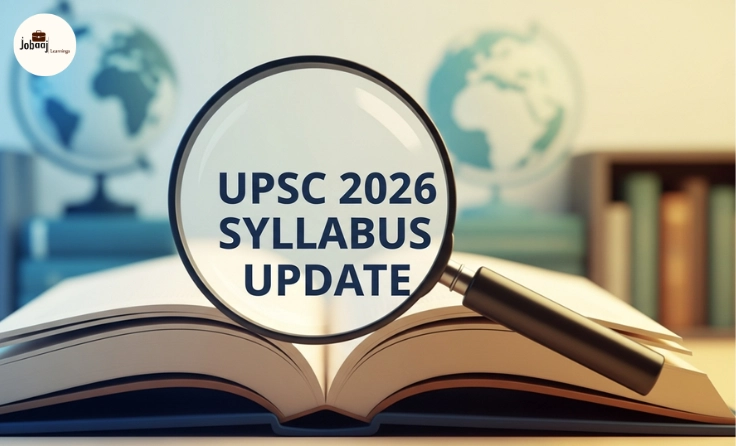
Key Updates to the UPSC Exam Syllabus for 2026
Every year, the UPSC occasionally tweaks its syllabus to keep up with the changing needs of the country and the competitive landscape. The 2026 syllabus update brings several changes aimed at improving the structure and relevance of the examination.
1. Increased Emphasis on Contemporary Issues
One of the significant updates in the UPSC syllabus for 2026 is the increased emphasis on contemporary issues. The General Studies Paper II (Governance, Constitution, Polity, Social Justice) has been revised to include more current affairs topics, particularly those related to:
-
Social Justice and Empowerment
-
Political Reforms
-
Globalization and Economic Policies
This means that you must stay more updated on the national and international political climate, current government policies, and social movements. Being well-versed with these topics will be essential for scoring well in the exam.
Stay updated by reading daily newspapers, following news websites, and subscribing to monthly current affairs magazines.
2. Changes in the General Studies Papers
General Studies Paper I (Indian Heritage and Culture, History, Geography) will now place greater importance on regional history and culture, focusing more on the diversity of India. Expect a rise in questions that focus on regional affairs, cultural history, and environmental issues faced by specific states.
Additionally, General Studies Paper IV (Ethics, Integrity, and Aptitude) has become more extensive, with more topics covering issues like:
- Corporate governance
- Public administration
- Ethical dilemmas in governance
Ethics is no longer just about theories; now, the focus is more on applying ethical thinking in practical governance scenarios, which is crucial for civil servants.
Upcoming government exams 2026
3. Modernizing Optional Subjects
The optional subject papers have also been revised. Subjects such as Artificial Intelligence, Blockchain, and Environmental Sustainability have been integrated into the syllabus to reflect contemporary developments. This is part of the UPSC’s ongoing efforts to modernize and keep the syllabus aligned with the current landscape of governance, technology, and economics.
If you’re planning to take a technical subject as your optional, this change will require you to focus on emerging trends like data privacy, cyber security, and sustainable development practices.
4. More Focus on Social and Economic Issues
The Social Issues section of the General Studies Paper II has expanded to cover contemporary topics such as:
- Urbanization
- Climate Change
- Gender Equality
- Youth Unemployment
These areas are highly relevant today, so it’s essential to focus on modern social issues in both your General Studies preparation and optional subjects.
Effective Preparation Strategy for the UPSC 2026 Syllabus
With these updates, preparation for the UPSC Civil Services Exam in 2026 requires a more dynamic approach. Here’s how you can set up your study plan:
1. Stay Current with Daily News and Weekly Reviews
Given the heavy emphasis on current affairs, make it a habit to:
-
Read daily newspapers like The Hindu or Indian Express for national and international updates.
-
Subscribe to current affairs magazines like Yojana, Kurukshetra, and PIB.
2. Focus on Conceptual Understanding
While current affairs are important, you should focus on developing a conceptual understanding of key subjects like ethics, governance, and polity. Read multiple sources, but focus on NCERTs and standard reference books for depth and clarity.
3. Mock Tests and Answer Writing Practice
With the syllabus becoming more practical and case-study-based, practice mock tests and answer writing frequently. Regular writing will improve your ability to articulate answers clearly and logically.
4. Choose Your Optional Subject Wisely
The optional subject you choose will have a significant impact on your success. Make sure to select a subject that aligns with your strengths and interests. Consider topics that are relevant to modern-day governance, such as environmental sustainability, public administration, and technology management.
Conclusion
The UPSC Civil Services Exam remains one of the toughest exams, but with the right approach, a well-structured study plan, and an understanding of the syllabus changes in 2026, you can navigate through it successfully. Focus on both conceptual clarity and practical application to excel in this exam. Stay consistent, keep adapting to the evolving syllabus, and you will be well on your way to achieving your dream of joining the prestigious Indian Civil Services.
Frequently asked questions
What is the UPSC exam?
The UPSC exam is the Civil Services Examination conducted by the Union Public Service Commission to recruit candidates for various government positions in India, including IAS, IPS, IFS, and other civil services. It consists of three stages: Prelims, Mains, and an Interview.
What are the key changes in the UPSC syllabus for 2026?
The 2026 UPSC syllabus update includes a greater emphasis on contemporary issues like social justice, political reforms, and economic policies. Additionally, there’s a modernized approach to optional subjects, with more focus on topics like Artificial Intelligence, Blockchain, and Environmental Sustainability.
How many papers are there in the UPSC Mains exam?
The UPSC Mains exam consists of nine papers, including General Studies papers, Optional Subject papers, and Language papers. It also includes an Essay paper and a Personality Test/Interview stage after the Mains exam.
How can I stay updated with current affairs for the UPSC exam?
To stay updated with current affairs, read newspapers like The Hindu or Indian Express daily. Subscribe to current affairs magazines like Yojana, Kurukshetra, and PIB. Additionally, use current affairs apps and participate in daily quizzes to stay informed on important topics.
What is the importance of selecting the right optional subject in UPSC?
The optional subject in the UPSC exam plays a crucial role in your overall score. It’s important to choose an optional subject based on your interests, strengths, and relevance to current affairs. A well-chosen subject can make a significant difference in your preparation and exam success.
How should I prepare for the ethics paper in UPSC 2026?
The ethics paper now includes case studies and practical applications of ethical principles in governance. It’s important to read standard reference books, analyze case studies, and develop your ethical reasoning skills. Focus on the practical application of ethics in real-world governance scenarios.

Join 5,00,000+ Subscribers
Be a part of our ever growing community.