Categories








































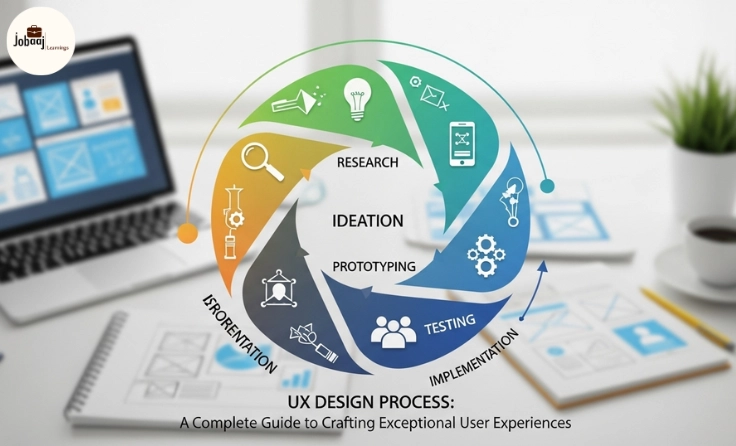
UX Design Process: A Complete Guide to Crafting Exceptional User Experiences

Imagine you're walking into a new coffee shop for the first time. The door swings open, and immediately, you're greeted by the inviting aroma of freshly brewed coffee. You head towards the counter, and the menu is clear and easy to read. As you place your order, the barista is friendly, and the process feels smooth, almost effortless. You sit down, enjoy your coffee, and leave with a smile, eager to return. This seamless experience didn’t happen by accident. It was carefully designed. The UX design process behind that coffee shop experience—just like any great product or service—was about creating an experience that was intuitive, satisfying, and memorable.
Exploring a career in Performance Marketing? Apply Now!
In this blog, we’ll explore the essential UX design process that helps designers craft exceptional user experiences, from understanding the user’s needs to testing and refining the product. Whether you’re a beginner or an experienced designer, this guide will provide you with a solid foundation to build products that people love to use.
What is UX Design?
User Experience (UX) Design is the process of designing products that provide meaningful and relevant experiences to users. This includes the entire process of product development, from the initial concept to the final interface. It involves understanding the user’s needs, goals, and pain points and designing solutions that provide an efficient, enjoyable, and easy experience. In simpler terms, UX design is about making sure that users have a smooth and satisfying experience when interacting with a product, whether it's a website, mobile app, or even a physical product.
The UX Design Process: A Step-by-Step Guide
1. Research and Discovery
The first step in the UX design process is research. Before you can design a product, you need to understand who the users are and what their needs are. This involves gathering data through methods such as:
-
User Interviews: Talking directly with users to understand their needs, frustrations, and behaviors.
-
Surveys: Collecting quantitative data from a larger user base to identify trends and common pain points.
-
Competitive Analysis: Reviewing competitor products to identify areas of improvement and innovation.
-
Market Research: Understanding the target market, industry trends, and potential opportunities for your product.
Research is about gathering insights to inform your design decisions and ensure that the product solves real user problems.
2. Define the Problem and Create Personas
Once you have collected your research, it’s time to define the problem clearly. What issue are you solving for your users? To help guide the design process, you’ll create personas, which are fictional characters representing different user types. These personas are based on the research data and reflect real user behavior, needs, and goals.
For example, if you're designing a fitness app, your personas might include someone who wants to track workouts, someone focused on healthy eating, and someone looking to join a fitness community. Personas help you keep the users’ needs at the center of the design process.
3. Ideation and Brainstorming
At this stage, the goal is to generate ideas and solutions to address the problems identified earlier. Ideation can be done through brainstorming sessions, mind mapping, or sketching initial wireframes. The key is to think creatively and explore a wide range of possible solutions before narrowing down the best approach.
This is a time to be open to unconventional ideas and collaborate with others to spark innovative solutions. Don’t focus too much on perfection yet—just focus on quantity and creativity.
4. Wireframing and Prototyping
Now that you have a concept, it’s time to create a wireframe. A wireframe is a low-fidelity, simplified version of your design. It represents the basic layout and structure of the product, showing where key elements like buttons, menus, and content will appear.
Once the wireframe is validated, you can move on to building a prototype, which is a working model of the product that simulates user interaction. Prototypes help visualize the flow and functionality of the product and provide a more realistic sense of how users will experience the design.
5. User Testing
Testing is one of the most critical stages in the UX design process. It’s time to get feedback from real users. User testing involves observing users as they interact with the product, identifying any pain points or usability issues, and collecting feedback on how the design could be improved.
You can conduct usability tests through:
-
In-person testing: Watching users interact with the product face-to-face.
-
Remote testing: Observing users interact with the product from a distance, often through screen-sharing tools.
-
A/B testing: Comparing two versions of the design to see which one performs better.
User testing is essential because it helps ensure that the design works as intended and provides real value to the users.
6. Iterate and Refine
Once user testing is complete, the feedback is analyzed, and design improvements are made. The design process is iterative, meaning that it is refined and improved upon after each round of feedback. This might involve tweaking the interface, adding new features, or simplifying the user flow.
The goal is to keep improving the design until it meets both user needs and business objectives, ensuring that it delivers an exceptional user experience.
7. Final Design and Handoff
After iterating and refining, the final design is ready. It’s time to prepare the design for development and hand it off to the development team. This includes creating high-fidelity designs, specifying design elements, and ensuring that the final design is well-documented for the developers to implement.
Clear communication between design and development is crucial to ensure that the product is built to the exact specifications and that the user experience remains intact during implementation.
Conclusion: The Heart of Great Products
The UX design process is not just about making things look pretty; it’s about creating meaningful, functional, and enjoyable experiences that solve real user problems. By focusing on research, iterative design, and testing, you can ensure that your product meets the needs of your users and delivers a seamless, satisfying experience. Whether you’re designing a website, an app, or a physical product, keeping the user at the heart of the design process is the key to crafting exceptional user experiences.
Dreaming of a Performance Marketing Career? Start with Performance Marketing Certificate with Jobaaj Learnings.
Frequently asked questions
What is the UX design process?
The UX design process involves research, ideation, wireframing, prototyping, user testing, and refining the design to create products that provide exceptional user experiences.
Why is user testing important in the UX design process?
User testing helps identify usability issues and ensures that the design meets the needs of real users. It provides valuable feedback to refine the product and improve the user experience.
What is the role of wireframing in UX design?
Wireframing helps define the basic layout and structure of a product, allowing designers to plan the user interface and functionality before moving to more detailed design work.
How do you create personas in UX design?
Personas are created by conducting user research and interviews to gather insights into user behaviors, goals, and pain points. These fictional characters represent different user types and help guide design decisions.
What is the importance of iteration in the UX design process?
Iteration allows designers to refine and improve the product continuously. By testing, gathering feedback, and making adjustments, the design evolves into a more effective solution for the users.
What tools are commonly used in the UX design process?
Popular UX design tools include Sketch, Figma, Adobe XD, InVision, and Axure for wireframing, prototyping, and collaboration. These tools help designers create, test, and refine their designs.
Join 5,00,000+ Subscribers
Be a part of our ever growing community.