Categories






































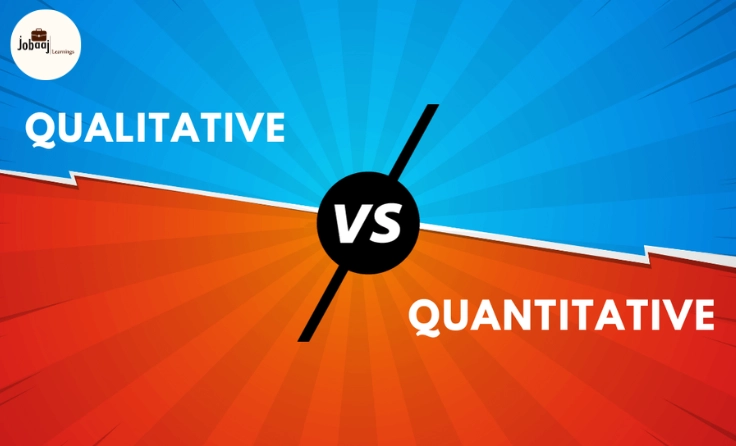
What are the key differences between qualitative and quantitative analysis?

Data is everywhere. Whether you’re running a business, analyzing trends, or making important financial decisions, understanding the difference between qualitative and quantitative analysis can make all the difference in how you interpret the information at hand.
Imagine you’re a marketer trying to understand your customers’ behaviors. You might want to know how many people bought your product (quantitative) or why they chose your product over a competitor’s (qualitative). While both types of data are valuable, they serve different purposes and are used in different ways.
In this blog, we’re going to break down the key differences between qualitative and quantitative analysis. We’ll look at when and why to use each type of analysis and how they work together to give you a more complete understanding of your data. Whether you’re a business owner, a student, or just someone curious about data, this guide will help clarify how these two approaches can transform the way you make decisions.
What is Quantitative Analysis?
Let’s start with quantitative analysis—the method that’s all about the numbers. Quantitative analysis is about measuring and analyzing data that can be quantified, usually with statistics. It’s typically used to answer questions like: how many? how much? or how often? This type of analysis is all about using numbers to uncover patterns, identify relationships, and predict outcomes.
For example, imagine you’re looking at sales data for a product over the past year. Quantitative analysis will allow you to look at the total sales, growth rate, or customer retention numbers. These figures help you see whether the product is growing in popularity, whether customers are coming back, and where the business can improve.
Key Characteristics of Quantitative Analysis:
-
Numbers-based: Everything from sales data to website traffic counts.
-
Statistical methods: Uses regression analysis, hypothesis testing, and forecasting.
-
Objective: This analysis doesn’t rely on opinions or feelings. It’s based purely on data points and facts.
-
Actionable insights: Helps predict future trends, improve processes, and measure performance.
Example in Action:
If you're analyzing how much time people spend on your website, a quantitative approach would be to track how many visitors you get and how long they stay. This would be measured through metrics like bounce rate, page views, or session duration.
What is Qualitative Analysis?
On the flip side, qualitative analysis focuses on the quality and meaning behind the data. While quantitative analysis is concerned with numbers, qualitative analysis is about understanding people’s experiences, opinions, and emotions. It's often used in areas like market research, customer feedback, or social sciences, where the goal is to dive deep into the why and how behind behaviors.
For instance, when looking at customer satisfaction, qualitative analysis might involve conducting interviews or focus groups to understand why customers prefer your product over others or what their pain points are. This type of analysis is about gathering insights that help explain patterns, and sometimes those insights can’t be quantified.
Key Characteristics of Qualitative Analysis:
-
Insight-based: It’s about understanding motivations, reasons, or experiences.
-
Subjective: Unlike quantitative analysis, qualitative insights are shaped by human perceptions and feelings.
-
Open-ended: It often involves open-ended questions that allow for in-depth responses.
-
Contextual: This method allows you to understand the context behind behaviors or trends.
Example in Action:
A brand might analyze customer feedback about a new product through surveys, interviews, or social media comments. The goal is not just to know how many customers liked the product, but to understand why they liked it and what could be improved.
Key Differences Between Quantitative and Qualitative Analysis
Let’s break down the differences between these two types of analysis to give you a clearer picture of when to use each approach:
1. Data Type
-
Quantitative Analysis: Deals with numerical data that can be measured and compared. For instance, sales figures, survey ratings, or traffic counts.
-
Qualitative Analysis: Deals with descriptive data, such as customer opinions, feelings, or observations. It’s about understanding experiences and perspectives.
2. Purpose
-
Quantitative Analysis: It’s about measuring and quantifying trends. It helps answer questions like how much? and how often?
-
Qualitative Analysis: It’s about understanding the why and how behind behaviors or trends. It digs deep into feelings, motivations, and insights.
3. Approach
-
Quantitative Analysis: Uses statistical tools and mathematical formulas to analyze the data. Common methods include regression analysis, mean calculations, and standard deviation.
-
Qualitative Analysis: Involves interviews, focus groups, and content analysis. It’s more descriptive and seeks to capture human experiences.
4. Data Collection Methods
-
Quantitative Analysis: Surveys with closed-ended questions, tracking software, or data logs.
-
Qualitative Analysis: Interviews, open-ended surveys, focus groups, and ethnographic studies.
When Should You Use Quantitative vs. Qualitative Analysis?
The choice between qualitative and quantitative analysis depends largely on what you’re trying to achieve.
-
Use Quantitative Analysis when:
-
You need to analyze and track specific data over time.
-
You’re looking to test hypotheses or predict future trends.
-
You need to present data to stakeholders in a clear, measurable way.
-
-
Use Qualitative Analysis when:
-
You need to understand the motives, feelings, or attitudes behind certain behaviors.
-
You’re exploring new ideas or areas where hard data isn’t available.
-
You want to tell a story about customer experiences or gather insights for product development.
-
Conclusion
In many cases, quantitative and qualitative analysis can complement each other. For instance, quantitative data may tell you that sales have dropped, but qualitative insights can explain why that’s happening and what you can do to fix it.
Ultimately, the key is knowing when to use each type of analysis based on what information you’re seeking and what kind of decisions you need to make. By mastering both, you’ll have a fuller understanding of your market, your audience, and your own business performance. The balance between the numbers and the stories can help guide you to better, more informed decisions.
Frequently asked questions
What is the difference between qualitative and quantitative analysis?
Qualitative analysis focuses on understanding behaviors, opinions, and emotions, using descriptive data. Quantitative analysis, on the other hand, relies on numerical data and statistical methods to measure and quantify trends.
When should I use qualitative analysis?
Use qualitative analysis when you need to understand the motivations, feelings, and reasons behind certain behaviors or trends. It’s perfect for gathering insights and exploring new ideas.
What is an example of quantitative analysis?
Quantitative analysis includes looking at measurable data like sales figures, website traffic, or market trends. For example, you can track how many people visited your website and how long they stayed using analytics tools.
Why is qualitative analysis important?
Qualitative analysis helps businesses understand customer emotions and motivations, offering a deeper understanding of consumer behavior and experiences, which can't always be captured with numbers alone.
How can I apply both qualitative and quantitative analysis?
Both analyses can be used together to provide a comprehensive view of your data. Quantitative data may show trends, while qualitative insights explain why those trends are occurring. Combining both methods helps make more informed decisions.
What tools can I use for qualitative and quantitative analysis?
For quantitative analysis, tools like Excel, SPSS, and R are commonly used. For qualitative analysis, tools like NVivo or manual coding of interview transcripts are often employed to analyze responses and categorize insights.
Join 5,00,000+ Subscribers
Be a part of our ever growing community.