Categories














/content/learnings/assets/header/ManagementConsulting.svg)
/content/learnings/assets/header/InvestmentBanking.svg)


























Imagine a world where machines can learn, adapt, and make decisions all on their own—without human intervention. This is the world of deep learning, a subset of artificial intelligence (AI) that has revolutionized how we interact with technology today. From voice assistants like Siri and Alexa to medical imaging systems that detect diseases, deep learning is everywhere, changing the way we live and work.
Exploring a career in Data Analytics? Apply Now!
But how does it all work? At the heart of deep learning are complex algorithms that mimic the way the human brain processes information. The sheer power of deep learning lies in its ability to handle vast amounts of data and recognize patterns that would be impossible for traditional algorithms. In this blog, we’ll explore the methods behind deep learning, discuss the most common techniques, and look at how it’s being applied in industries like healthcare, finance, and AI.
What is Deep Learning?
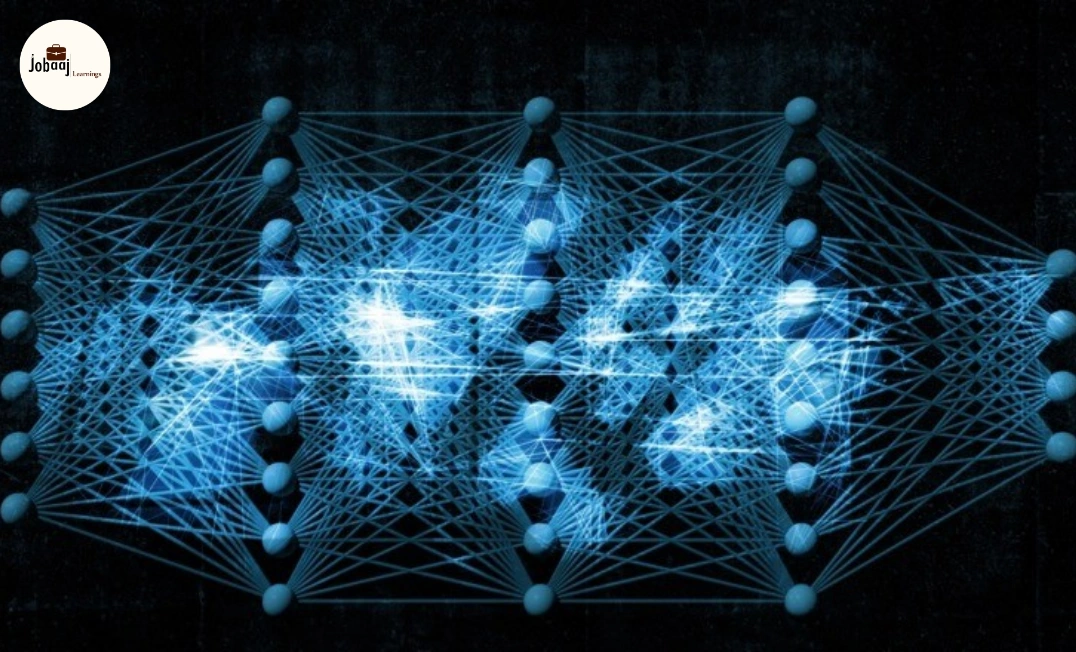
Deep learning refers to a class of machine learning techniques that involve neural networks with many layers. These networks are designed to learn from large amounts of data by automatically adjusting their internal parameters to minimize errors in prediction or classification. Deep learning algorithms mimic the brain’s neural networks, hence the name "neural networks" in deep learning.
Why Deep Learning is Powerful:
Deep learning models can learn from unstructured data (like images, audio, and text) and improve over time as they are exposed to more data. This makes them incredibly useful for tasks that involve pattern recognition, classification, and prediction.
Common Deep Learning Techniques
There are several deep learning methods used to solve different types of problems. Let’s take a closer look at the most popular techniques:
1. Convolutional Neural Networks (CNNs)
CNNs are widely used in image and video recognition tasks. They are designed to automatically detect patterns and features within images by applying filters to different parts of the image. CNNs are incredibly powerful for tasks like object detection, face recognition, and image classification.
-
Applications: Used in self-driving cars, medical imaging, and security systems.
2. Recurrent Neural Networks (RNNs)
RNNs are ideal for tasks involving sequential data, such as time-series analysis or natural language processing (NLP). Unlike traditional neural networks, RNNs can remember previous inputs due to their internal memory, making them great for predicting future data based on past information.
-
Applications: Used in speech recognition, language translation, and financial forecasting.
3. Autoencoders
Autoencoders are a type of neural network used primarily for unsupervised learning tasks. They work by encoding data into a smaller, compressed version and then decoding it back to the original input. This technique is often used for dimensionality reduction and feature learning.
-
Applications: Used in image denoising, anomaly detection, and data compression.
4. Generative Adversarial Networks (GANs)
GANs are a class of deep learning models used for generating synthetic data. They consist of two neural networks: a generator and a discriminator, which compete against each other. The generator creates fake data, and the discriminator tries to distinguish it from real data. This rivalry leads to the generation of incredibly realistic data.
-
Applications: Used in image generation, video generation, and deepfake technology.
5. Transformer Networks
Transformer networks are a breakthrough in deep learning, especially for natural language processing. They use self-attention mechanisms to understand the relationships between different words in a sentence, making them highly effective for tasks like language translation and text generation.
-
Applications: Used in language models like GPT-3, chatbots, and automatic translation systems.
Applications of Deep Learning in Different Industries
Deep learning has applications across various industries, where it is being used to solve complex problems and create new opportunities. Here are some key sectors where deep learning is making a significant impact:
1. Healthcare
In healthcare, deep learning is being used for medical imaging, diagnosis, and drug discovery. Models like CNNs are particularly effective in analyzing medical images, such as X-rays, MRIs, and CT scans, helping doctors identify diseases like cancer or tumors at an early stage.
-
Example: Deep learning algorithms are being used in radiology to detect abnormalities in medical scans and predict the likelihood of certain conditions.
2. Finance
In the finance sector, deep learning is transforming how companies handle fraud detection, risk analysis, and algorithmic trading. By analyzing patterns in financial data, deep learning models can predict market trends, identify potential fraudulent activities, and optimize investment strategies.
-
Example: Deep learning is used by banks and financial institutions to detect unusual patterns in transaction data, reducing the risk of fraud.
3. Autonomous Vehicles
Self-driving cars rely heavily on deep learning techniques, particularly CNNs, to process real-time data from cameras, sensors, and LiDAR to make decisions on the road. Deep learning allows these vehicles to recognize traffic signs, pedestrians, and other vehicles to navigate safely.
-
Example: Companies like Tesla and Waymo use deep learning to enable autonomous driving capabilities in their vehicles.
4. Entertainment
In entertainment, deep learning is used for personalizing recommendations, creating realistic animations, and even generating synthetic media. Recommendation systems, powered by deep learning, analyze user preferences and suggest movies, music, or content tailored to individual tastes.
-
Example: Netflix and Spotify use deep learning to recommend shows and songs based on user preferences.
Conclusion: The Future of Deep Learning
Deep learning has come a long way in transforming industries by automating processes, enhancing user experiences, and solving complex problems. As technology continues to advance, deep learning techniques will evolve further, opening up new possibilities in fields like artificial intelligence, healthcare, finance, and entertainment.
For those interested in diving deeper into the world of deep learning, now is the time to learn and explore. Whether you’re a developer, data scientist, or just a tech enthusiast, mastering deep learning methods will unlock numerous opportunities and shape the future of industries worldwide.
Dreaming of a Data Analytics Career? Start with Data Analytics Certificate with Jobaaj Learnings.
Frequently asked questions
What is deep learning?
Deep learning is a subset of machine learning that uses neural networks with many layers to analyze large amounts of data and learn from it, often used in complex tasks like image recognition and language processing.
How is deep learning used in healthcare?
Deep learning is used in healthcare for tasks like medical image analysis, diagnosis, drug discovery, and predicting disease progression. CNNs are commonly used for analyzing medical images like X-rays and MRIs.
What are the different types of deep learning models?
The most common deep learning models are Convolutional Neural Networks (CNNs), Recurrent Neural Networks (RNNs), Autoencoders, Generative Adversarial Networks (GANs), and Transformer networks.
What is the role of data in deep learning?
Data is the foundation of deep learning. Models are trained on large datasets to recognize patterns, learn from examples, and improve their predictions or classifications over time.
What industries are using deep learning?
Deep learning is widely used in industries such as healthcare, finance, automotive, entertainment, and marketing for tasks like **image analysis**, **fraud detection**, **autonomous vehicles**, and **personalized recommendations**.
How can I start learning deep learning?
You can start learning deep learning by taking online courses, reading books, and working with deep learning frameworks like TensorFlow and PyTorch. Practice on real datasets and build simple models to gain experience.

Join 5,00,000+ Subscribers
Be a part of our ever growing community.