Categories






































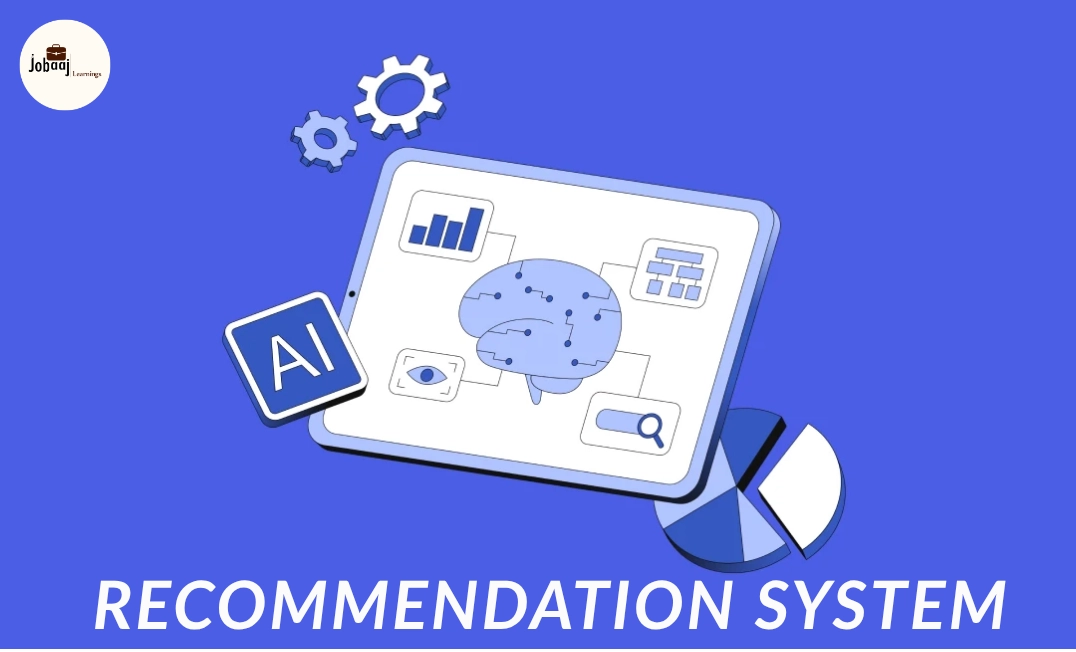
In today's digital world, recommendation systems have become a cornerstone of personalized user experiences. Whether it’s recommending movies on Netflix, products on Amazon, or songs on Spotify, recommendation systems are at the heart of many online platforms. But how exactly do you go about building one?
Exploring a career in Data and Business Analytics? Apply Now!
Building a recommendation system involves understanding the underlying goals of personalizing user experiences, choosing the right approach, and fine-tuning the algorithm to provide the best recommendations. In this blog, we will break down the process of building a recommendation system step-by-step, covering the types of recommendation systems, the algorithms used, and best practices for implementation.
Step 1: Understanding the Problem and Gathering Data
Before jumping into the coding or algorithm development phase, the first and most crucial step is understanding the problem. What kind of recommendations are you trying to make? The types of recommendations vary depending on the domain, such as:
- Product recommendations (e-commerce platforms like Amazon or eBay)
- Content recommendations (streaming platforms like Netflix or YouTube)
- Social recommendations (social networks like Facebook or Twitter)
- Job recommendations (career platforms like LinkedIn)
Once the problem is defined, the next critical step is gathering the data. Recommendation systems rely heavily on data, so you need access to historical user data. Depending on the type of recommendation system, this data can come from various sources:
- User preferences (e.g., ratings, clicks, interactions)
- Product details (e.g., categories, tags, and descriptions)
- User demographics (e.g., age, gender, location)
- Interaction history (e.g., user behavior, purchases, watch history)
Step 2: Choosing the Type of Recommendation System
There are three main types of recommendation systems, each with its own strengths and use cases. You’ll need to decide which one is best for your application:
1. Collaborative Filtering
Collaborative filtering relies on user behavior and interactions to make recommendations. The core idea is that if users have agreed on past interactions (e.g., rating movies or purchasing products), they will likely agree again in the future.
- User-based collaborative filtering: This approach recommends items that users with similar tastes have liked in the past.
- Item-based collaborative filtering: This approach recommends items that are similar to what the user has interacted with previously.
Challenges:
- Cold start problem: If you don’t have enough data about users or items, collaborative filtering doesn’t perform well.
- Scalability: It can be computationally expensive with large datasets.
2. Content-Based Filtering
Content-based filtering makes recommendations based on the features of the items and the user’s preferences. For example, if a user likes a certain genre of movies (e.g., action), the system would recommend similar movies in that genre.
- How it works: Items are described using attributes like keywords, tags, or categories, and recommendations are made based on matching those attributes to what the user has previously liked.
Challenges:
- Limited diversity: Since the system only recommends items similar to what the user has already liked, it can lack variety.
-
Feature engineering: You need to carefully select the features that describe the items.
3. Hybrid Systems
Hybrid systems combine both collaborative filtering and content-based filtering. They aim to leverage the strengths of both approaches and mitigate their weaknesses. For example, a hybrid system can use collaborative filtering for popular recommendations and content-based filtering for niche or new items.
Advantages:
- Reduces the cold start problem and scalability issues.
- Provides more accurate and diverse recommendations.
Step 3: Selecting the Right Algorithm
Once you've chosen the type of recommendation system, the next step is to select the algorithm. Depending on your data, size, and requirements, different algorithms might be suitable. Here are some common ones:
1. K-Nearest Neighbors (K-NN)
The K-NN algorithm is one of the most straightforward methods in collaborative filtering. It works by finding the K most similar users or items to a given one and recommending items that those similar users liked.
2. Matrix Factorization (e.g., SVD)
Matrix factorization is widely used in collaborative filtering. It breaks down large user-item interaction matrices into smaller matrices that reveal underlying patterns in the data. Singular Value Decomposition (SVD) is a popular matrix factorization technique used to predict missing values in the matrix and make recommendations.
3. Deep Learning-Based Methods
Deep learning has gained significant traction in recommendation systems, especially in content-based systems. Techniques like convolutional neural networks (CNNs) and recurrent neural networks (RNNs) are used to capture complex patterns in content (like images or text) and user behavior. Autoencoders are also commonly used for collaborative filtering tasks.
4. Association Rule Mining
This method is commonly used in e-commerce for product recommendations. It identifies patterns in the data, such as "if a user buys item A, they are likely to buy item B." Apriori and FP-growth are popular algorithms for finding association rules.
Step 4: Model Evaluation and Testing
Once the model is built, the next step is to evaluate its performance. You should assess how well your recommendation system is performing and fine-tune it accordingly. Here are some common evaluation metrics:
- Precision: How many of the recommended items were actually liked by the user?
- Recall: How many of the user’s liked items were recommended by the system?
- F1-Score: The harmonic mean of precision and recall.
- Mean Absolute Error (MAE): The average of the absolute differences between predicted and actual ratings.
- Root Mean Square Error (RMSE): A more sensitive version of MAE that penalizes larger errors more heavily.
Testing is essential to ensure your recommendation system delivers quality suggestions. You can use cross-validation, offline testing, or A/B testing to assess the system's accuracy.
Step 5: Deploying and Maintaining the System
After training and testing your recommendation system, it’s time to deploy it. A recommendation system needs to be integrated into the platform, whether it’s an e-commerce site, a media platform, or a service app. Once deployed, the system should be continuously monitored and updated to ensure that it performs well over time.
- Online Learning: As new data comes in, the recommendation system should be updated regularly to reflect new user preferences and behaviors.
- Cold Start Problem: For new users or items with limited data, try to use hybrid systems or apply basic content-based methods until enough data is gathered.
Best Practices for Building a Recommendation System
- Data Quality is Key: Make sure you collect high-quality and relevant data. The more accurate your data, the better your recommendations will be.
- Handle the Cold Start Problem: Use hybrid systems, content-based filtering, or expert recommendations for new users or items that have no interaction history.
- Personalization is Crucial: The more personalized the recommendations, the better. Try to take into account user behavior, preferences, and demographic information.
- Diversity of Recommendations: Ensure your recommendation system doesn’t just recommend the same types of items. Include some diversity to keep the recommendations fresh and interesting.
- Test and Optimize: Always test different models and algorithms. Try A/B testing to see which approach works best for your audience.
Conclusion
Building a recommendation system involves understanding the problem at hand, choosing the right approach, selecting the most appropriate algorithms, and constantly fine-tuning the system. Whether you are using collaborative filtering, content-based filtering, or hybrid systems, the key to success is gathering accurate data and optimizing your model based on user behavior.
By following the steps outlined in this blog, you can build an effective recommendation system that helps improve user experience and drive engagement, no matter what industry you are in.
Aspiring for a career in Data and Business Analytics? Begin your journey with a Data and Business Analytics Certificate from Jobaaj Learnings.
Frequently asked questions
What is a recommendation system?
A recommendation system is an algorithmic tool used to suggest products, services, or content to users based on their preferences, behavior, and past interactions. It is widely used in e-commerce, streaming platforms, and social media.
What are the main types of recommendation systems?
The main types of recommendation systems are collaborative filtering, content-based filtering, and hybrid systems. Collaborative filtering makes recommendations based on user behavior, while content-based filtering uses item features. Hybrid systems combine both approaches.
How does collaborative filtering work?
Collaborative filtering makes recommendations based on the behavior of users with similar preferences. It looks at patterns of ratings or interactions and suggests items based on what similar users liked.
What is the cold start problem in recommendation systems?
The cold start problem refers to the challenge of making accurate recommendations for new users or items with little or no data. Hybrid systems or content-based filtering can help mitigate this issue.
What are the best practices for building a recommendation system?
Best practices include ensuring data quality, using hybrid models to handle cold starts, personalizing recommendations, including diversity in suggestions, and continually testing and optimizing your model.

Join 5,00,000+ Subscribers
Be a part of our ever growing community.