Categories








































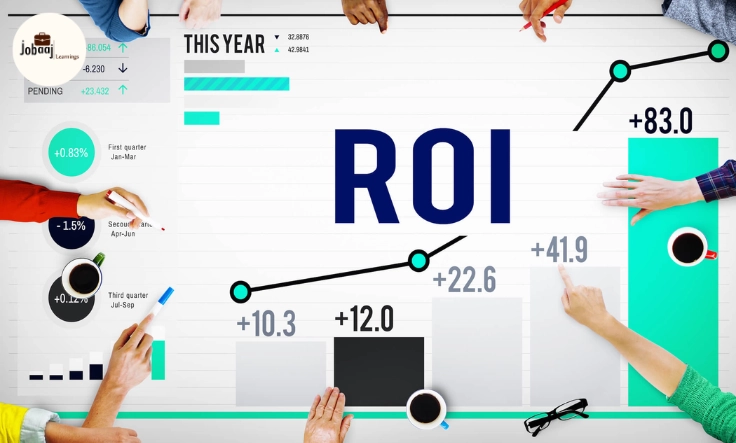
Imagine this: You’ve just launched a new marketing campaign, and the excitement is palpable. You’ve put in the work—crafting the perfect message, selecting the right channels, and targeting the right audience. But after all the effort, you find yourself wondering, "How do I know if it’s working?" It’s a common question for marketers, and it’s crucial to answer. The effectiveness of any marketing campaign should be measured, and that measurement often comes down to one key metric: ROI (Return on Investment). Knowing how to measure ROI can help you understand the impact of your marketing efforts and guide you in optimizing future campaigns. Let’s explore how to effectively measure ROI for your marketing campaigns.
Exploring a career in Performance Marketing? Apply Now!
Measuring ROI for marketing campaigns is essential for assessing whether your efforts are paying off. Without understanding your ROI, it’s hard to know what strategies are working and where you need to adjust. In this blog, we’ll break down the process of calculating ROI, explore important factors to consider, and offer tips on improving it.
1. What is ROI in Marketing?
Before diving into how to measure ROI, it’s important to understand what ROI is and why it matters. ROI refers to the return on investment, which is a way to measure the profitability of a marketing campaign relative to its cost. It’s a key metric that helps you determine whether the money you’re spending on marketing is yielding profitable results.
In simple terms, ROI is the ratio of the profit generated by your campaign compared to how much you spent to run it. By calculating ROI, you can decide which marketing tactics are worth continuing and which need to be tweaked or abandoned.
2. The Formula for Calculating ROI
Calculating ROI for your marketing campaigns is fairly straightforward once you have the right data. The basic formula is:
ROI = (Revenue – Cost of Campaign) / Cost of Campaign × 100
Here’s a simple breakdown:
-
Revenue: The total sales or profits generated directly from the campaign.
-
Cost of Campaign: The total cost incurred to execute the campaign (ad spend, production costs, etc.).
For example, if you spent $5,000 on a campaign and it generated $15,000 in sales, your ROI would be calculated as:
ROI = ($15,000 - $5,000) / $5,000 × 100 = 200%
This means that for every dollar you spent, you earned $2 in return.
3. Factors to Consider When Measuring ROI
While the basic ROI formula is simple, there are several factors you should consider to ensure you get an accurate picture of your marketing efforts:
-
Attribution: Sometimes, customers engage with your brand across multiple touchpoints before making a purchase. It’s important to understand which touchpoints are contributing to conversions.
-
Timeframe: Make sure you’re measuring ROI over a relevant timeframe. For example, it may take time for customers to convert after a campaign, especially for more complex products or services.
-
Customer Lifetime Value (CLV): When calculating ROI, consider the long-term value of a customer. A customer acquired during one campaign may return for more purchases in the future, which should be factored into your ROI.
-
Non-revenue goals: Not all marketing campaigns are directly aimed at generating sales. Some may focus on brand awareness, lead generation, or customer engagement. In these cases, measuring ROI might involve tracking metrics like website traffic, social media engagement, or email sign-ups.
4. Use of Tools to Track and Measure ROI
To accurately measure ROI, you need the right tools. There are several analytics and marketing tools that can help you track your ROI effectively:
-
Google Analytics: This tool helps track website traffic, conversions, and sales, allowing you to measure the impact of your marketing campaigns.
-
CRM (Customer Relationship Management) software: Tools like Salesforce or HubSpot can help track customer data, allowing you to attribute sales to specific marketing campaigns.
-
Marketing Automation Tools: Platforms like Mailchimp or Marketo can help you track campaign performance and calculate ROI from email marketing and automation efforts.
These tools can make your calculations more precise, helping you gather data from multiple touchpoints and channels.
5. Adjusting Your Marketing Strategy Based on ROI
Once you’ve calculated ROI and identified which campaigns are delivering the best returns, it’s time to optimize your strategy. A few ways to adjust based on ROI include:
-
Doubling down on successful campaigns: If a particular campaign is driving significant ROI, consider allocating more resources to it.
-
Tuning underperforming campaigns: If certain campaigns aren’t delivering results, analyze what’s not working (targeting, creatives, channels) and make adjustments.
-
Testing and experimentation: Always be testing. Running A/B tests on different aspects of your campaigns (like ad copy, targeting, or offers) can help improve your ROI over time.
Understanding ROI allows you to make informed decisions and ensure that your marketing budget is being used as effectively as possible.
6. Real-World Example of ROI Measurement
Let’s look at an example to illustrate how measuring ROI can guide decisions:
Imagine you run an online retail store and launch a paid ad campaign on Facebook. You spend $2,000 on the ads, which result in $8,000 in sales.
Using the ROI formula:
-
Revenue = $8,000
-
Cost of Campaign = $2,000
ROI = ($8,000 - $2,000) / $2,000 × 100 = 300%
This means that for every dollar you spent on the campaign, you earned $3 in return. Based on this positive ROI, you could decide to increase your ad budget to drive even more sales.
Conclusion
Measuring ROI is an essential part of any marketing strategy. It helps you evaluate the effectiveness of your campaigns, optimize your budget, and ultimately make smarter decisions that contribute to business growth. By understanding the formula for calculating ROI, considering key factors, and using the right tools, you can get a clear picture of how well your marketing efforts are paying off. Remember, tracking ROI isn’t just about numbers—it’s about continuously improving your strategy to ensure that every marketing dollar spent is working hard for you.
Dreaming of a Performance Marketing Career? Start with Performance Marketing Certificate with Jobaaj Learnings.
Frequently asked questions
What does ROI mean in marketing?
ROI in marketing refers to the return on investment, which is a measure of the profitability of a marketing campaign relative to its cost. It helps determine the effectiveness of marketing efforts.
How do you calculate ROI for marketing campaigns?
To calculate ROI, use the formula: (Revenue – Cost of Campaign) / Cost of Campaign × 100. This gives you the percentage return on your marketing investment.
Why is ROI important in marketing?
ROI helps measure the success of marketing campaigns, allowing businesses to assess which strategies are working and which need improvement. It ensures marketing budgets are being spent effectively.
What factors should be considered when measuring ROI?
Key factors include attribution (identifying which channels contribute to sales), customer lifetime value, non-revenue goals (like brand awareness), and the timeframe of the campaign.
What tools can help measure ROI in marketing?
Tools like Google Analytics, CRM software (e.g., Salesforce), and marketing automation platforms (e.g., HubSpot) can help track and measure ROI from various marketing efforts.
How can I improve my marketing ROI?
To improve ROI, focus on optimizing successful campaigns, adjusting underperforming ones, and continuously testing different elements of your marketing strategy to maximize efficiency.

Join 5,00,000+ Subscribers
Be a part of our ever growing community.